AMBOSSFUNKEN™ – red-yellow hybrid tea rose – Meyer
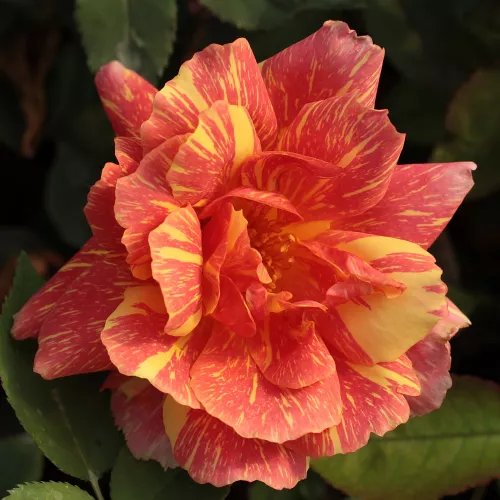
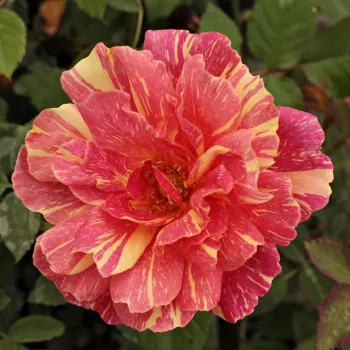
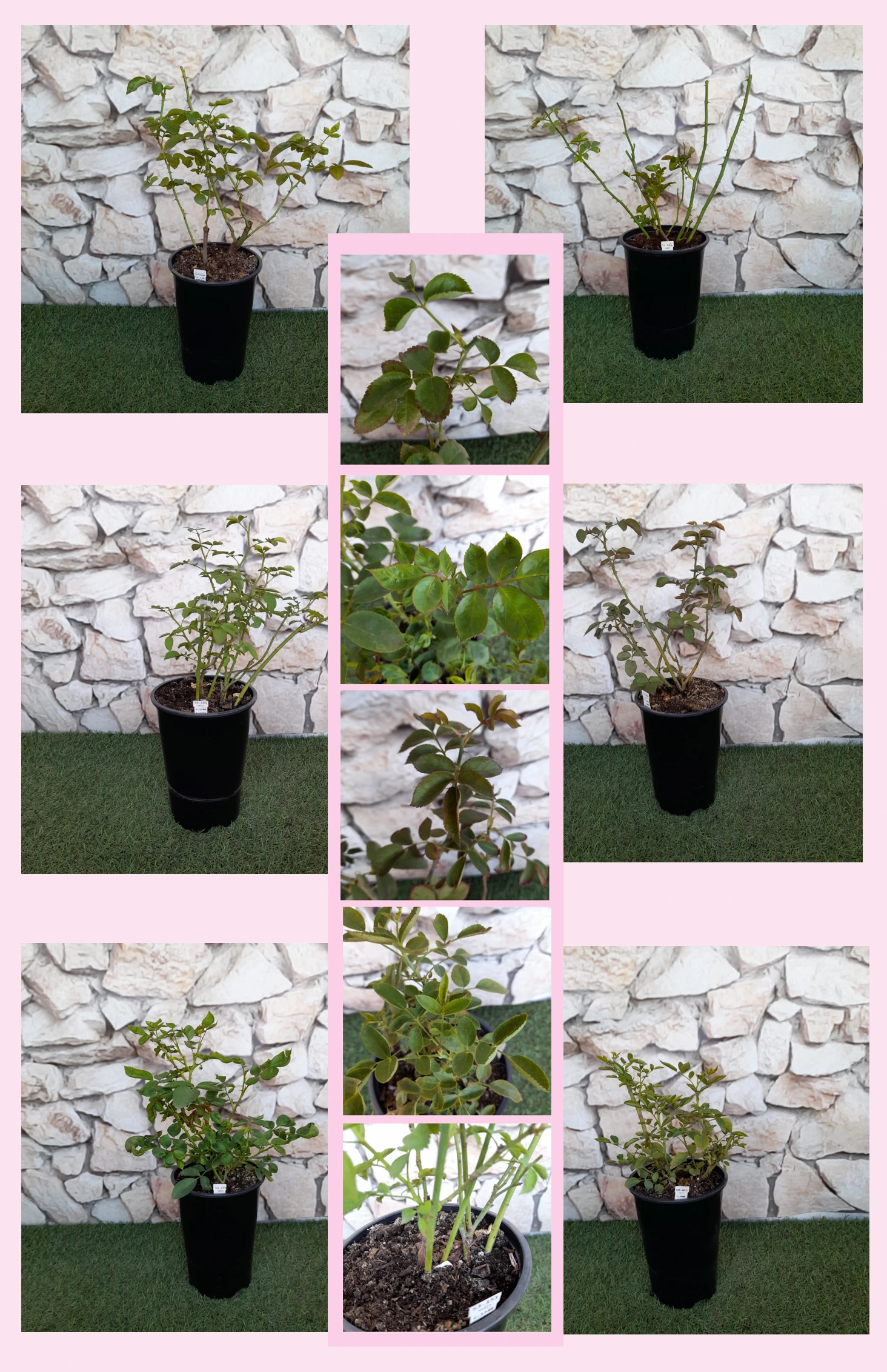
This characterful hybrid tea brings a sense of intimate romance to the family garden, its cup-shaped blooms glowing in a distinctive red and gold palette that feels straight from an English cottage storybook. Supplied as an own-root, premium-quality plant in a manageable 2‑litre pot, it is simple to establish in modest front gardens or mixed borders where dependable flowering and strong, classic rose fragrance are a priority. Disease-resilient foliage reduces complex spraying routines, leaving you more time for relaxed afternoons under an arbour, even in gardens that regularly face brisk coastal breezes and frequent showers. With low maintenance needs and hardy growth, it settles in as a long-lived garden feature, rewarding basic deadheading with repeat flushes from early summer onwards. The own-root habit supports a long, stable life and steady regeneration, so a simple three-year development – first roots, then framework, then full display – gives you a reliably maturing garden centrepiece.
Usage options
| Target area |
Reasoning |
| Main feature in a small front garden bed |
Ideal as a focal shrub where space is limited but you still want the look of a traditional hybrid tea rose. Its upright shape and striking bicolour flowers give strong visual impact from a single plant, suiting the tidy frontage valued by homeowners. |
| Classic cottage-style mixed border |
The warm coral-red and golden-yellow tones blend naturally with soft pastels and traditional perennials, adding height without dominance. Repeat flowering keeps colour running through the season, supporting the relaxed charm sought by cottage-garden lovers. |
| Low-maintenance family back garden |
Good disease resistance and modest care needs make this cultivar practical where gardening time is short. Simple watering in dry spells and occasional deadheading are usually enough, a realistic level of work for busy families. |
| Cutting bed for home-grown bouquets |
Long, upright stems and classic hybrid tea form make it well suited to cutting, providing scented blooms for the house from early summer to autumn. Regular picking supports further flowering, appealing to creative, home-focused gardeners. |
| Raised bed or improved heavy-clay border |
Performs well when planted into well-drained, improved soil, so is a good choice where heavy clay would otherwise stay wet. A raised or mounded bed helps roots stay healthy in wetter regions, reassuring owners of challenging plots. |
| Informal flowering hedge or boundary line |
Planted at recommended hedge spacing, the consistent height and moderate spread create a loose, blossoming boundary. The strong fragrance and lively colour pattern give everyday paths and play areas a cheerful feel appreciated by families. |
| Large container on terrace or patio |
In a stable 40–50 litre container with quality compost and regular watering, it forms a fragrant, colourful presence close to seating. This avoids digging in difficult ground and suits paved spaces enjoyed by urban gardeners. |
| Weather-resilient focal point in exposed gardens |
The robust growth and dependable flowering make it suitable for sites where wind and rain can quickly spoil less sturdy roses, including many open or coastal gardens that experience frequent gusts and showers, reassuring more cautious beginners. |
Styling ideas
- Storybook archway – Train Ambossfunken™ beside a simple metal arch, underplanting with lavender and catmint to echo its warm blooms – ideal for romantic cottage-style enthusiasts.
- Kitchen-border glow – Place near herbs, chives and compact vegetables so its red-yellow flowers light up the productive area – suited to practical cooks who love homegrown charm.
- Pastel partnership – Combine with soft pink roses, pale foxgloves and white campanulas to let the bicolour blooms act as gentle highlights – perfect for those favouring a subtle, feminine palette.
- Sunny feature pot – Grow in a 40–50 litre terracotta container with trailing thyme and small sedums around the base – appealing to balcony and terrace owners wanting easy elegance.
- Warm hedgerow – Plant a loose row with yarrow, tickseed and dwarf spindle to create a low, wildlife-friendly ribbon of colour – attractive for family gardens edging lawns or play spaces.
Technical cultivar profile
| Characteristic |
Data |
| Name and registration |
Hybrid tea rose; registered as Ambossfunken, also marketed as Ambossfunken™ hybrid tea rose Ambossfunken; ARS exhibition name Ambossfunken; collection: hybrid tea rose. |
| Origin and breeding |
Natural sport of ‘Signora Piero Puricelli’; bred by E. H. F. Meyer in South Africa, 1961; introduced by W. Kordes’ Söhne (Germany) and Vilmorin-Andrieux (France) in the early 1960s. |
| Growth and structural characteristics |
Upright habit, height around 75–105 cm, spread 100–140 cm; moderately dense, dark green, glossy foliage; moderately thorny stems; spent blooms persist and benefit from regular deadheading. |
| Flower morphology |
Semi-double flowers with 13–25 petals; medium-sized, typically 4–7 cm across; solitary, cup to goblet-shaped blooms; remontant, with an abundant second flush given basic maintenance. |
| Colour data and phenology |
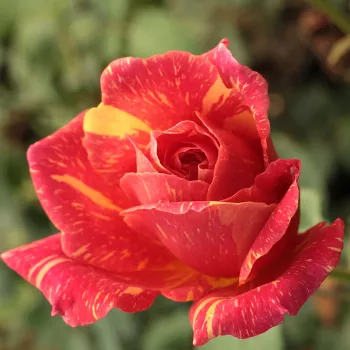
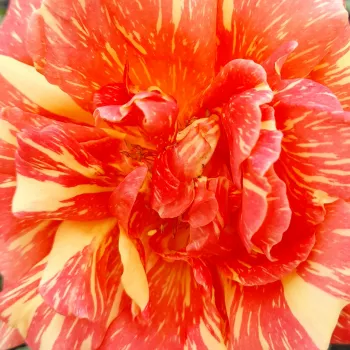
Coral-red ground with irregular golden-yellow stripes and spots; buds elongated and veined; colour can soften in strong sun, yellow areas paling while orange-red tones become gentler. |
| Fragrance and aroma |
Strong, clearly noticeable scent with a classic rose character; fragrance evident on warm, still days and suitable for cutting for indoor enjoyment in vases and arrangements. |
| Hip characteristics |
Produces spherical orange-red hips, typically 12–18 mm in diameter; hips are moderately numerous and add a discreet autumn feature once flowering has slowed. |
| Resistance and winter hardiness |
Rated H7, hardy to approximately −26 to −23 °C; good heat tolerance with watering during prolonged drought; resistant to powdery mildew, black spot and rust under normal garden conditions. |
| Horticultural recommendations |
Best in a sunny, well-drained position; suitable for beds, specimen planting, hedging and cutting; low overall maintenance with occasional deadheading and feeding for sustained flowering. |
AMBOSSFUNKEN™ offers romantic bicolour blooms, strong fragrance and reliable disease resistance on a long-lived own-root framework, making it a thoughtful choice for those shaping a relaxed, traditional garden.