AUSRAM – white landscape shrub rose - Austin
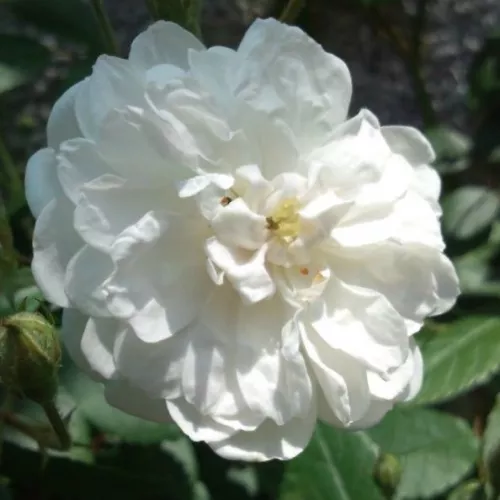
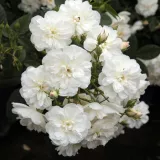
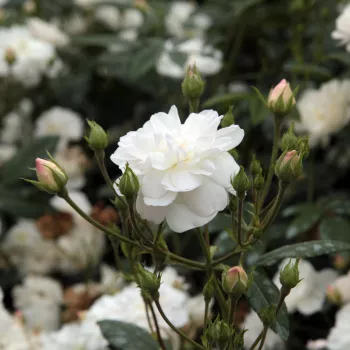
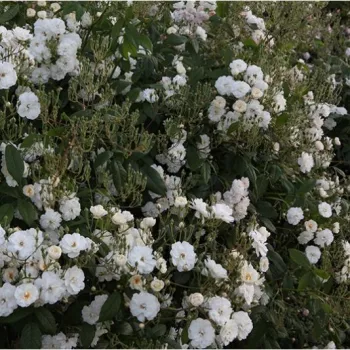
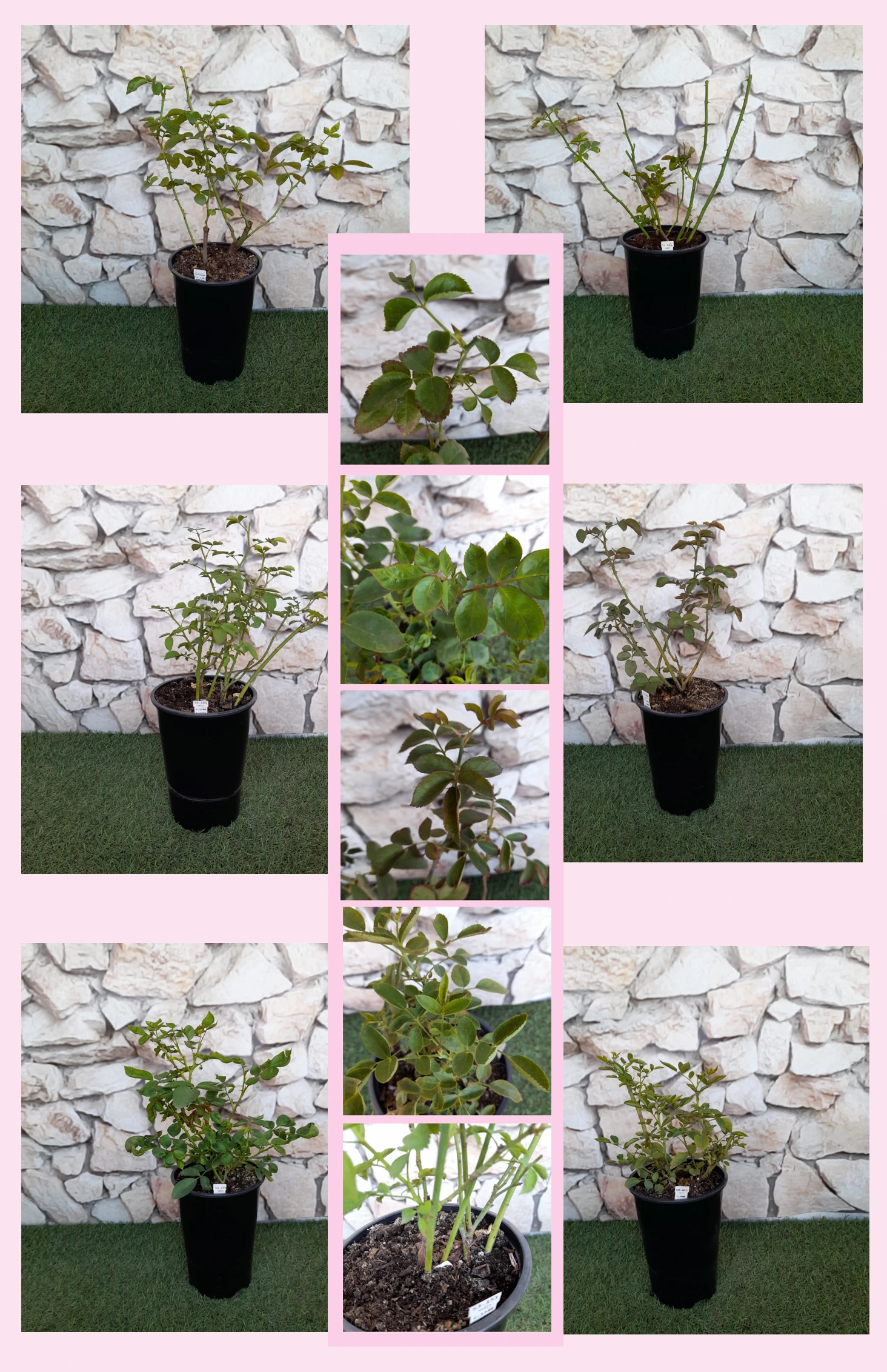
Under a wooden arbour or along a cottage path, AUSRAM settles in as a quietly enchanting presence: tight clusters of small, very double blooms open in waves of pure white with a gentle ivory glow, creating a soft, romantic backdrop for family life and afternoon tea. This English shrub rose forms a bushy, slightly spreading, mid‑green mound that works beautifully in informal borders and hedges, giving you an easy, storybook look without demanding expert skills or constant attention. As an own‑root plant, it knits itself firmly into the soil, offering reassuring stability even where gardens are exposed to coastal breezes and blustery weather, and it can be moved or rejuvenated more easily over the years. Medium maintenance needs and dependable repeat flowering mean you simply feed, mulch, prune when convenient and enjoy the gentle fragrance, rather than worrying about complicated routines. In smaller family gardens, its manageable height and width make it ideal for boundaries, rose beds or generous containers of at least 40–50 litres, where its clusters of flowers light up seating areas from early summer onwards. Over the seasons this own‑root plant matures steadily, its roots first establishing, then shoots filling out, and by the third year it shows its full ornamental potential as a long‑lived cottage‑garden feature that quietly supports relaxation and togetherness in everyday life.
Usage options
| Target area | Reasoning |
|---|
| Small family front garden bed |
The bushy, slightly spreading habit reaches around 100–140 cm in both height and width, giving a generous yet manageable presence for modest plots. Clustered, very double white flowers read clearly from the pavement, adding a welcoming, traditional feel without overwhelming the space. Medium maintenance needs mean that light deadheading and an annual tidy will suffice for a smart but relaxed frontage, suitable for beginners. |
| Romantic cottage-style mixed border |
Masses of small, very double blooms arranged in tight clusters create a lace-like effect that pairs effortlessly with perennials and herbs, echoing classic English cottage borders. The pure white, ivory-tinted colour harmonises with pastel pinks, blues and silvers, tying together a “girly” country look. Reliable repeat flowering in waves across the season keeps the border lively for cottage-garden lovers. |
| Informal low hedge or boundary |
With its bushy structure and moderately dense foliage, this rose can be planted in a row at 100–110 cm spacing to form a soft, flowering division between garden areas. The mid-green leaves and rounded outline give year-round structure, while summer flushes of white blossom lift the boundary without requiring strict clipping. Medium disease resistance and simple pruning needs make it manageable for busy households. |
| Long-lived specimen in a focal position |
As an own-root rose, AUSRAM is not dependent on a graft, so it can regenerate from its base if damaged and maintain stable ornamental value over many years. Once established, it forms a durable, rounded shrub that can anchor a small lawn island, seating area or kitchen-garden entrance, giving a gentle sense of permanence without complex care, ideal for homeowners. |
| Large container on terrace or patio |
Planted in a substantial container of at least 40–50 litres, this variety’s compact height and width provide a contained yet abundant display near seating areas. The medium-green, slightly glossy foliage and pure white blooms brighten paved spaces, while the own-root form copes better with occasional neglect or repotting. Routine watering and a yearly prune suit urban gardeners. |
| Traditional white-and-green colour scheme |
The uniform snow-white flowers with a delicate creamy tone lend themselves to cool, restrained planting plans around dining terraces and paths. Their very good colour retention means the display remains fresh rather than quickly browning, so the whole planting looks composed for longer between maintenance sessions, appealing to style-conscious buyers. |
| Relaxed seating area for afternoon tea |
The mild, muscat-like scent and continuous clusters of small, double blooms create a gentle, intimate mood around benches, arbours or pergolas. Planting in well-drained soil allows the shrub to anchor securely and sway safely even when strong, gusty winds sweep through the garden, supporting family users. |
| Flower bed for repeating seasonal interest |
Remontant flowering brings a plentiful second flush, so borders do not lapse into green-only after the first peak. Medium care requirements and own-root resilience mean you can focus on straightforward feeding and pruning, while the plant steadily moves from root establishment to fuller top growth and finally to its mature display, suiting time-poor gardeners. |
Styling ideas
- Cottage-hedge – Plant AUSRAM in a loose, informal line with lavender and catmint for a soft, white-and-blue boundary – ideal for cottage-garden romantics seeking a traditional frame to family lawns.
- Tea-corner – Flank a small bistro set with two large containers of AUSRAM and underplant with creeping thyme to perfume paving – appealing to urban owners wanting an easy afternoon-tea nook.
- Kitchen-garden – Use AUSRAM as a flowering marker at the entrance to a potager, backed by rosemary and small fruit bushes – perfect for home growers blending practical crops with decorative structure.
- White-border – Combine AUSRAM with white foxgloves, silver lamb’s-ear and pale grasses for a restrained monochrome scheme – suited to those who prefer calm, low-fuss planting with long seasonal impact.
- Storybook-arch – Site AUSRAM near a simple wooden arch and echo its clusters with nearby climbers and daisies – attractive for families wanting a photogenic, fairytale path for children and guests.
Technical cultivar profile
| Parameter | Data |
|---|
| Name and registration |
English shrub rose from the David Austin collection; registered as AUSram, marketed under names including Francine Austin and Ausram English Rose AUSram. |
| Origin and breeding |
Bred by David C. H. Austin in the United Kingdom in 1988 from ‘Alister Stella Gray’ × ‘Ballerina’; registered 1994 and introduced after 1994 by David Austin Roses. |
| Awards and recognition |
Recognised with a Certificate of Merit at the Glasgow rose trials in 1990, indicating reliable garden performance and ornamental value under independent evaluation. |
| Growth and structural characteristics |
Bushy, slightly spreading shrub reaching about 100–140 cm in height and width, with moderately dense, medium-green, slightly glossy foliage and moderate prickliness on the stems. |
| Flower morphology |
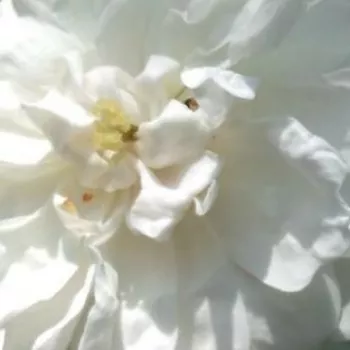
Small, flat, very double blooms with over 40 petals, produced in clustered inflorescences; remontant, giving an abundant main display followed by a generous second flowering period. |
| Colour data and phenology |
Pure white flowers with a subtle ivory to creamy tint, ARS white and RHS 155C–155D; colour holds very well, fading gently from soft ivory to snow-white over the bloom’s life. |
| Fragrance and aroma |
Mild, pleasantly muscat-like fragrance that is noticeable at close range without being overpowering; suitable near seating or paths where a subtle, refined scent is preferred. |
| Hip characteristics |
Occasional small, spherical rose hips, 6–10 mm across, developing orange-red colouring late in the season and adding discreet interest if spent flowers are not removed. |
| Resistance and winter hardiness |
Medium disease resistance to black spot, powdery mildew and rust; classed as RHS H7 and hardy to around –21 to –18 °C, suitable for most typical UK winters with basic care. |
| Horticultural recommendations |
Best in sunny positions with reasonably drained soil; medium maintenance with occasional plant protection; plant at 100–110 cm for hedging and beds, wider spacing for individual specimens. |
AUSRAM – white landscape shrub rose - Austin offers romantic clustered white blooms, a compact, easy-care habit and long-lived own-root resilience; a thoughtful choice if you would like a quietly dependable cottage-style rose.