BOBBIE JAMES – white climbing rambler rose - Thomas
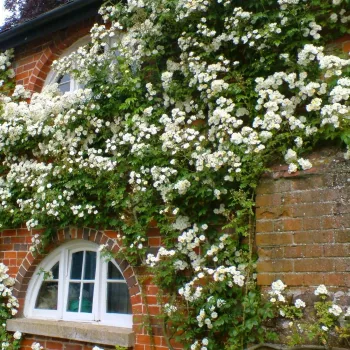
Picture a mature pergola or old tree veiled in billowing clusters of scented white blossom, creating a storybook backdrop for afternoon tea while coping calmly with brisk, salt‑tinged coastal breezes and changeable British summers. This classic rambler builds a permanent, living framework for your garden, smothering fences and arches in one spectacular midsummer flush, then decorating autumn with small, orange‑red hips that birds enjoy. As an own‑root plant, it promises a long lifespan, reliable regrowth from the base and steady, structural presence with only simple seasonal care, fitting beautifully into relaxed cottage and kitchen‑garden settings.
Usage options
| Target area | Reasoning |
|---|
| Pergola over seating or “afternoon tea” corner |
Exceptional height and spread allow Bobbie James to cloak a pergola in cascading white flowers, casting dappled shade over a sitting area in early summer. Once established, it copes well with exposed, breezy spots, creating a romantic, sheltered nook for tea‑lovers. |
| Climbing a mature tree at the garden boundary |
The long, climbing shoots can be trained into an established tree, turning a plain boundary into a summer spectacle without needing a new structure. Own‑root growth gives long‑term stability and recovery if branches are cut back hard, reassuring more cautious beginners. |
| Screening a tall fence at the back of a family garden |
Vigorous growth and moderately dense foliage form a soft, flowering screen that hides neighbouring houses and creates a traditional cottage‑garden backdrop. Self‑cleaning flowers keep the display tidy with minimal deadheading for time‑pressed homeowners. |
| Training along a sunny outbuilding or garage wall |
Once guided onto horizontal wires, the long canes quickly cover a large wall area, adding character to otherwise plain brick or render. The plant’s good heat and periodic drought tolerance suit drier walls, needing only occasional tying‑in for busy gardeners. |
| Romantic entrance arch or driveway arbour |
The abundant early‑summer blossom and strong sweet, muscatel scent create a storybook welcome at garden entrances. Own‑root plants give enduring structure and dependable re‑growth over many years, ideal for those planning long‑term families. |
| Informal country‑style hedge or boundary sweep |
Planted at wider spacings, the rose forms a flowing, informal boundary, with a single magnificent flowering followed by decorative rose hips. This suits larger plots seeking a low‑intervention, wildlife‑friendly feature that still feels carefully considered to planners. |
| Part‑shaded corner near a kitchen or utility area |
Tolerance of partial shade lets you green up less‑used side spaces, where many roses struggle. Even with some shade, the plant offers a generous midsummer flush and handsome foliage, giving reliable impact without fussy upkeep for practical owners. |
| Large rural or coastal garden with strong winds |
With deep roots on its own stock and a robust, climbing framework, the plant anchors securely and rides out wet, windy spells once established, even where salt‑tinged winds and heavy showers are common, providing reassuring permanence for coastal‑region buyers. |
Styling ideas
- Tea‑arbour romance – Train Bobbie James over a wooden pergola, underplant with lavender and catmint, and place a small bistro set beneath for summer teas – ideal for lovers of classic English romance.
- Tree‑clad storybook – Let the rambler scramble through an old apple or hawthorn, with foxgloves and bearded iris at the base – for those who enjoy naturalistic, low‑maintenance country gardens.
- White‑and‑herb fence – Soften a back fence with this white rose, fronted by yarrow, daylilies and culinary herbs – perfect for kitchen‑garden owners wanting practical beauty.
- Driveway welcome – Arch two plants over a drive or path and line the verge with hardy perennials in pastel tones – suited to families seeking a traditional, storybook entrance.
- Wildlife ribbon – Use a loose row along a boundary, letting hips develop for birds, with meadow‑style grasses nearby – a good fit for nature‑minded, time‑conscious gardeners.
Technical cultivar profile
| Trait | Data |
|---|
| Name and registration |
Climbing rambler rose marketed as Bobbie James – white climbing rambler rose - Thomas; ARS exhibition name Bobbie James; commercial climbing rose within rambler, Hybrid Multiflora and Hybrid Wichurana groups. |
| Origin and breeding |
Bred by Graham Stuart Thomas at Sunningdale Nursery Ltd., Windlesham, United Kingdom; introduced and registered in 1961, with initial distribution handled by Sunningdale Nursery for the British market. |
| Awards and recognition |
Holds the Royal Horticultural Society Award of Garden Merit (1993), indicating reliable performance, good ornamental value and sound garden worth under typical UK conditions when grown with reasonable care. |
| Growth and structural characteristics |
Very vigorous climbing habit to around 6–9 m high and 2.4–3.8 m spread, with densely thorned canes, moderately dense, glossy mid‑green foliage and generally good self‑cleaning of small spent blooms. |
| Flower morphology |
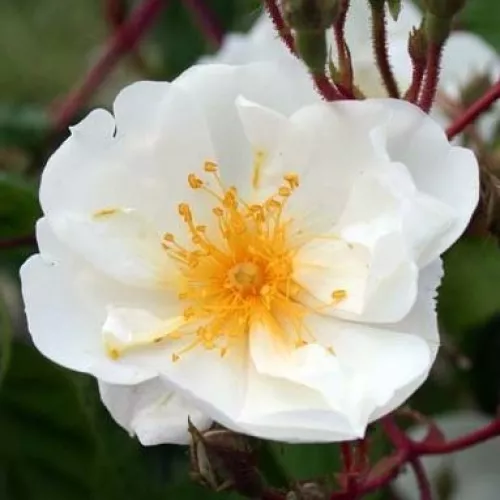
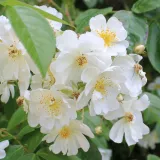
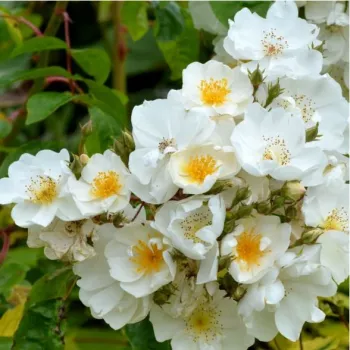
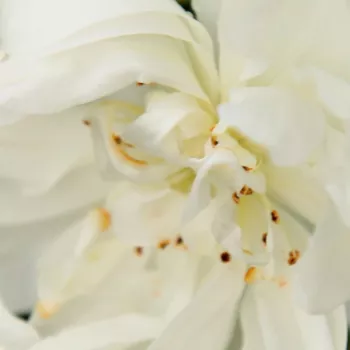
Semi‑double, flat, small flowers (about 0.5–1.5 in) produced in large clusters; 13–25 petals per bloom; non‑remontant, delivering one abundant main flowering period rather than repeat flushes through the season. |
| Colour data and phenology |
Flowers open creamy white with buttery hints at the throat, maturing to pure off‑white with silky petals and golden stamens; colour holds well with minimal fading, creating a long‑lasting, luminous early‑summer display. |
| Fragrance and aroma |
Strong, clearly perceptible sweet, muscatel fragrance that carries in still air; semi‑double flowers provide moderate pollinator attraction, with nectar and pollen access partly reduced by the petal arrangement. |
| Hip characteristics |
After flowering, the plant sets abundant small, egg‑shaped hips, around 6–10 mm in diameter, colouring orange‑red in autumn and adding seasonal interest while providing a useful food source for birds. |
| Resistance and winter hardiness |
Rated to approximately −26 to −23 °C (RHS H7; USDA 5b, Swedish zone 4); shows medium resistance to black spot, powdery mildew and rust, with good heat and periodic drought tolerance once established. |
| Horticultural recommendations |
Best for pergolas, arches, fences, tree training and large specimens with 2.3–3.6 m spacing; prefers well‑ventilated sites and may need disease monitoring in enclosed, humid courtyards or very shaded urban positions. |
BOBBIE JAMES – white climbing rambler rose - Thomas offers a spectacular scented summer curtain, long‑term structural coverage and dependable own‑root resilience, making it a thoughtful choice for those planning a lasting, romantic garden feature.