CSINSZKA – pink bedding polyantha rose - Márk
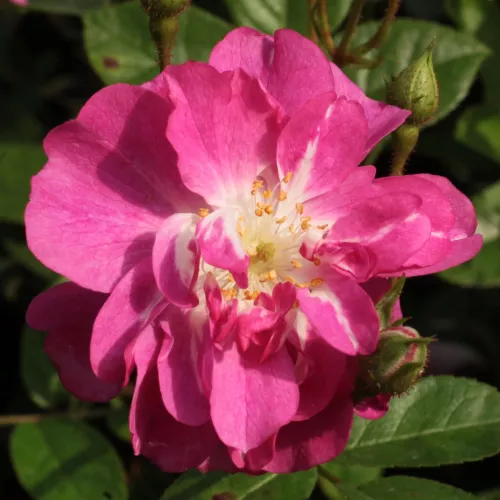
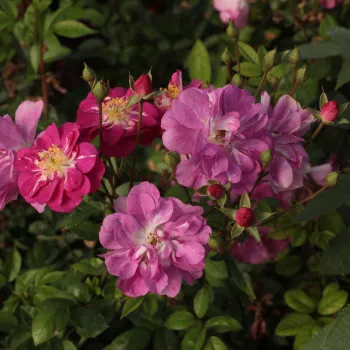
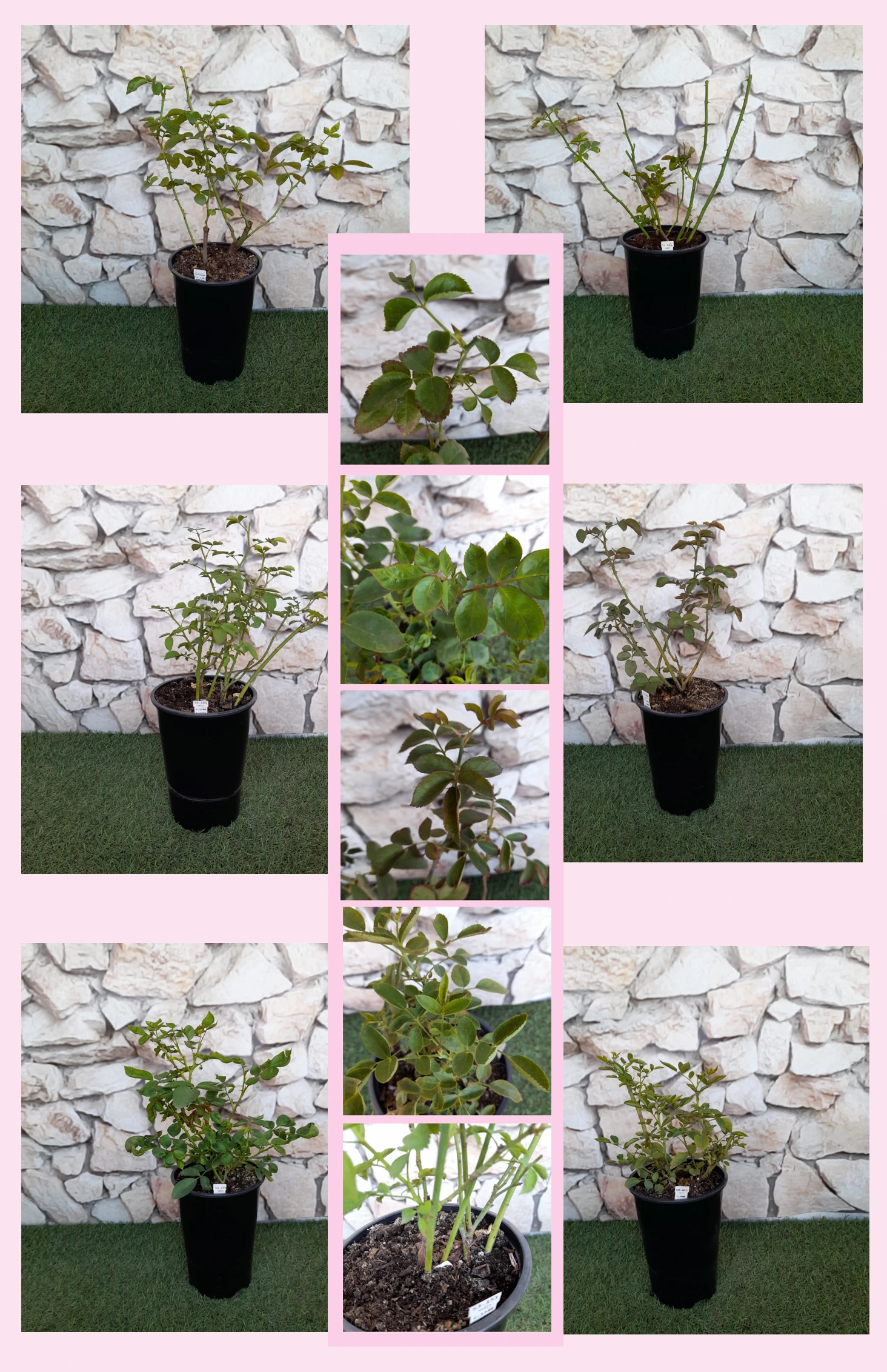
Picture gentle afternoon light on a cottage-style border where clouds of soft mid-pink blooms repeat from summer into autumn, creating a storybook backdrop around your seating area or kitchen-garden path. Csinszka’s compact, bushy habit makes it easy to fit into an average family garden, whether you prefer relaxed drifts or neat, low edging. As an own-root rose it offers reassuring longevity, quietly rebuilding from the base if stems are damaged and holding its ornamental value for years with modest care. Plant once, then allow its semi-double flowers to form an airy pink tapestry that copes well with blustery, rain-swept days near the coast and other exposed spots. In larger containers of at least 40–50 litres it provides a romantic focus for patios or doorways, while in the border it partners effortlessly with lavender, bee balm and cottage perennials. From the first year’s settling roots through stronger second-year shoots to full garden presence by year three, Csinszka supports a relaxed, low-effort approach for busy gardeners who still want traditional charm.
Usage options
| Target area |
Reasoning |
| Cottage-style flower bed near a seating area |
The compact, bushy shape and continual clusters of mid-pink blooms create a soft, romantic carpet effect at about 40–60 cm, ideal beside a bench or afternoon tea corner without overwhelming the space; perfect for the hobby gardener |
| Low, traditional hedge along a path or drive |
Planted at 35 cm intervals, Csinszka forms a neat, slightly spreading pink line that guides the eye and defines boundaries while remaining easy to prune at almost any height, suiting those who prefer structured charm with minimal effort; ideal for the family buyer |
| Mass planting in front garden beds |
With recommended spacing for 5.7–6.6 plants per m², this rose quickly reads as a continuous pink drift, giving high visual impact per square metre and reliable repeat flowering through the season for a classic streetside welcome; well suited to the homeowner |
| Coastal or wind-exposed spots in small gardens |
The low, anchoring growth and flexible, moderately thorny shoots cope well with blustery days and heavy showers, so planting in well-prepared soil gives dependable colour where taller roses might rock or snap; reassuring for the practical gardener |
| Large containers on patios, balconies or terraces |
In 40–50 litre or larger pots with good drainage, Csinszka’s modest height, glossy foliage and continual flowering give a long-season focal point that is easy to water and tidy, ideal where border space is limited; attractive to the urban gardener |
| Mixed cottage border with herbs and perennials |
The pure mid-pink shade blends effortlessly with lavender, ornamental alliums and bee balm, allowing you to build a “girly” English-countryside palette that feels cohesive rather than fussy, even when maintenance time is short; appealing for the cottage-lover |
| Low-maintenance family garden beds |
Medium disease resistance and a scentless, semi-double flower mean fewer specialised tasks, while own-root growth helps the plant recover if pruned hard or knocked back by winter, supporting a long-lived, forgiving planting scheme; ideal for the beginner |
| Wildlife-aware yet ornamental planting |
Semi-double blooms offer moderate pollinator interest in summer, followed by bright red spherical hips in autumn, adding quiet ecological value and seasonal colour without complicating care routines or pruning strategies; a good fit for the nature-conscious |
Styling ideas
- Teacup-border – Edge a small lawn or terrace with a single curving row of Csinszka, underplanting with lavender for scent and soft structure – for lovers of intimate, cottage-style afternoon tea corners.
- Kitchen-curve – Run a low hedge of Csinszka along the edge of a kitchen garden, weaving in bee balm and chives so flowers, herbs and pollinators mingle – for relaxed home growers who like romance with their vegetables.
- Pink-drift – Fill a front bed with massed Csinszka and a few clumps of ornamental alliums, letting the pink and purple orbs create a gentle, storybook welcome – for families wanting easy kerb appeal.
- Patio-arbour – Stand a pair of large containers with Csinszka either side of a light arch, threading a simple climber above for height while the roses provide the pink base – for small-garden owners seeking a focal photo spot.
- Pastel-patchwork – Mix Csinszka with soft pastels and airy grasses in a loose border, keeping all plants compact and tolerant of average care – for busy gardeners who prefer calm, feminine planting without complexity.
Technical cultivar profile
| Parameter |
Data |
| Name and registration |
Polyantha bedding rose classified as a bed rose; current trade name Csinszka, exhibition name Csinszka; marketed in the darinaROSE ORIGINAL 2-litre own-root range for family gardens. |
| Origin and breeding |
Bred by Hungarian rosarian Márk Gergely from an unknown seedling crossed with ‘Orange Glory’; introduced and first distributed by PharmaRosa Ltd. in 2002, with registration in the same year. |
| Growth and structural characteristics |
Compact bushy shrub with slightly spreading habit, around 40–60 cm high and 50–70 cm wide; moderately dense, glossy light green foliage and moderate prickliness, suitable for edging, bedding and low hedges. |
| Flower morphology |
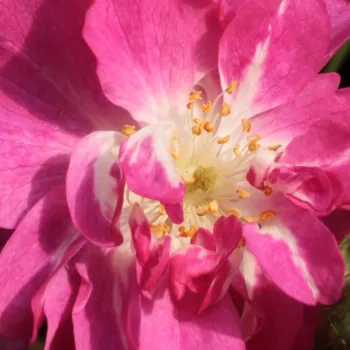
Semi-double flat blooms with 13–25 petals, borne in clusters on branching stems; small flower size of approximately 0.5–1.5 inches, with good repeat flowering and an especially abundant second flush in season. |
| Colour data and phenology |
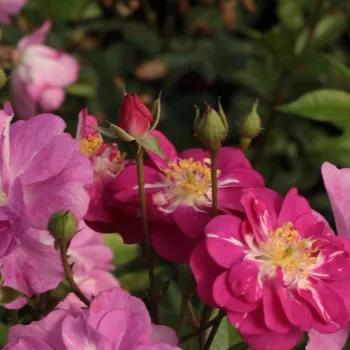
Uniform pure mid-pink colour, ARS mp, RHS 57C outer and 65C inner; buds deep pink and slightly glossy, fading gradually to pastel powder pink towards petal edges before the blooms age and drop. |
| Fragrance and aroma |
No noticeable fragrance; bred primarily for visual effect and garden structure rather than scent, making it suitable where fragrance is not required or needs to remain discreet near seating and walkways. |
| Hip characteristics |
Produces moderately abundant, bright red spherical hips, around 6–9 mm in diameter, adding autumn and early winter colour and light wildlife interest where spent flowers are not fully dead-headed. |
| Resistance and winter hardiness |
Hardy to approximately –26 to –23 °C (RHS H7, Swedish Zone 4, USDA 5b); medium resistance to powdery mildew, black spot and rust, with comments noting good frost hardiness and some drought tolerance. |
| Horticultural recommendations |
Medium maintenance; occasional pest and disease control advised. Suggested spacings: 40 cm for bedding, 35 cm for low hedges, 65 cm as specimens; suitable for mass planting, edging and larger containers with drainage. |
CSINSZKA offers compact, repeat pink flowering, durable hardiness and own-root resilience for long-term, low-fuss charm in family gardens, making it a thoughtful choice if you favour traditional cottage style.