EURYDOME – pink-yellow hybrid tea rose – Panozzo
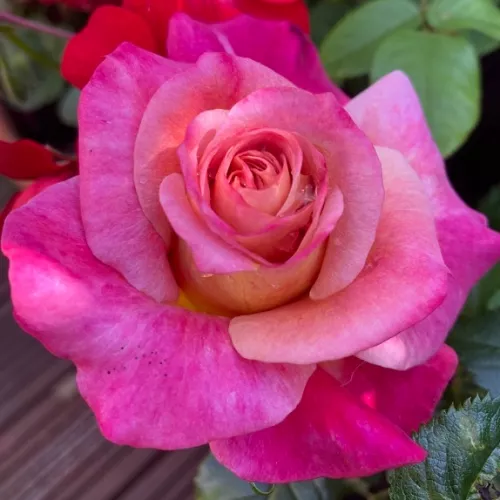
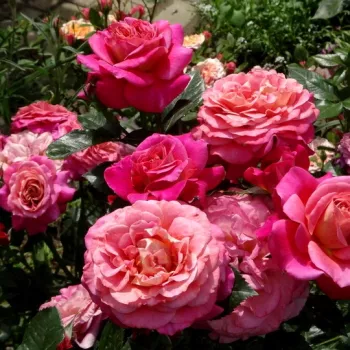
Bring a sense of storybook romance to a small or medium family garden with EURYDOME, a premium hybrid tea rose whose warm pink‑and‑peach blooms create the feel of afternoon tea beneath an arbour. Its upright, well‑branched habit and glossy, dark green foliage make it an elegant, reliable feature in a mixed border or as a specimen by a seating area. As an own‑root rose, it is designed for long garden life, regenerating well after pruning and giving stable ornamental value year after year with only moderate care. The remontant flowering pattern keeps buds and blooms coming for cutting and vase display, while medium fragrance adds a fresh, fruity note close to a terrace or path. It settles well in typical British conditions, coping with exposed spots where you need a rose that can handle wetter, windier coastlines.
Usage options
| Target area | Reasoning |
|---|
| Feature rose near a seating area or garden bench |
EURYDOME’s upright, compact hybrid tea form is easy to place beside a small terrace, bench or arbour, giving a clear focal point without overwhelming the space. Its structured growth habit keeps paths neat and makes routine pruning straightforward for beginners and busy homeowners who still want a refined cottage style in their everyday view, especially homeowners. |
| Cutting patch for home flower arrangements |
The large, high‑centred blooms with long, straight stems make this variety ideal for a small home cutting row beside a kitchen garden. Remontant flowering means the second flush is also abundant, so you can cut regularly in season without leaving gaps in the border. Medium fragrance with a fresh, fruity tone suits elegant jugs and vases indoors, pleasing hobby-gardeners. |
| Traditional mixed cottage border in a family garden |
EURYDOME works beautifully among perennials, herbs and low hedging, its bicoloured pink‑yellow flowers giving that soft, “girly” English‑cottage look. Own‑root growth supports a long‑lived planting, settling in alongside shrubs and climbers without demanding complex care. Over the first few seasons, it builds from strong roots to fuller top growth and dependable display for relaxed families. |
| Small specimen rose in a front garden or entrance bed |
With its premium, exhibition‑style blooms and glossy foliage, this rose offers a smart yet romantic welcome by a front door or gate. The tidy, upright silhouette and medium maintenance needs suit smaller plots where you want impact from a single well‑chosen plant rather than intensive planting schemes, which particularly reassures beginners. |
| Border planting in exposed or breezier suburban sites |
The strong, upright stems and dense foliage help the plant stand firmly in beds that catch the wind, anchoring the planting visually. Once established in well‑prepared soil, its own‑root system supports recovery after tougher weather, making it a good choice for ordinary family gardens that can be gusty yet still need a quietly romantic feel valued by families. |
| Roses beside patios for relaxed summer entertaining |
Medium, fresh‑fruity fragrance is most enjoyable at close quarters, making EURYDOME a good companion to a patio table or barbecue area. The repeated flushes of flowers keep the space looking dressed for informal afternoon tea or evening drinks without complicated deadheading routines, fitting the lifestyle of time‑pressed urbanites. |
| Own-root rose choice for long-term garden structure |
As an own‑root plant, EURYDOME does not rely on a graft union, so it can rejuvenate from its base and keep its varietal character over many years. This supports a long‑term layout where the rose forms part of the garden’s backbone rather than needing regular replacement, suiting buyers who value durable plantings, particularly thoughtful homeowners. |
| Raised beds and improved soils in wetter, heavier plots |
In typical UK gardens with heavier soils, planting EURYDOME into a raised or well‑drained bed lets its root system establish steadily, helping it cope when the weather turns rainy and blustery for longer spells. Over the seasons, this steady rooting underpins reliable flowering with moderate care, which is ideal for busy but style‑conscious gardeners. |
Styling ideas
- Arbour-elegance – Train a light clematis such as ‘Snow Queen’ over an arbour and plant EURYDOME at the base for formal, high‑centred blooms at eye level – perfect for romantic cottage‑style lovers.
- Kitchen-border – Line a path to the vegetable patch with EURYDOME and low herbs; cut blooms for the table while keeping a practical, easy‑care structure – ideal for home cooks with kitchen gardens.
- Frontage-focus – Use a single EURYDOME as a specimen in a small front bed, underplant with lavender or catmint for soft edging – suited to homeowners wanting smart but traditional kerb appeal.
- Mixed-shrub – Combine EURYDOME with Cornus alba ‘Spaethii’ and a simple evergreen hedge for year‑round shape and seasonal colour contrast – good for families seeking dependable, long‑term planting.
- Patio-centrepiece – Place EURYDOME in a large 40–50 litre container on a sunny terrace with pale gravel and terracotta pots for a relaxed afternoon‑tea corner – attractive for busy urban gardeners.
Technical cultivar profile
| Parameter | Data |
|---|
| Name and registration |
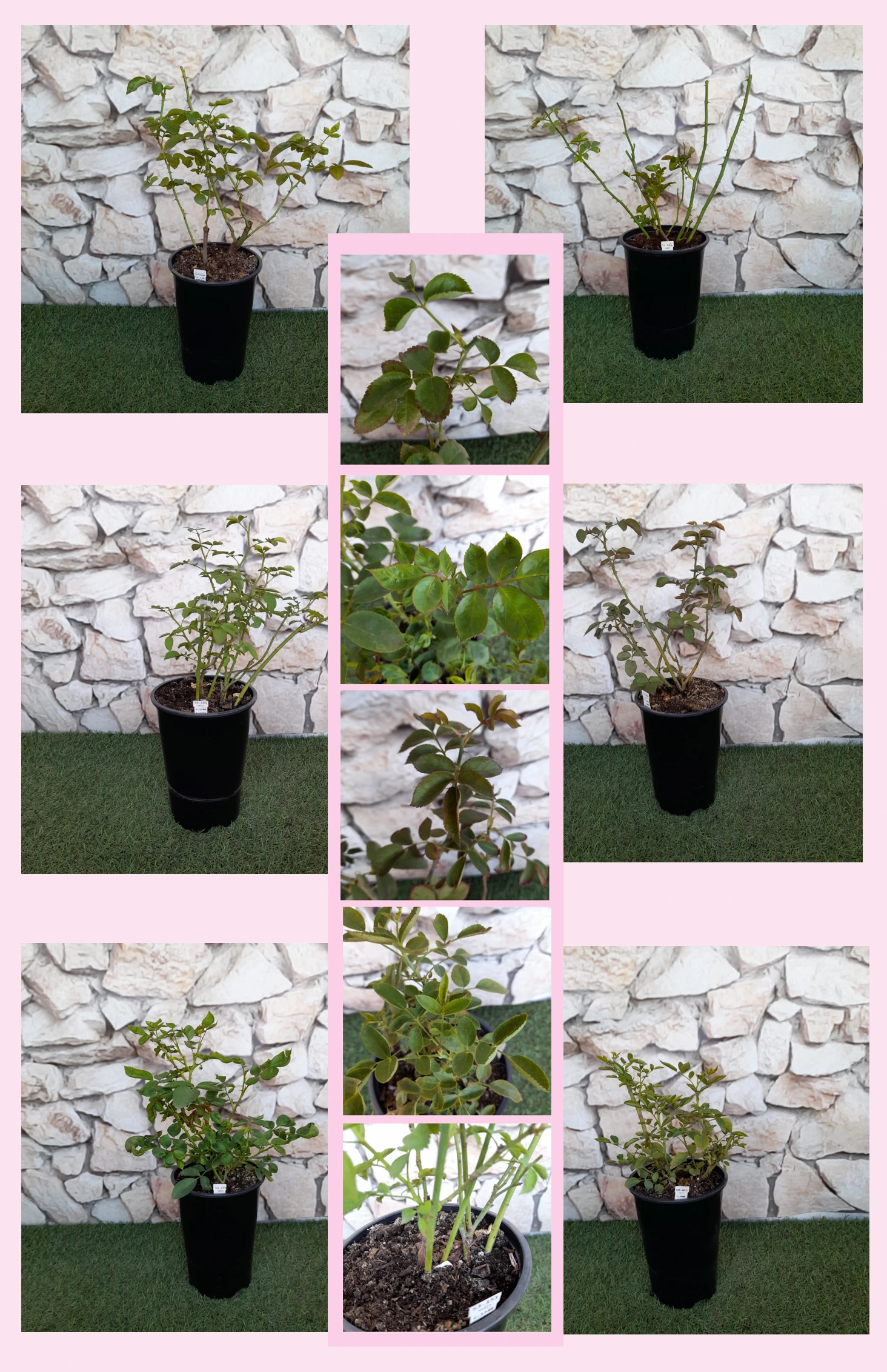
EURYDOME – pink-yellow hybrid tea rose; registered as PANlavrug, hybrid tea group, commercial hybrid tea rose type; darinaROSE ORIGINAL 2-litre own-root, premium gold cultivar authenticity verified 03.05.2025. |
| Origin and breeding |
Bred by Bernard Panozzo in France, 2006; parentage unknown; first distributed by Pépinière Leroi and Le Star de Doué; introduced to the market in 2007 as a refined garden and cutting hybrid tea. |
| Growth and structural characteristics |
Upright bush 80–110 cm high and 50–70 cm wide, with dense, glossy dark green foliage and medium prickliness; forms a tidy, well‑branched plant for borders, hedging or specimen use with moderate maintenance. |
| Flower morphology |
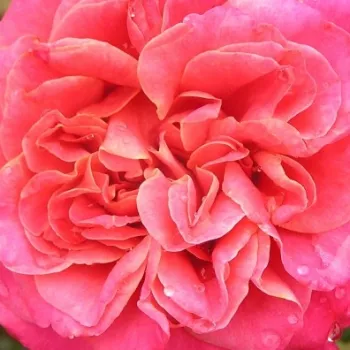
Large, high‑centred hybrid tea blooms (L, 2.75–3.95 in) carried mainly solitary; very double with 40+ petals; classic pointed buds and exhibition character; remontant with an abundant second flush in suitable conditions. |
| Colour data and phenology |
Distinctly bicoloured: golden–peach centre, mid‑pink outer petals with magenta shading; over time peach tones cream, pinks pastelise to coral‑powder; very good colour retention gives a softly shifting yet stable display. |
| Fragrance and aroma |
Medium, noticeable scent with a fresh, fruity character; best appreciated at close range around seating areas, entries and patios; heavily double blooms focus the fragrance while limiting pollen access for insects. |
| Hip characteristics |
Hip set generally limited by the very double flowers, but when present forms small spherical hips 8–12 mm across in orange‑red tones, offering modest late‑season interest without significant self‑seeding. |
| Resistance and winter hardiness |
Medium disease resistance to black spot, powdery mildew and rust; benefits from basic monitoring and occasional protection; hardy to around −21 to −18 °C (RHS H7, Swedish zone 3, USDA 6b) in well‑drained soil. |
| Horticultural recommendations |
Best in sunny positions; plant 60 cm apart for masses, 50 cm for hedges, 90 cm as specimens; allow about 2.8–3.2 plants/m²; medium maintenance, including deadheading due to weak self‑cleaning of very full blooms. |
EURYDOME – pink-yellow hybrid tea rose offers romantic, remontant blooms, a tidy upright habit and long-lived own-root reliability; consider it if you want enduring cottage-garden charm with manageable care.