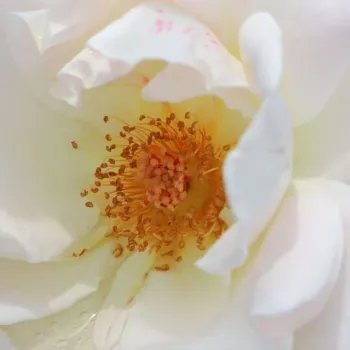
EISPRINZESSIN ® – white bedding floribunda rose – Kordes
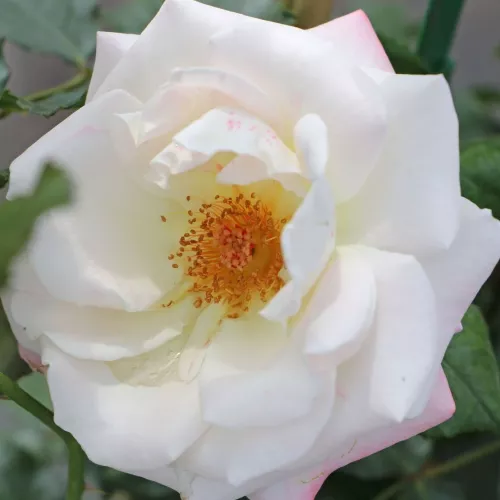
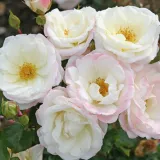
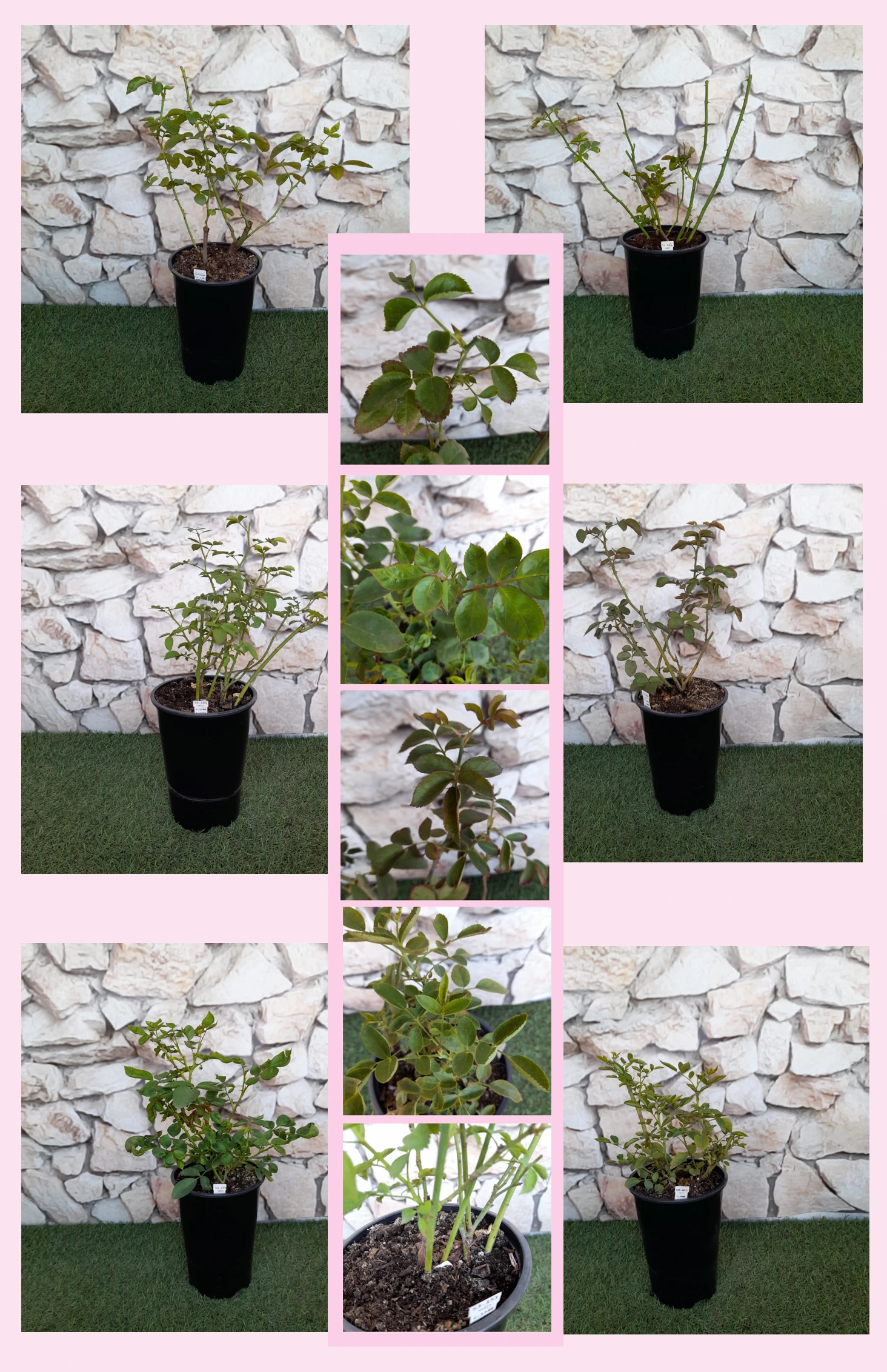
A refined floribunda with softly blushed, off‑white blooms, EISPRINZESSIN ® brings a serene, storybook mood to family gardens while coping well with blustery, rain‑laden coastal conditions. Its upright, medium‑tall habit and dense, glossy foliage create a neat, low hedge or flowering ribbon along paths and beds, without demanding complex care. As an own‑root rose it offers reassuring longevity, quietly regenerating from the base if stems are damaged, so its elegant structure and ornamental effect remain stable over many years. In a 40–50 litre container on a terrace, or grouped in borders among herbs and cottage perennials, its repeat‑flowering clusters provide season‑long colour with only moderate maintenance. Medium disease resistance and good hardiness support relaxed gardening, suiting busy households who want reliable, romantic charm rather than high‑input perfection.
Usage options
| Target area | Reasoning |
|---|
| Front‑of‑border flowerbed in a family garden |
The upright, medium‑height habit and clustered semi‑double flowers form a continuous, readable band of blooms at the front of mixed borders, giving structure without overwhelming smaller spaces; suits busy family gardeners. |
| Informal low hedge along paths or driveways |
Regular spacing at 35–45 cm creates a soft, low hedge that frames paths with repeating off‑white flowers; own‑root plants thicken gradually, offering long‑term edging without complicated pruning; ideal for traditional‑style homeowners. |
| Feature group in small and medium beds |
Planted in groups of three to five at recommended density, the rose reads as a single, full clump, its repeat flowering giving a generous effect from limited space, suiting those who want impact from few, dependable plants; perfect for compact‑garden owners. |
| Cottage‑style planting with perennials and herbs |
The cool off‑white and blush flowers sit beautifully among cottage plants such as Russian sage and blazing star, softening kitchen‑garden areas and vegetable plots with a feminine, “girly” accent; appealing for romantic cottage‑garden lovers. |
| Large containers on terraces or patios |
In 40–50 litre pots this upright rose keeps a tidy outline and repeat flowers close to seating areas, while own‑root vigour supports recovery after winter and routine pruning, providing a practical long‑term container subject for urban balcony and patio owners. |
| Part‑shaded corners and north‑east aspects |
Tolerance of partial shade lets you brighten less‑sunny spots where other roses may sulk, with pale blooms that remain luminous in low light, extending planting options around buildings and fences for flexibility‑seeking gardeners. |
| Low‑input, family‑friendly beds |
Moderate disease resistance, notably good black spot tolerance, supports lower chemical use; combined with own‑root resilience, it suits gardens where children and pets play and where simple, routine care is preferred by health‑ and eco‑conscious families. |
| Exposed or open sites in variable weather |
The sturdy, upright growth with dense foliage copes well with ordinary British winds and rain, maintaining its shape and flower display where more fragile types might flop, which is reassuring for gardeners in breezy, unsettled climates. |
Styling ideas
- Cottage Ribbon – Plant a loose line along a path, interweaving with catmint and Russian sage for a soft, romantic border – suited to lovers of traditional English cottage gardens.
- Tea Terrace – Position a trio in 40–50 litre containers near seating, underplanted with lavender and thyme for fragrance – ideal for homeowners creating a cosy afternoon‑tea corner.
- Kitchen Edge – Use as a low hedge to frame kitchen‑garden beds, mixed with chives and marigolds for a productive yet pretty look – perfect for practical cooks who enjoy a rural feel.
- Moonlit Strip – Combine with silvery foliage such as lamb’s ear and Artemisia so pale blooms glow at dusk – appealing to evening garden hosts and quiet after‑work relaxers.
- Cool Contrast – Set against dark evergreens or yew to emphasise the off‑white flowers and glossy foliage – best for design‑minded gardeners who like crisp, structured planting.
Technical cultivar profile
| Aspect | Data |
|---|
| Name and registration |
Floribunda bed rose; registered as KORettiflus, marketed as EISPRINZESSIN ® and Ice Princess in exhibition; verified premium gold cultivar for darinaROSE® ORIGINAL 2‑litre own‑root sales. |
| Origin and breeding |
Bred by Tim‑Hermann Kordes, W. Kordes’ Söhne, Germany, around 2006; introduced commercially in 2015, with parentage undocumented but selected for garden performance and soft white‑pink effect. |
| Growth and structural characteristics |
Upright bush rose, typically 75–105 cm tall and 50–70 cm wide, with dense, dark glossy foliage and moderate prickles, forming a compact, well‑filled shrub suited to beds, edging and containers. |
| Flower morphology |
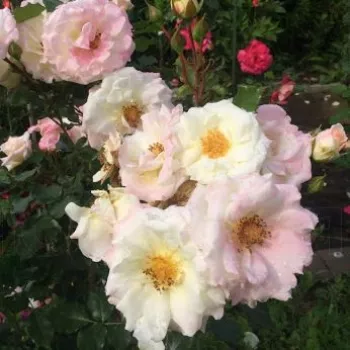
Semi‑double, cup‑shaped blooms with 13–25 petals in clusters, large‑flowered floribunda type; repeat‑flowering, with a notably generous second flush that extends ornamental value through the season. |
| Colour data and phenology |
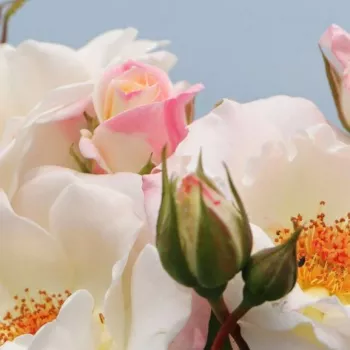
Base colour off‑white (RHS 155D) with delicate pale pink edging (around 65D) on newly opened flowers; pink tints fade in full bloom, giving a cool, clean look that remains fresh as petals age. |
| Fragrance and aroma |
Light, classic rose scent noticeable only at close range, adding refinement without overwhelming nearby seating or dining areas; fragrance best appreciated on still, warm days or in sheltered corners. |
| Hip characteristics |
Rose hip production usually slight; where present, small spherical orange‑red hips 6–10 mm across may develop, adding discreet late‑season interest without significantly reducing flowering. |
| Resistance and winter hardiness |
Hardy to approximately −21 to −18 °C (RHS H7, USDA 6b, Swedish Zone 3); moderate overall disease resistance with good black spot tolerance, plus acceptable heat tolerance given watering in dry spells. |
| Horticultural recommendations |
Suited to beds, groups, edging, parks and urban plantings; plant 35–75 cm apart; prefers well‑drained soil and regular watering; medium maintenance with occasional pest and disease checks. |
EISPRINZESSIN ® offers cool off‑white floribunda blooms, reliable repeat flowering and long‑term stability from its own‑root form, making it a thoughtful choice for relaxed, romantic gardens where you prefer beauty with modest effort.