ESPRESSO – red bedding floribunda rose - Spek
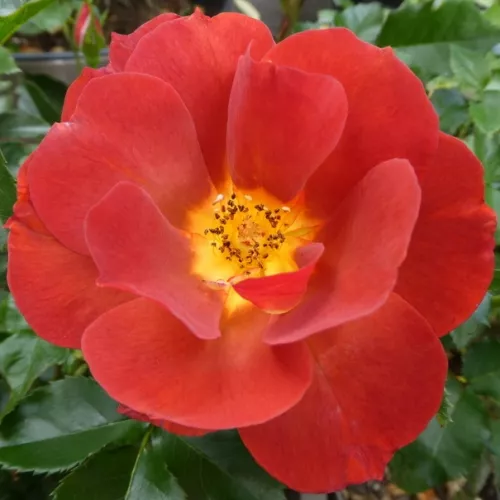
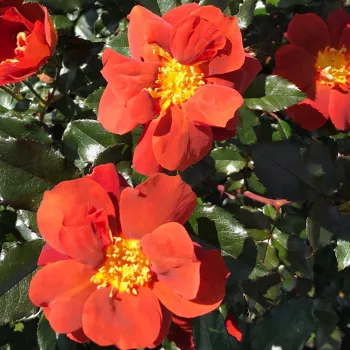
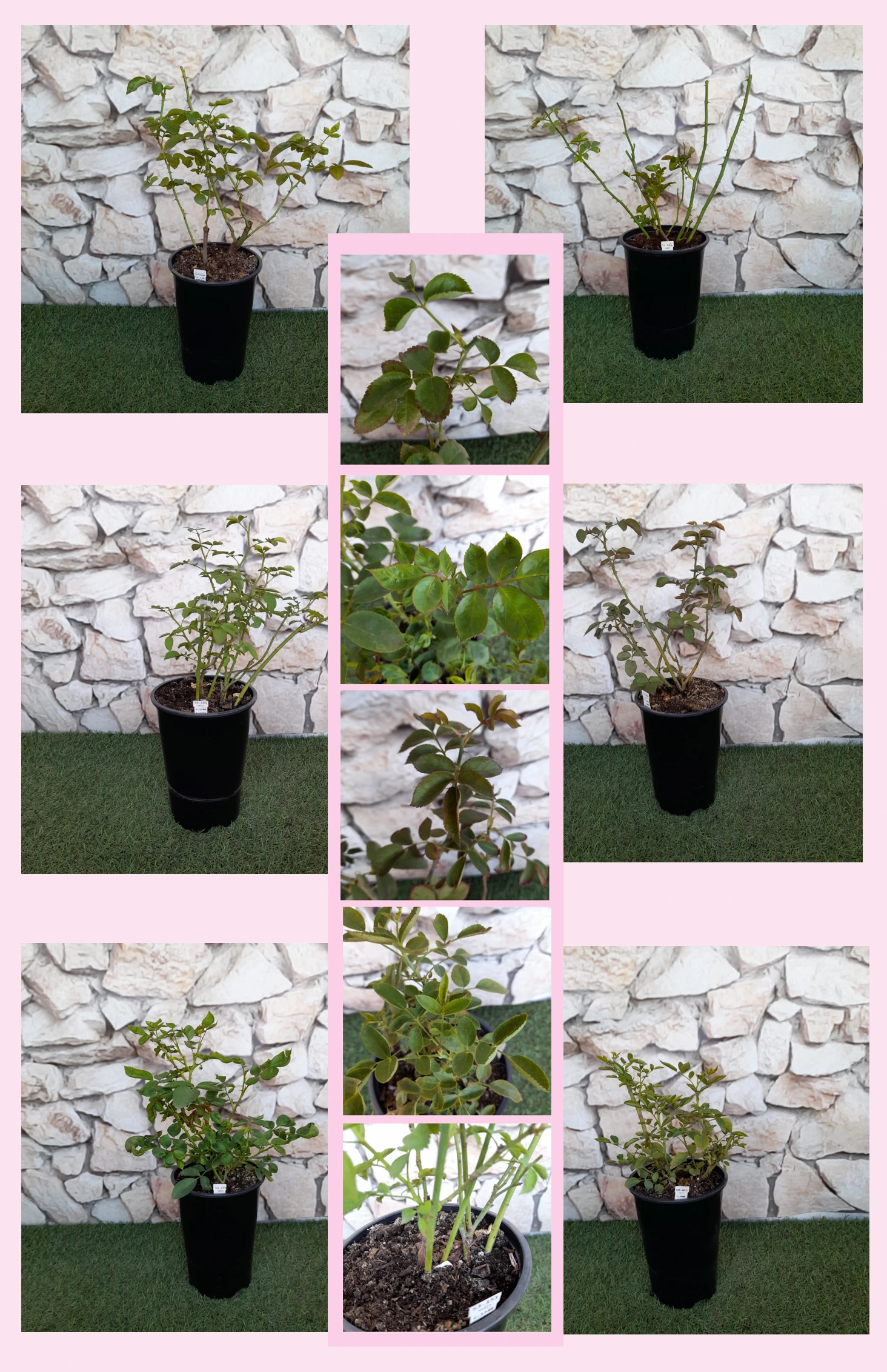
With its rich, coffee-toned brick-red blooms and glowing golden centres, Espresso brings an immediate sense of romance and storybook cosiness to even the smallest family garden. This compact, upright, bushy floribunda makes light work of maintenance, needing only modest pruning and watering while flowering repeatedly from early summer into autumn. Dense, glossy foliage stays attractive thanks to its reliable disease resistance, ideal where damp weather or a breezy, exposed setting can challenge more delicate roses along the coast. As an own-root rose, it offers reassuring longevity, quietly rebuilding and renewing itself after hard winters or a lapse in care, so you enjoy a stable, mature shrub over many years. In a 40–50 litre container on a terrace, or mass-planted in beds and borders, its tidy habit and warm, changing colour tones are effortless to weave into a cottage-style scheme. Over time, you will see a gentle development arc in the garden picture, with roots establishing in the first year, stronger shoots and structure in the second, and full ornamental impact by the third, all with refreshingly simple planting and aftercare.
Usage options
| Target area | Reasoning |
|---|
| Compact front-of-border bedding in a family garden |
Espresso’s upright, bushy structure and moderate height create a neat, legible edge to mixed borders without blocking views across a small to medium garden. Its compact habit keeps paths clear and makes deadheading easy for beginners. |
| Low-maintenance cottage-style rose bed with seasonal perennials |
This floribunda repeats well with only light pruning and average watering, so you gain months of colour without a demanding care regime. It suits busy households who want traditional charm but have limited time for detailed rose care for hobby-gardeners. |
| Long-lived structural rose in a mixed shrub planting |
Being grown on its own roots, Espresso can regenerate from the base after frost damage or hard pruning, avoiding problems with suckers and keeping the original variety for decades. This stability gives a dependable backbone in evolving family gardens for homeowners. |
| Colour-anchoring feature in a small cottage-style scheme |
The unusual rust-red, brick and coral shades with a golden centre provide a warm focus point that ties together terracotta pots, clay soil tones and kitchen-garden planting. Its consistent, rich palette makes layout planning simpler for style-lovers. |
| Urban front garden or pavement-side planting |
Espresso shows good urban tolerance and stands up well to traffic dust and wind, while its disease resistance helps foliage stay clean despite humidity and fluctuating temperatures. This robustness suits exposed, street-facing beds for city-gardeners. |
| Container planting for patios, terraces and balconies |
In a 40–50 litre or larger container with free-draining compost, the tidy growth and moderate size stay proportionate, giving a strong vertical accent without overwhelming the space. Container culture also simplifies soil management on heavy clay for small-space-owners. |
| Mass planting for continuous, romantic flowering carpets |
Planted at the recommended density, Espresso quickly knits into a cohesive, flowering carpet that suppresses weeds and looks harmonious even in simple, rectangular beds. Its remontant habit keeps these areas lively throughout summer for family-gardens. |
| Resilient rose choice for breezy, damp-prone locations |
Strong resistance to black spot and powdery mildew means foliage stays ornamental where high humidity and wind-driven rain often mar other roses, particularly in more exposed gardens near the coast. This reduces spraying and worry for low-maintenance-seekers. |
Styling ideas
- Kitchen-border warmth – Combine Espresso with thyme, chives and terracotta pots to echo its brick-red tones and golden centres – ideal for cooks who like their herbs framed by roses.
- Soft-hedge rhythm – Plant in a low, gently curving line along a path, repeating at 30–35 cm for a tidy, flowering hedge – perfect for families wanting clear boundaries without hard fencing.
- Container focus – Use a single shrub in a 50 litre clay pot with trailing sedum at the rim – suited to balcony and patio owners seeking one strong, easy-care statement.
- Cottage patchwork – Weave Espresso through a bed of foxgloves, hardy geraniums and sedums for a romantic, layered tapestry – appealing to lovers of traditional English cottage borders.
- Brick-and-gravel scheme – Set Espresso against brick walls or gravel paths where its rust-red blooms echo the masonry – for designers wanting a coherent, low-upkeep front garden.
Technical cultivar profile
| Parameter | Data |
|---|
| Name and registration |
Espresso (SPEkbrown), bedding floribunda rose, shrub/floribunda exhibition type; ARS exhibition name Espresso; part of the Bedding rose collection, commercial group bed rose. |
| Origin and breeding |
Bred by Jan Spek Nurseries in Boskoop, Netherlands, around 2013; introduced by Jan Spek Rozen B.V. in 2019 after registration in 2013; parentage officially listed as unknown. |
| Awards and recognition |
Awarded Certificates of Merit at Bagatelle, Paris (2019), Belfast (2019) and The Hague (2020), reflecting strong garden performance and decorative value under trial conditions. |
| Growth and structural characteristics |
Compact, upright, bushy shrub reaching about 60–90 cm in height and 40–65 cm spread, with dense, glossy medium to dark green foliage and only slight prickliness on the stems. |
| Flower morphology |
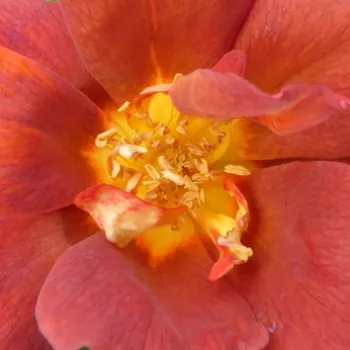
Semi-double, flat, cluster-flowered blooms of medium size (approx. 4–7 cm), with 13–25 petals; remontant habit providing abundant repeat flushes and an especially strong second flowering. |
| Colour data and phenology |
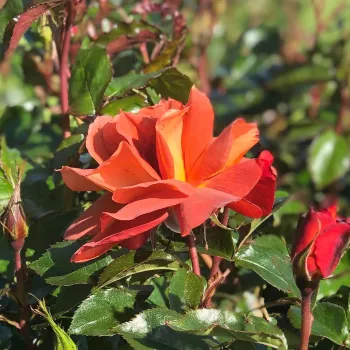
Brick-red, rust-tinted petals with a vivid golden-yellow centre; tones fade through salmon and coral pink with a creamier heart, giving a dynamic colour show from bud to petal fall. |
| Fragrance and aroma |
Moderate, distinct scent with a spicy, slightly sweet character; fragrance most noticeable at close range around the main flowering periods, adding sensory interest without overwhelming nearby seating. |
| Hip characteristics |
Produces only slight numbers of hips; occasional small, spherical, light to bright red hips about 8–13 mm in diameter, contributing modest extra seasonal interest after flowering has finished. |
| Resistance and winter hardiness |
Rated hardy to approximately –21 to –18 °C (RHS H7, Swedish zone 3, USDA 6b); resistant to black spot and powdery mildew, with moderate rust tolerance and good heat acceptance. |
| Horticultural recommendations |
Best in full sun with well-drained soil; ideal for beds, edging, mixed borders and low specimens; plant 30–55 cm apart; low maintenance, with only light pruning and average watering needs. |
Espresso Bedding rose SPEkbrown offers easy repeat flowering, reliable disease resistance and long own-root longevity in a compact form, making it a thoughtful, low-effort choice for cottage-style gardens.