Climbing and rambling roses

90-144-1
90-144-2

Hybrida

Climbing rose

- – -

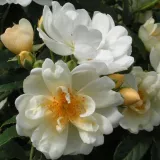
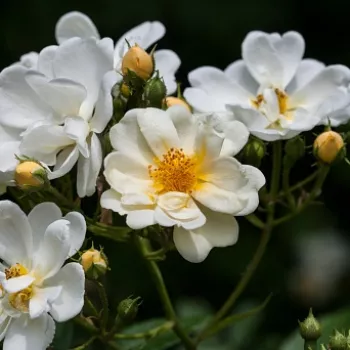
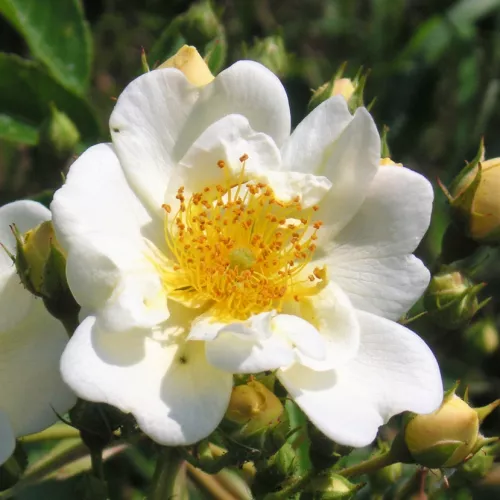
Snow-white petals with a sunny lemon-yellow centre and golden-yellow stamens. - rambler, climbing rose - no reliable data on fragrance strength - scent description not available

– Compact rambler for pergolas and arches
– Prolific clusters of soft white blooms
– Clean self‑shedding flowers, little deadheading
– Reliable medium disease resistance
– Decorative red hips add autumn interest
Special feature: Awarded Certificate of Merit at Lyon International Competition of New Roses (2020).
Origin guarantee – Proportional arrangement
Hybrida
darinaROSE® ORIGINAL 2-litre own-root potted rose
21,10 £
Unfortunately, we are currently unable to ship to the United Kingdom; we only deliver to countries within the European Union. For more information, please contact us!
4 (5603)
facebook   twitter

HYBRIDA – white rambler climbing rose

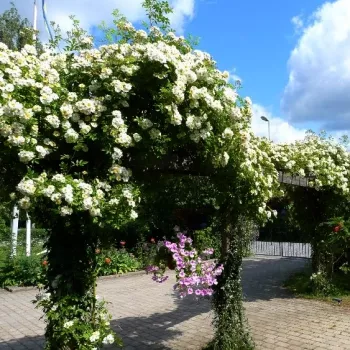
Plant HYBRIDA when you dream of afternoon tea under a leafy arbour: its upright rambler habit is ideal for pergolas and arches, and the snow-white clusters with a sunny lemon-yellow eye create an instantly romantic cottage atmosphere. This cultivar flowers once in early summer, but does so with impressive abundance, forming dense, cup-shaped clusters along the canes that shed their spent blooms cleanly, keeping the plant looking fresh with hardly any deadheading. On its own roots HYBRIDA builds a long-lived framework that can regenerate from the base and remain structurally stable for decades with only moderate care. It copes reliably with exposed family plots where winds meet heavier soils by benefiting from improved drainage in raised beds that suit coastal and wetter climates. Medium maintenance means a simple annual tidy and basic pest checks are usually sufficient, while its good resistance to powdery mildew and black spot supports easy-care health. Over time you will notice the natural development arc as underground roots strengthen in the first year, above-ground shoots build structure in the second, and by the third season HYBRIDA takes on its full ornamental character around your seating area.


Usage options

Target areaReasoning
Garden arbour or pergola in a family garden HYBRIDA’s upright rambler habit and 120–200 cm height make it easy to guide over modest arbours, creating a cosy, storybook tunnel of white and lemon flowers in early summer with minimal training tasks, ideal for a relaxed homeowner.
Small cottage-style front garden on heavy soil Suitable for average UK plots, HYBRIDA copes with medium maintenance and disease resistance; planted in slightly raised, well-drained beds it roots deeply and anchors well even where clay dominates, reassuring the time-poor beginner.
Romantic seating corner or afternoon tea nook Once-flowering, self-cleaning clusters give a concentrated flush that feels special around a bench or bistro set, while dark green foliage provides a calm backdrop the rest of the year, pleasing the cottage-garden enthusiast.
Training into a small tree or pillar The moderate height and flexible canes suit gentle spiralling into a small tree crown or onto a sturdy pillar, forming a vertical veil of bloom without overwhelming the support, attractive for the imaginative garden planner.
Wall, fence or garage side in partial shade HYBRIDA tolerates partial shade, so a north-east or east-facing wall still becomes a bright focal point; its own-root longevity means a more permanent living screen for the practically minded householder.
Mixed cottage border with perennials The semi-double, cluster-flowered habit weaves well among perennials, while once-flowering simplicity reduces pruning decisions; combine with airy perennials for an informal look that suits the relaxed family gardener.
Large container or half barrel near the patio In a 40–50 litre or larger container HYBRIDA can be trained onto an obelisk, bringing height and romance close to the house; own-root growth allows steady renewal in the pot, appealing to the busy urban gardener.
Informal park-style corner or secondary garden area Medium maintenance and good self-cleaning make HYBRIDA suitable for less-frequented corners, where once-flowering display and decorative hips add seasonal interest with limited intervention, useful for the low-input owner.

Styling ideas

  • Arbour-romance – Train HYBRIDA over a simple wooden arbour with gravel beneath and a small bistro set, for a white-and-lemon tunnel that frames afternoon tea – ideal for cottage-style romantics.
  • Kitchen-border – Let the rambler rise at the back of a kitchen garden bed, underplanted with herbs and soft fruit for a productive yet pretty scene – perfect for rural kitchen-garden keepers.
  • Pastel-partner – Combine HYBRIDA with soft pink or lilac perennials and low hedging to create a gentle, feminine frontage – suited to those favouring a “girly” English country look.
  • Tree-draped – Allow the rose to climb into a small ornamental tree, where its early-summer white clusters cascade through green foliage – appealing to creative gardeners who like naturalistic effects.
  • Patio-pillar – Grow HYBRIDA in a 50 litre half barrel with a slim obelisk, bringing vertical bloom close to doors or seating – convenient for space-conscious urban terrace owners.

Technical cultivar profile
ParameterData
Name and registration HYBRIDA – white rambler climbing rose, rambler group, commercial climbing rose type; registered cultivar name not documented, collection classification: climbing rose for garden and landscape use.
Origin and breeding Bred by Pépinières et Roseraies Georges Delbard in France, with parentage not recorded; breeding year noted as 1941, later introduced to market with incomplete registration date information.
Awards and recognition Lyon International Competition of New Roses, Certificate of Merit in the cluster-flowered category in 2020, underlining its garden and ornamental value in professional trial conditions.
Growth and structural characteristics Upright rambler habit reaching 120–200 cm in height and 60–110 cm spread, with moderately dense, dark green foliage and densely thorned stems, forming a structured, trainable framework over supports.
Flower morphology Semi-double, cup-shaped flowers, small size (0.5–1.5 in), borne in clusters; 13–25 petals, once-flowering in early season, with good self-cleaning that reduces deadheading and keeps the plant tidy.
Colour data and phenology Buds open pale lemon-yellow, quickly fading through cream to snow-white petals with a lemon-yellow centre and golden stamens, giving a cool, clean effect during the main early-summer flowering period.
Fragrance and aroma No reliable information is available on fragrance character or strength; HYBRIDA is primarily selected and recommended for its visual effect and climbing habit rather than for pronounced scent.
Hip characteristics Produces moderately abundant, ellipsoid red hips, approximately 10–14 mm diameter, adding subtle autumn interest and seasonal colour contrast against the dark green foliage and supporting wildlife structure.
Resistance and winter hardiness Hardy to around –21 to –18 °C (USDA 6b), Swedish Zone 3; good resistance to powdery mildew and black spot, medium susceptibility to rust, tolerates heat reasonably with moderate drought tolerance under watering.
Horticultural recommendations Best on pergolas, arbours, walls, small trees or as a specimen; plant 55 cm apart for masses, 50 cm for hedges, 90 cm as specimens, allowing partial shade and providing regular watering in prolonged dry spells.

HYBRIDA – white rambler climbing rose offers abundant once-a-year flowering, tidy self-cleaning clusters and long-lived own-root growth for relaxed structure, making it a thoughtful choice if you prefer enduring, low-fuss garden romance.
Detailed product attributes

Product Identification Data

Product Name: HYBRIDA – white rambler climbing rose
Product Type: darinaROSE® ORIGINAL - 2-litre own-root potted rose
Cultivar Authenticity: Verified:16.07.2025
Cultivar Quality Rating: premium bronze
Item Number: [1494] 90-144 (14.02.2026) darinarose.co.uk

Name and Registration

Cultivar Synonym: Hybrid Helena
Current Trade Name: Hybrida Climbing rose
Rose Group: Rambler
Commercial Type: rambler, climbing rose
Commercial Group: Climbing rose
Collection: Climbing rose

Origin and Breeding

Introduction Year: Information not available
Registration Year: Data not available
Breeder: -
Breeding Company / Institution: Pépinières et Roseraies Georges Delbard (France)
Breeding Year: -, 1941
Parentage: unknown

Awards and Honours

Competition and Show Awards: Lyon International Competition of New Roses – Certificate of Merit (cluster‑flowered) (2020)

Growth and Structural Characteristics

Height: 3.9-6.6ft (120-200 cm)
Spread: 2-3.6ft (60-110 cm)
Growth Habit: upright
Foliage: The variety has moderately dense foliage, the surface texture of the leaves is not clearly classifiable and their colour is a dark green shade.
Prickliness: densely thorned
Self-Cleaning Description: According to sources, spent blooms shed cleanly and the shrub is largely self-cleaning, requiring only minimal subsequent tidying.
Self-Cleaning Intensity: self-cleaning good

Flower Morphology

Petal Count: 13-25
Flower Fullness: semi-double
Flower Shape: cup-shaped
Flower Size: S (0,5-1,5 in)
Inflorescence Type: cluster-flowered
Colour Code: ARS code: not available RHS code: not available
Repeat Flowering: Not remontant; flowers once.

Colour Data and Phenology

Colour: white
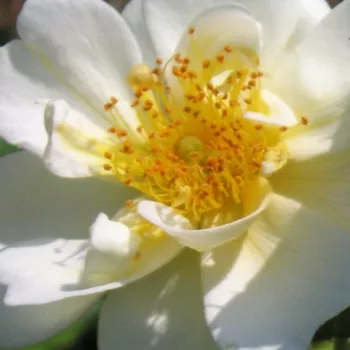
Flower Colour Description: Snow-white petals with a sunny lemon-yellow centre and golden-yellow stamens.
Closed Bud: Pale lemon–butter yellow with a slightly glossy surface and an ivory edge on the outer petals.
Newly Opened Flower: Cream-white outer petals; the centre soft butter-yellow with golden-yellow stamens.
Full Bloom: In full bloom it forms a large, double rosette flower whose centre is a deeper violet-purple, while the outer petals are a paler pinkish-purple, in places almost whitish. The petal margin is slightly darker, lightening towards the base, the reverse side.
Before Fading: The yellow tones recede, fading to ivory–porcelain white, with a clean, cool overall effect.
Colour Fading Description: Light yellow at opening, fading to white within a short time.

Fragrance and Aroma

Fragrance Strength: no reliable data on fragrance strength
Fragrance Character: scent description not available
Pollinator Attraction: Double, cupped, very many‑petalled flowers tend to hide the stamens, so as nectar and pollen sources they are poorly accessible to pollinators; flower form (simple/half‑double/double) and stamen accessibility therefore reduce their attractiveness to polli
Pollinator-Friendly Rating: Limited pollinator-friendliness; primarily an ornamental cultivar

Hip Characteristics

Hip Shape: ellipsoidal
Hip Colour: red
Hip Comment: Moderately abundant, ellipsoid-shaped red rose hips, 10–14 mm in diameter.

Resistance and Hardiness

Hardiness (°C): -21–-18 °C
Heat and Drought Tolerance Description: It tolerates summer heat well, and several sources describe it as heat‑ and frost‑tolerant. Its drought tolerance is rather moderate: during prolonged periods of low rainfall it requires regular watering.
Disease Resistance: medium
  • powdery mildew – resistant
  • black spot – resistant
  • rust – medium

Horticultural Recommendations

Recommended Planting Distance: for mass planting 55 cm, for hedging 50 cm, as a specimen 90 cm
Planting Density: in square planting 3,2 plants/m², in hexagonal arrangement 3,7 plants/m²
Partial Shade Tolerance: suitable for partial shade
Maintenance Requirement: Maintenance requirement medium; occasional pest and disease control required.
Primary Uses: pergola, arbour, wall training, tree training, park, specimen

Comments

Strengths: Origin guarantee – Proportional arrangement
Companion Plants: Crocosmia sp - Garden montbretia
Ilex crenata - Globe-shaped serrated-leaved Japanese holly
Knautia macedonica 'Red Knight' - Macedonian scabious
Comment: -
HYBRIDA – white rambler climbing rose
Snow-white petals with a sunny lemon-yellow centre and golden-yellow stamens. - rambler, climbing rose - no reliable data on fragrance strength - scent description not available
Online rose purchase - rambler, climbing rose - Hybrida - white - (3.9-6.6ft (120-200 cm))
Inflorescence: cluster-flowered Height: 3.9-6.6ft (120-200 cm) Flower shape: cup-shaped Winter hardiness: 3b white - - rambler, climbing rose - Flower size: S (0,5-1,5 in) Flower size: S (0,5-1,5 in) - Height: 3.9-6.6ft (120-200 cm) Height: 3.9-6.6ft (120-200 cm) - Flower fullness: semi-double Hybrida - Roses in the garden | darinaROSE® Original - premium bronze -

We showcase the external appearance of the roses available for online purchase from our webshop.


Which product type is right for you?


Information

In what condition do we send the rose from our online webshop?

Let us ask ourselves the question: What do I want to use the rose for?
Flower? - Location? - Cover? - Fragrance? - Height? - Breeder? - Rose hips?

Rose purchase information
Methods of payment - Delivery charges - Delivery - Complaints handling

Care guide

Our product is a rose grown with pharmaROSA®’s unique cultivation technology!

2-litre, own-root, potted rose.
With a shoot system appropriate to the season.
With a root system that thoroughly permeates the growing medium.
Quality compliant with the requirements of the E.N.A. (European Nurserystock Association).
Supplied in unique packaging that prevents damage.
Can be planted during frost-free periods.
True-to-variety rose bush with a unique identifier.

The pharmaROSA® own-root potted rose is a well-rooted plant that supports reliable establishment when planted and cared for properly, so it can be planted whenever the soil is not frozen.


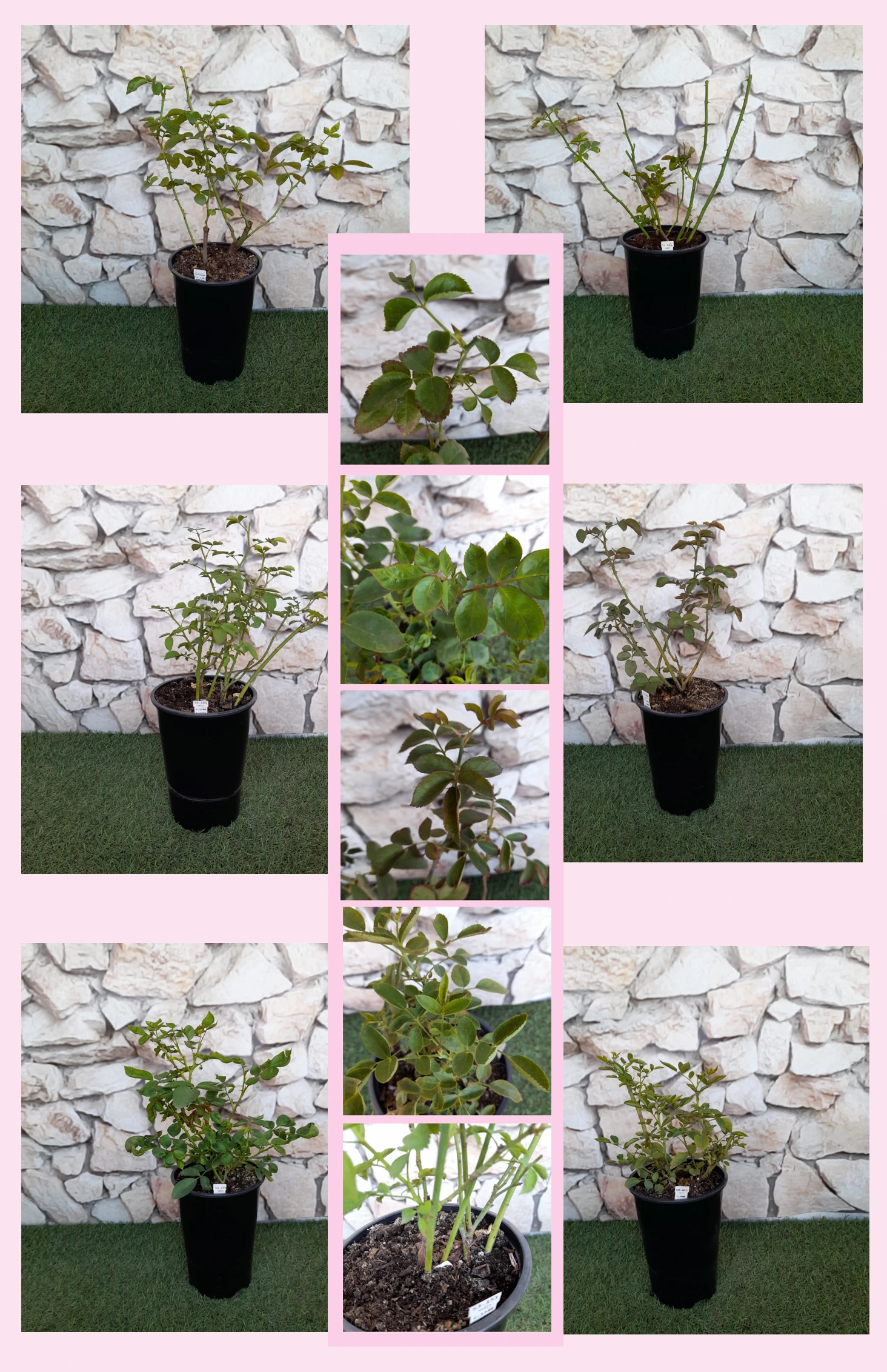
Crop overview: several varieties and growth stages in a short crop section.
Shoot system: intensive growth of fresh basal shoots on a young plant.
Root system: demonstration of a vigorous root system permeating the growing medium, by removing the pot.
Balance: mature plant with root system and shoots in harmony with each other.

Information about the videos
The video series is not a “seasonal showcase”; it illustrates the essence of pharmaROSA® own-root cultivation in a tangible way: how the plant is built up, what the root system is like and how the shoot system regenerates. The recordings were therefore made at different times and with plants at various stages of development, so mixed foliage levels and differing stages of growth may appear in the videos. They are not a ‘sample’ of the batch dispatched, but a visual explanation of how the technology works. The current condition of the rose available to order — typical for the given period and similar to what you can expect to receive in the parcel — is shown in the upper part of the product page.

pharmarosa.lupharmarosa.bgpharmarosa.atpharmarosa.compharmarosa.depharmarosa.ropharmarosa.sipharmarosa.skpharmarosa.hrpharmarosa.itpharmarosa.frpharmarosa.grpharmarosa.bepharmarosa.dkpharmarosa.nlpharmarosa.iepharmarosa.plpharmarosa.ptpharmarosa.espharmarosa.ltpharmarosa.sepharmarosa.lvpharmarosa.eepharmarosa.fipharmarosa.rudarinarose.co.ukpharmarosa.cz

Product types

Pages for private customers
Garden roses for the family garden, with minimal care  → ORIGINAL®
Premium garden roses – instant impact, a truly showpiece garden  → EXTRA®
Pages for professionals and private customers
Roses for public spaces – large areas, sustainable maintenance  → NATURAL®
Roses for projects – hedge and row planting, fast implementation  → RAPID®
For professional partners only
Production – propagation material for garden roses, wholesale  → NEONATAL®

Company details

PharmaRosa Ltd.
Company registration number: 01-09-717479
VAT number: 13075314-2-43
Plant health registration no.: HU130721
Bank account (IBAN):
HU85117631891388688400000000
BIC (SWIFT): OTPVHUHB
Bank name: OTP Bank Nyrt.