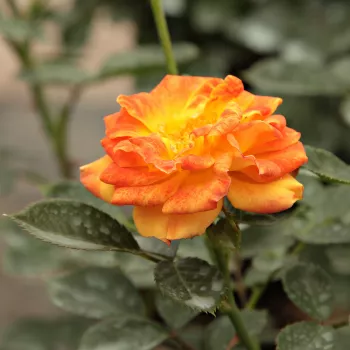
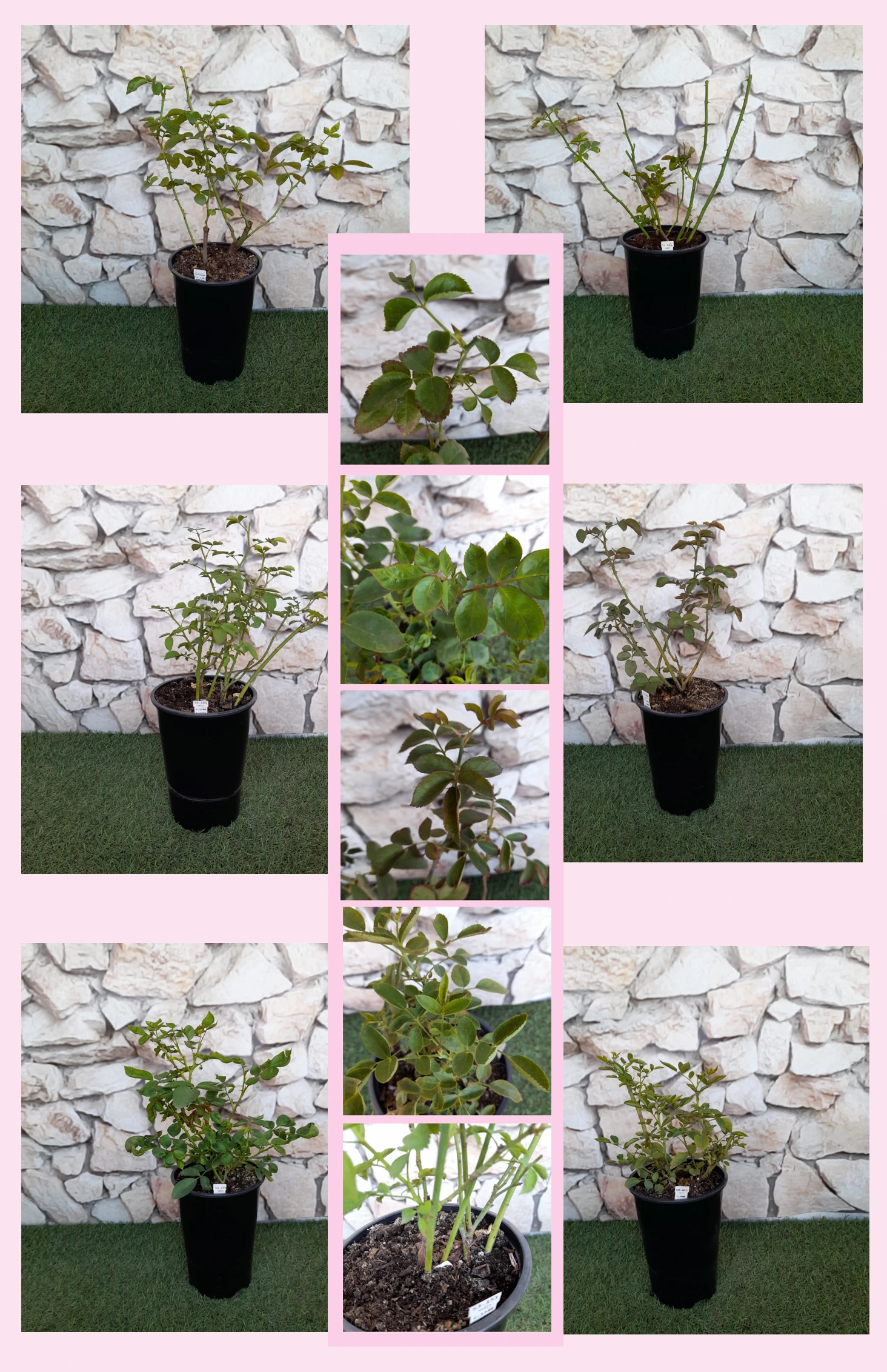
NAVELINA – yellow-red bedding Floribunda rose - Dickson
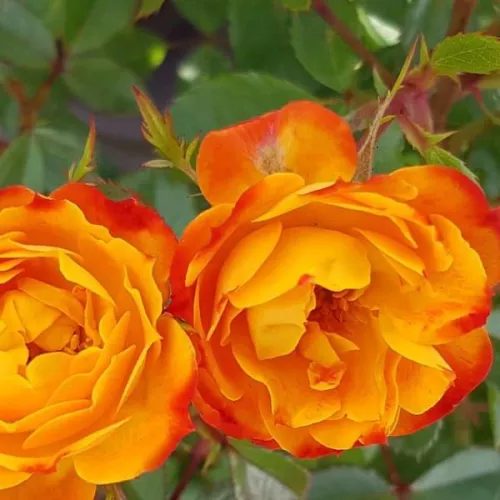
Bright clusters of NAVELINA bring instant colour and a cosy, storybook feel to an average family garden, lighting up beds and paths with cheerful, yellow-red blooms. Its compact, bushy habit stays neatly within 60–90 cm, ideal where space is limited yet you still want strong visual impact. Bred in Northern Ireland and tested for reliability, it copes steadily with British summers, even in breezier, wetter plots where careful drainage helps roots remain healthy in heavy clay. As a floribunda, it repeats generously, giving waves of flowers for relaxed afternoon teas beneath an arbour without demanding fussy techniques. Own-root production supports long-term longevity, quietly rebuilding from the base if stems are damaged and keeping its ornamental value stable for many years. Once planted, routine tasks are simple: light feeding, basic deadheading and moderate watering, especially in longer dry spells, are normally enough. Ideal for cottage borders, kitchen gardens and front gardens, it will grow from establishing roots in the first season to fuller top growth in the second and a rounded, showy presence by the third, maturing into a reliable centrepiece for busy households.
Usage options
| Target area | Reasoning |
|---|
| Front-of-border cottage bedding |
NAVELINA’s compact, bushy shape holds at 60–90 cm, perfect for the front or mid-front of a mixed cottage border where you want structure without blocking the view. The rounded outline reads clearly from the house or patio with little shaping work, ideal when you prefer simple pruning and easy-care lines for beginners. |
| Continuous colour in family flower beds |
The generous repeat flowering ensures a long season of warm yellow-red clusters, giving beds and small lawns a lively focus from early summer onwards. With straightforward feeding and deadheading, it keeps producing buds so family gardens feel looked-after even when you only have time for quick weekend checks, suiting busy-owners. |
| Low-maintenance traditional front garden |
Dense, glossy foliage and regular clusters of blooms create a tidy, traditional look that flatters brickwork, paths and bay windows. Medium maintenance needs mean routine checks and occasional disease control are enough, fitting homeowners who want a classic rose frontage that still looks smart between more thorough gardening sessions for homeowners. |
| Urban patios in large containers |
The upright, compact habit works very well in substantial pots of at least 40–50 litres, where roots have enough volume to stay moist yet well drained. Placed by a seating area, its mild, fresh fragrance and bright flower heads add intimacy to small paved spaces, appealing to city dwellers with balconies or courtyards for urban-gardeners. |
| Part-shaded cottage-style side paths |
Suitable for partial shade, this floribunda will still flower reliably along east- or west-facing side paths where taller fences or houses reduce light. The colour remains vivid enough to lift narrower spaces, helping link front and back gardens in a coherent cottage theme, ideal for those designing lived-in, everyday routes for families. |
| Informal low hedging or edging runs |
Recommended spacings of around 45 cm allow you to create a low, colourful hedge that outlines lawns, kitchen beds or play areas without feeling rigid. Medium prickliness helps discourage shortcut trampling while remaining manageable, making it a practical, gentle boundary for households that juggle pets, children and relaxed entertaining for garden-owners. |
| Long-term planting in heavy soils |
On its own roots, the plant develops a stable framework that can regenerate from the base after stress, supporting a long life in one spot. In heavier or wetter ground, using a raised bed or improved planting hole for better drainage helps it anchor securely and cope with persistent wind and rain for planners. |
| Small-scale cutting for kitchen vases |
The medium, cupped double flowers with 26–39 petals lend a charming, informal touch to small jugs or jars indoors. Regularly taking a few stems doubles as deadheading, encouraging fresh flushes without extra work, suiting hobby gardeners who like to bring a little of the border to the table for cottage-lovers. |
Styling ideas
- Kitchen-border ribbon – Run a loose row of NAVELINA along vegetable beds, echoing its warm tones with calendula and yellow herbs; for cottage gardeners who like cheerful, edible-adjacent colour.
- Pastel-and-fire mix – Weave its fiery blooms through soft pink verbena and pale salvias to create a gentle but lively tapestry; for romantics seeking a storybook English border.
- Glossy-green framework – Combine its dense foliage with small-leaved euonymus for a permanent green structure that still offers generous flowers; for planners who prize year-round framework.
- Patio-focus pot – Plant NAVELINA in a single, large terracotta container of at least 40–50 litres as a focal point near seating; for urban gardeners wanting maximum effect from one statement rose.
- Front-garden welcome – Repeat small groups by the gate, path and doorstep so the warm colour and upright habit draw the eye homewards; for families who want a friendly, traditional approach.
Technical cultivar profile
| Trait | Data |
|---|
| Name and registration |
Floribunda bed rose, registered as DICwitness and marketed as NAVELINA Bedding rose DICwitness; approved exhibition floribunda and shrub rose, commercial yellow-red bedding floribunda type. |
| Origin and breeding |
Bred by Patrick Dickson at Dickson Nurseries, Northern Ireland, from ‘Mr. JCB’ × ‘Gypsy Dancer’; bred in 1999, registered 1999 and introduced in 2000 in the United Kingdom market. |
| Awards and recognition |
Rose of the Year in Great Britain 2000, RHS Award of Garden Merit, and silver medal at the Glasgow International Rose Trials 2001, confirming strong ornamental and garden performance. |
| Growth and structural characteristics |
Compact, upright, bushy floribunda reaching about 60–90 cm in height and spread, with dense, glossy dark green foliage and moderate prickliness; growth habit suits beds, borders and containers. |
| Flower morphology |
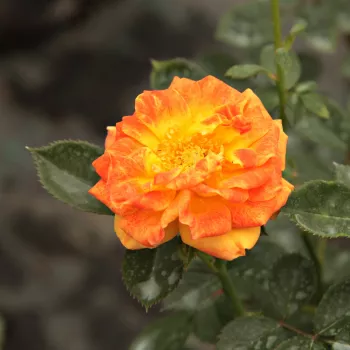
Medium-sized, cupped, double blooms with 26–39 petals, produced in clustered inflorescences on branching stems; remontant character ensures an initial flush followed by a generous repeat flowering. |
| Colour data and phenology |
Yellow-red blend (ARS yb), with RHS 28A outer and 14B inner; buds medium yellow with reddish-orange tips, maturing to fiery orange-red and rich yellow, then softening to reddish and creamy tones. |
| Fragrance and aroma |
Mild, restrained scent with a fresh, vibrant character; fragrance is noticeable at close quarters around seating but not overpowering, suiting mixed plantings and small spaces near doors or windows. |
| Hip characteristics |
Double flowers and regular deadheading limit hip formation; when present, forms small spherical scarlet-red hips around 6–10 mm in diameter, with modest ornamental interest in late season. |
| Resistance and winter hardiness |
Hardy to about −21 to −18 °C (RHS H7, Swedish zone 3, USDA 6b), with moderate resistance to black spot, powdery mildew and rust; needs regular watering in extended heat and drought. |
| Horticultural recommendations |
Best at 55 cm in mass plantings, 45 cm for hedging and 85 cm for specimens; maintenance is medium, with routine deadheading and occasional pest and disease control, plus suitable partial shade tolerance. |
NAVELINA Bedding rose DICwitness offers compact, colourful, repeat flowering on a long-lived own-root framework that suits containers and cottage borders, making it a considered choice for relaxed, traditional family gardens.