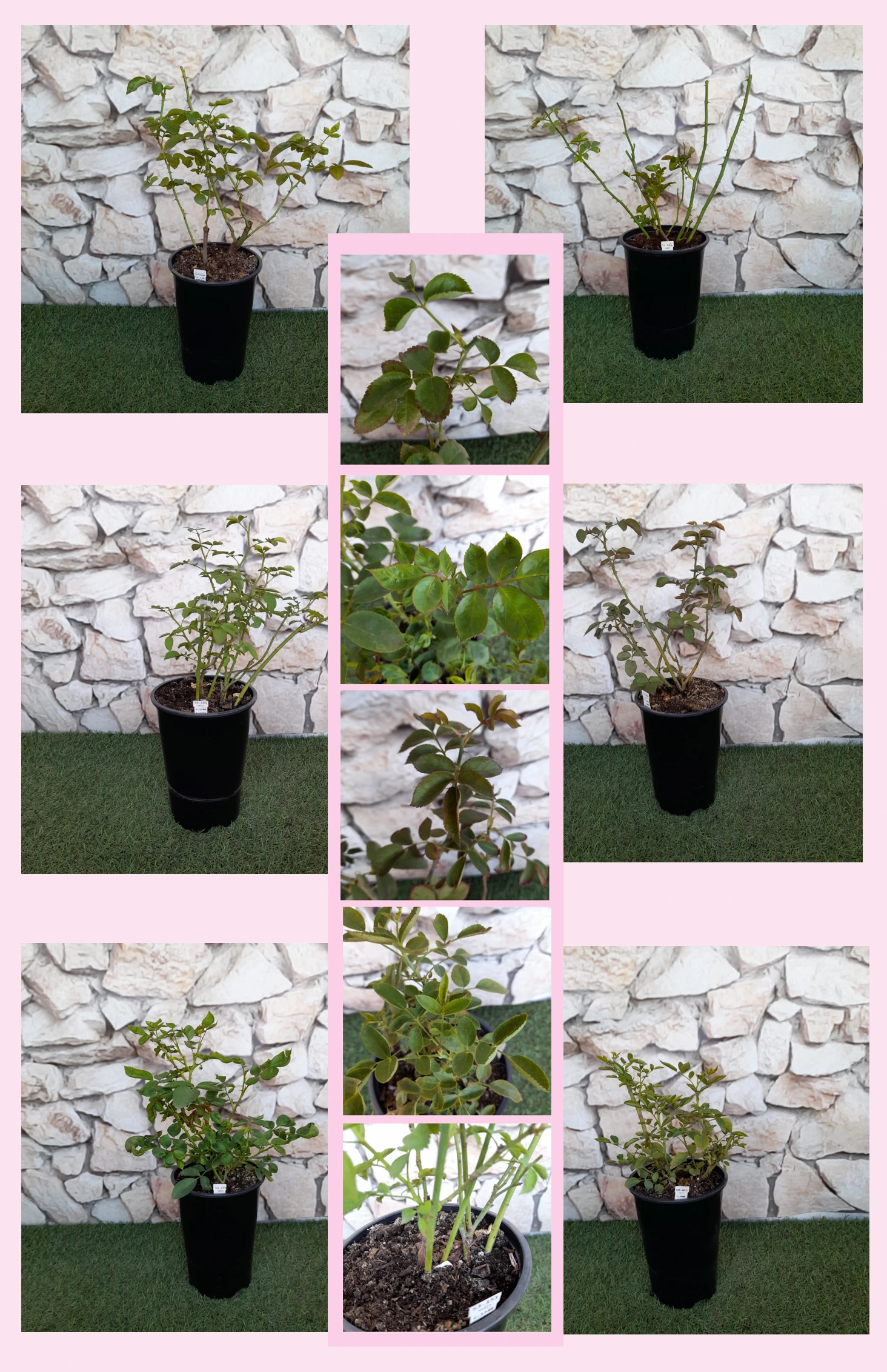
Bedding rose

53-168-1
53-168-2

Josiane Pierre-Bissey

Bedding rose

- – Fabien Ducher

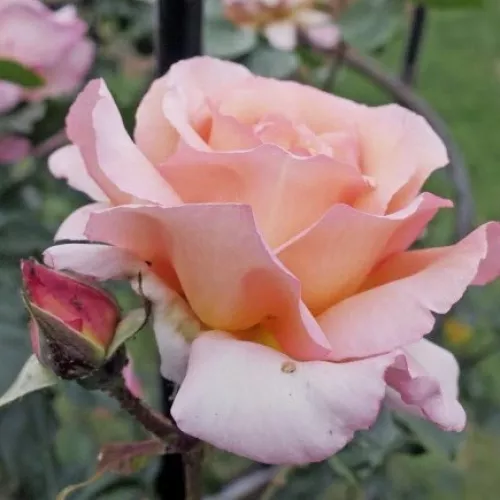
Peach‑pink with a light pink rim. - polyantha bedding rose - mild, restrained scented rose - fresh, fruity character

– Bushy, compact habit for neat bedding displays
– Strongly remontant with generous repeat flowering
– Peach‑pink blooms with elegant colour fading
– Medium disease resistance in typical garden conditions
– Hardy to around −20 °C for reliable overwintering
Special feature: Decorative orange‑red hips extend autumn interest.
Supports local wildlife – Long-term garden plan
Josiane Pierre-Bissey
darinaROSE® ORIGINAL 2-litre own-root potted rose
23,00 £
Unfortunately, we are currently unable to ship to the United Kingdom; we only deliver to countries within the European Union. For more information, please contact us!
4.5 (6640)
facebook   twitter

JOSIANE PIERRE-BISSEY – apricot-pink bedding polyantha rose - Ducher

Understated yet irresistibly pretty, JOSIANE PIERRE-BISSEY fills borders with clusters of soft peach‑pink blooms that repeat generously through the season, creating a relaxed, cottage‑garden ambience around seating areas and paths. Its bushy, medium‑sized habit sits comfortably in family gardens without overwhelming nearby planting, and it is equally at home in raised beds where heavier soils need extra drainage and air. As an own‑root rose, it establishes steadily and lives long, regenerating from the base rather than relying on vulnerable graft unions, so any winter damage is less of a worry in the long term. The dense, mid‑green foliage builds a strong framework for continuous flowering, supporting an easy‑care routine of simple seasonal tidying rather than intricate pruning. Over time, the shrub knits into a dependable feature for relaxed afternoon tea corners and cottage borders, its repeat flushes and subtle fragrance adding a gentle rhythm to the garden year after year. With patient establishment – roots in the first year, stronger top growth in the second and full ornamental value by the third – it rewards minimal effort with lasting visual comfort.


Usage options

Target area Reasoning
Front-of-border cottage bedding The bushy, 70–95 cm habit and 50–75 cm spread make this rose ideal for soft, low bedding in cottage‑style borders, where clustered blooms read as a continuous band of colour rather than isolated flowers. Medium maintenance and own‑root resilience keep aftercare simple for busy home gardeners, while the colour gently fades through pink and cream to extend visual interest without harsh deadheading deadlines for beginners.
Informal low hedge along paths Planted at 35–40 cm intervals, the dense foliage and regular flowering create a soft, informal edging that guides the eye along garden paths and separates lawn from kitchen‑garden beds. Own‑root growth supports a long‑lived line of plants, easier to rejuvenate with an occasional harder prune if needed, without worrying about weakening a graft. This works well for those wanting structure without high‑maintenance clipping, especially homeowners.
Small family garden feature group In average urban or suburban gardens, groups of three to five plants at specimen spacing (about 65 cm) quickly read as a single, romantic shrub, yet remain compact enough for smaller plots. The colour palette – peach‑pink softening to cream – blends easily with existing planting, avoiding clashes with children's play spaces or existing shrubs. The own‑root habit gives long‑term value where replanting space is limited for families.
Large containers on patios and terraces This rose performs well in sizeable containers, where its bushy form and continuous clusters brighten paved areas near seating. A pot of at least 40–50 litres helps buffer against drying out and gives the own‑root system room to develop into a stable, long‑lived plant; routine feeding and watering are the main jobs. Ideal for those wanting a romantic look on balconies or terraces without complex border design, particularly urbanites.
Mixed cottage border with perennials The soft peach‑pink clusters partner beautifully with cottage staples such as Rudbeckia, St John’s wort and ornamental Artemisia, creating a “girly”, English‑countryside feel without demanding formal layout skills. Medium disease resistance and a sturdy shrub structure allow it to hold its own among herbaceous perennials, while own‑root recovery makes occasional renovation cuts more forgiving for relaxed, low‑fuss gardeners.
Long-season ornamental flower bed Strongly remontant flowering provides a generous second flush, keeping beds attractive from early summer well into autumn with only light deadheading. Colour‑fast blooms that gradually fade through pink tones to cream ensure the bed always looks fresh rather than spent. Over successive years, the own‑root plants thicken into reliable bedding anchors, reducing the need for frequent replanting for cost‑conscious, time‑pressed owners.
Wind‑prone or exposed family plots The medium height, bushy framework and own‑root anchoring make this variety well suited to modestly exposed gardens, where plants benefit from a solid root system rather than a graft susceptible to rocking. In such sites, simple winter pruning and occasional pest checks are usually sufficient to keep the shrubs neat and productive, appealing to those who need robust but attractive planting in everyday family spaces for non‑experts.
Cutting for small indoor arrangements Medium‑sized, fully double, cup‑shaped blooms in gentle peach‑pink tones are perfect for small jugs and informal vases on kitchen or dining tables. The mild, fresh‑fruity fragrance offers a discreet scent that suits enclosed rooms and family environments. Regular picking encourages further flowering, turning a modest bed or container into a continual source of home‑grown decoration for flower‑loving enthusiasts.

Styling ideas

  • TEA-CORNER – Group three roses near a bench with soft gravel underfoot and a backdrop of Rudbeckia for golden contrast – for those creating a relaxed afternoon tea nook.
  • COUNTRYSIDE – Line a short path with closely spaced plants, weaving in catmint and low lavender for a romantic, English‑cottage entrance – for lovers of traditional front gardens.
  • KITCHEN-PLOT – Soften the edge of a vegetable or herb patch with a loose rose hedge interplanted with chives and marigolds – for home cooks who enjoy ornamental kitchen gardens.
  • COURTYARD – Place a single rose in a 50‑litre clay pot, underplanted with trailing thyme, to bring colour and scent to a paved courtyard – for balcony and patio dwellers.
  • FAMILY-BORDER – Mix this rose with hardy perennials and grasses for a low‑maintenance, softly coloured border along a fence – for busy families wanting easy charm.

Technical cultivar profile
Parameter Data
Name and registration Polyantha bedding rose marketed as JOSIANE PIERRE-BISSEY, honouring French rose historian Josiane Pierre-Bissey; commercialised by Roseraie Ducher without a separately publicised registered code.
Origin and breeding Bred by Fabien Ducher at Roseraie Ducher, Lyon, France; introduced and registered in 2011 with parentage not publicly documented, reflecting traditional European polyantha breeding lines.
Growth and structural characteristics Bushy shrub rose reaching about 70–95 cm in height and 50–75 cm in spread, with dense, mid‑green, slightly glossy foliage and moderate prickles, forming a compact, rounded outline in bedding schemes.
Flower morphology Medium‑sized, fully double, cup‑shaped flowers with roughly 26–39 petals, borne in clustered inflorescences, flowering strongly and remontantly with a notably generous second flush after the main summer display.
Colour data and phenology Peach‑pink blooms with a light pink rim, ARS code LP, RHS 65C outer and 65D inner; colour softens from warm peach‑cream to powder pink, then fades gracefully to cream without unsightly ageing.
Fragrance and aroma Mild, fresh, fruity fragrance that is noticeable at close quarters but not overpowering, making it suitable for seating areas and family gardens where a restrained, pleasant scent is preferred.
Hip characteristics Produces spherical orange‑red hips, around 6–9 mm in diameter, appearing in moderate quantities after flowering, adding discrete late‑season interest if spent blooms are not all removed.
Resistance and winter hardiness Classed as H7 and hardy approximately to −21 to −18 °C, with medium resistance to common rose diseases such as powdery mildew, black spot and rust under typical central European garden conditions.
Horticultural recommendations Best in well‑drained, fertile soil with regular watering and feed; suit beds, low hedges, large containers and small‑scale cutting. Medium maintenance, requiring periodic pruning and basic pest and disease monitoring.

JOSIANE PIERRE-BISSEY offers generous repeat flowering, compact bedding structure and forgiving own-root longevity, making it a thoughtful choice for relaxed, romantic family gardens seeking enduring charm.
Detailed product attributes

Product Identification Data

Product Name: JOSIANE PIERRE-BISSEY – apricot-pink bedding polyantha rose - Ducher
Product Type: darinaROSE® ORIGINAL - 2-litre own-root potted rose
Cultivar Authenticity: Verified:13.10.2025
Cultivar Quality Rating: premium silver
Item Number: [1255] 53-168 (14.02.2026) darinarose.co.uk

Name and Registration

Meaning of Cultivar Name: The name was given in honour of Josiane Pierre-Bissey, a French rose historian, author and former president of Roses Anciennes en France.
Original Trade Name: Josiane Pierre-Bissey
Current Trade Name: Josiane Pierre-Bissey Bedding rose Ducher
Rose Group: Polyantha
Commercial Type: polyantha bedding rose
Commercial Group: Bed rose
Exhibition Category: shrub rose; ornamental border
Collection: Bedding rose

Origin and Breeding

Initial Distributor: Roseraie Ducher (France)
Introduction Year: 2011 (France)
Registration Year: 2011 (assumed; no separate entry known at ARS)
Breeder: Fabien Ducher
Breeding Company / Institution: Roseraie Ducher (Lyon, France)
Breeding Year: France, 2011
Parentage: unknown

Growth and Structural Characteristics

Height: 2.3-3.1ft (70-95 cm)
Spread: 1.6-2.5ft (50-75 cm)
Growth Habit: bushy
Foliage: The variety's foliage is dense; the leaves have a slightly glossy surface and a mid‑green hue.
Prickliness: moderately thorny
Self-Cleaning Description: No data on self-cleaning.
Self-Cleaning Intensity: No data available on self-cleaning strength.

Flower Morphology

Petal Count: 26-39
Flower Fullness: fully double
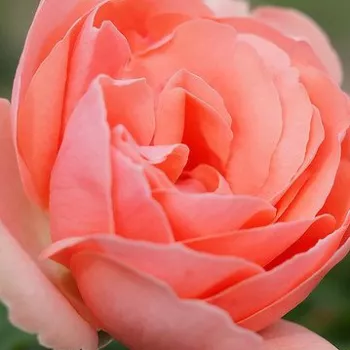
Flower Shape: cup-shaped
Flower Size: M (1,5-2,75 in)
Inflorescence Type: clustered
Colour Code: ARS code: LP RHS code: 65C (outer), 65D (inner)
Repeat Flowering: It is strongly remontant, with a generous second flush of blooms.

Colour Data and Phenology

Colour: peach-pink
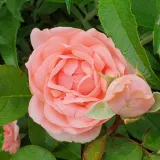
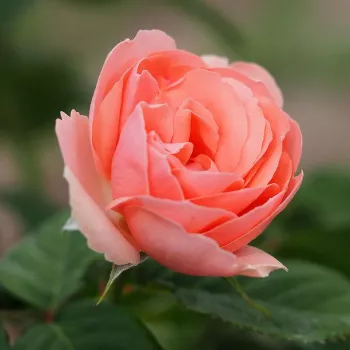
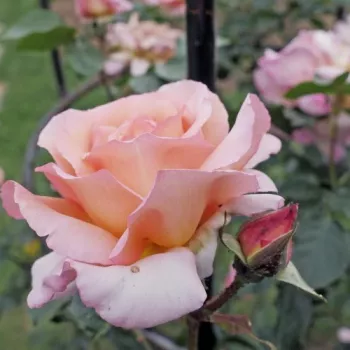
Flower Colour Description: Peach‑pink with a light pink rim.
Closed Bud: Pale peach with a delicate rosy blush on the tips and a hint of buttercream at the base.
Newly Opened Flower: Warm peach-cream centre, the outer petal whorl lightens to baby pink.
Full Bloom: Even, soft peach–pink overall appearance, more apricot towards the centre, more porcelain towards the outer petals, with a light pink rim.
Before Fading: The peachy tone softens and shifts to powder pink, then fades to cream.
Colour Fading Description: As the bloom opens, the warm peach–pink gradually fades to a powder pink and then to cream.

Fragrance and Aroma

Fragrance Strength: mild, restrained scented rose
Fragrance Character: fresh, fruity character
Pollinator Attraction: Semi-double, 13–25‑petalled blooms moderately attract pollinators, as the semi-double flower form and partly obscured stamens limit access.
Pollinator-Friendly Rating: Its double blooms attract pollinators only moderately, so it is only partially pollinator‑friendly and primarily an ornamental variety.

Hip Characteristics

Hip Shape: spherical
Hip Colour: orange-red
Hip Comment: Spherical, orange-red rose hips, 6–9 mm in diameter, produced in moderate quantities.

Resistance and Hardiness

Hardiness (°C): -21–-18 °C
Heat and Drought Tolerance Description: No data are available on heat–drought tolerance.
Disease Resistance: medium
  • powdery mildew – medium
  • black spot – medium
  • rust – medium

Horticultural Recommendations

Recommended Planting Distance: for mass planting 40 cm, for hedging 35 cm, as a specimen 65 cm
Planting Density: in square planting 5,7 plants/m², in hexagonal arrangement 6,6 plants/m²
Maintenance Requirement: Maintenance requirement medium; occasionally requires pest and disease control.
Primary Uses: flower bed, container, cut flower

Comments

Strengths: Supports local wildlife – Long-term garden plan
Companion Plants: Rudbeckia fulgida - showy coneflower Hypericum patulum Hidcote - evergreen St John's wort Artemisia vulgaris 'Oriental Limelight' - black mugwort
Comment: -
JOSIANE PIERRE-BISSEY – apricot-pink bedding polyantha rose - Ducher
Peach‑pink with a light pink rim. - polyantha bedding rose - mild, restrained scented rose - fresh, fruity character
Online rose order - polyantha bedding rose - Josiane Pierre-Bissey - peach-pink - (2.3-3.1ft (70-95 cm))
Inflorescence: clustered Height: 2.3-3.1ft (70-95 cm) Flower shape: cup-shaped Winter hardiness: 6b peach-pink - Roseraie Ducher (France) polyantha bedding rose - Flower size: M (1,5-2,75 in) Flower size: M (1,5-2,75 in) - Height: 2.3-3.1ft (70-95 cm) Height: 2.3-3.1ft (70-95 cm) - Flower fullness: fully double Josiane Pierre-Bissey - Roses in the garden | darinaROSE® Original - premium silver Fabien Ducher

We showcase the external appearance of the roses available for online purchase from our webshop.


Which product type is right for you?


Information

In what condition do we send the rose from our online webshop?

Let us ask ourselves the question: What do I want to use the rose for?
Flower? - Location? - Cover? - Fragrance? - Height? - Breeder? - Rose hips?

Rose purchase information
Methods of payment - Delivery charges - Delivery - Complaints handling

Care guide

Our product is a rose grown with pharmaROSA®’s unique cultivation technology!

2-litre, own-root, potted rose.
With a shoot system appropriate to the season.
With a root system that thoroughly permeates the growing medium.
Quality compliant with the requirements of the E.N.A. (European Nurserystock Association).
Supplied in unique packaging that prevents damage.
Can be planted during frost-free periods.
True-to-variety rose bush with a unique identifier.

The pharmaROSA® own-root potted rose is a well-rooted plant that supports reliable establishment when planted and cared for properly, so it can be planted whenever the soil is not frozen.


Crop overview: several varieties and growth stages in a short crop section.
Shoot system: intensive growth of fresh basal shoots on a young plant.
Root system: demonstration of a vigorous root system permeating the growing medium, by removing the pot.
Balance: mature plant with root system and shoots in harmony with each other.

Information about the videos
The video series is not a “seasonal showcase”; it illustrates the essence of pharmaROSA® own-root cultivation in a tangible way: how the plant is built up, what the root system is like and how the shoot system regenerates. The recordings were therefore made at different times and with plants at various stages of development, so mixed foliage levels and differing stages of growth may appear in the videos. They are not a ‘sample’ of the batch dispatched, but a visual explanation of how the technology works. The current condition of the rose available to order — typical for the given period and similar to what you can expect to receive in the parcel — is shown in the upper part of the product page.

pharmarosa.compharmarosa.atpharmarosa.czpharmarosa.depharmarosa.ropharmarosa.sipharmarosa.skpharmarosa.hrpharmarosa.itpharmarosa.frpharmarosa.grpharmarosa.bepharmarosa.dkpharmarosa.nlpharmarosa.iepharmarosa.plpharmarosa.lupharmarosa.ptpharmarosa.espharmarosa.bgpharmarosa.ltpharmarosa.sepharmarosa.lvpharmarosa.eepharmarosa.fipharmarosa.rudarinarose.co.uk

Product types

Pages for private customers
Garden roses for the family garden, with minimal care  → ORIGINAL®
Premium garden roses – instant impact, a truly showpiece garden  → EXTRA®
Pages for professionals and private customers
Roses for public spaces – large areas, sustainable maintenance  → NATURAL®
Roses for projects – hedge and row planting, fast implementation  → RAPID®
For professional partners only
Production – propagation material for garden roses, wholesale  → NEONATAL®

Company details

PharmaRosa Ltd.
Company registration number: 01-09-717479
VAT number: 13075314-2-43
Plant health registration no.: HU130721
Bank account (IBAN):
HU85117631891388688400000000
BIC (SWIFT): OTPVHUHB
Bank name: OTP Bank Nyrt.