KALYKE – salmon-pink climbing rose – Suzuki
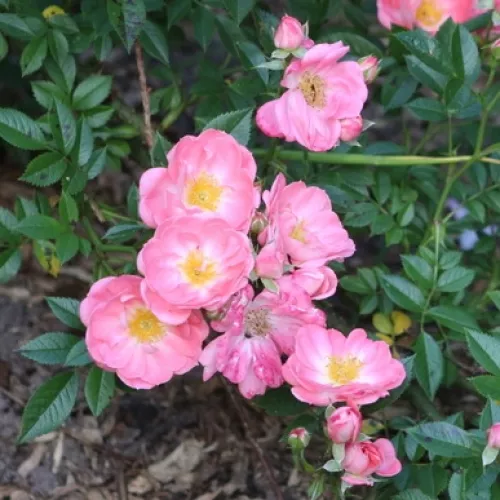
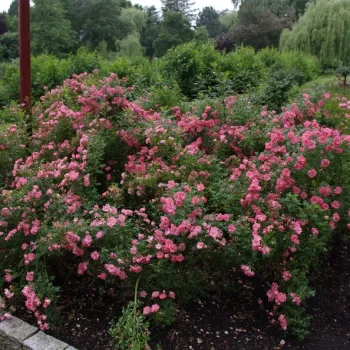
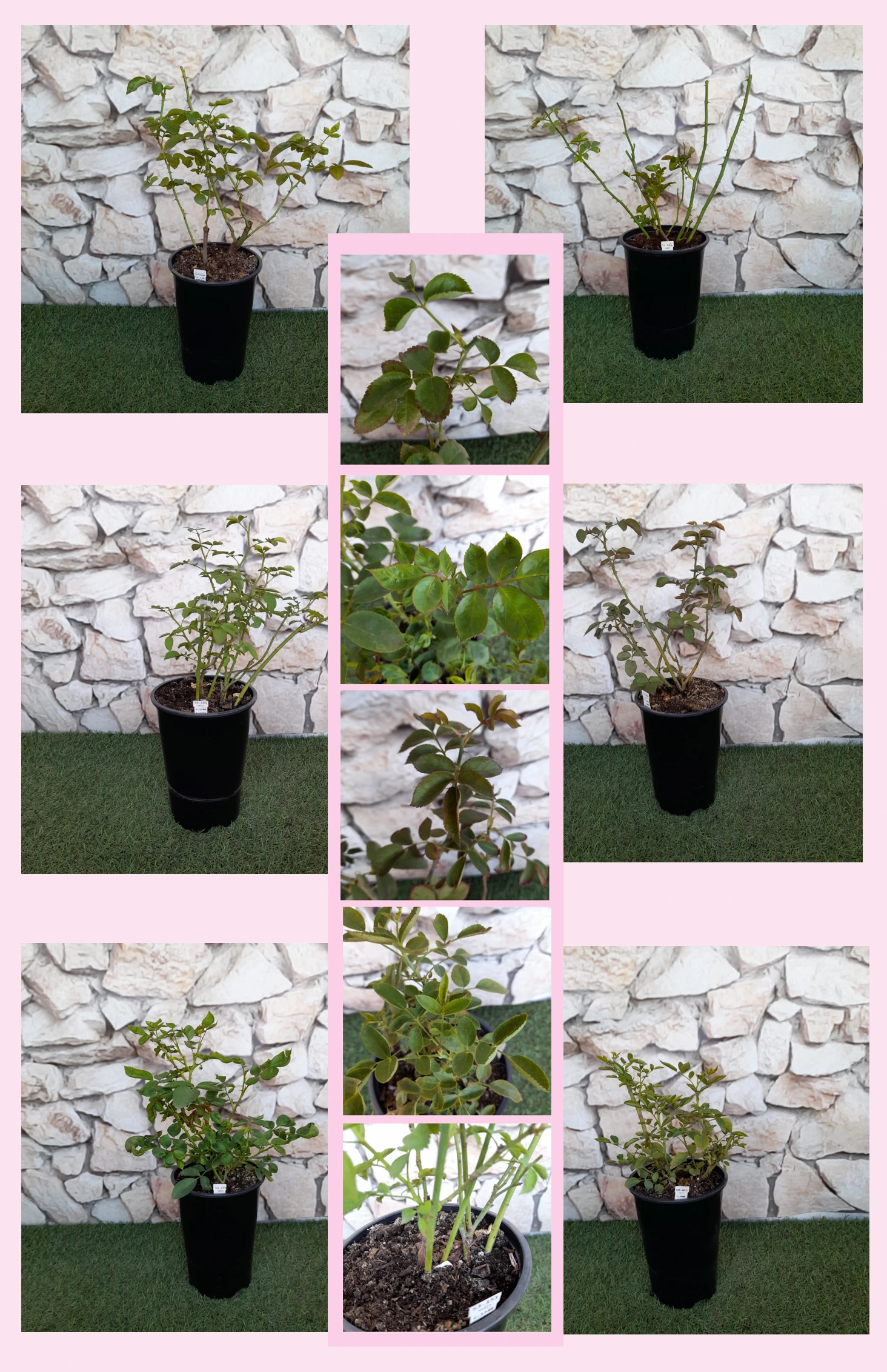
With its softly glowing salmon-pink blooms and gently spreading habit, KALYKE brings a romantic, storybook charm to pergolas, fences and low arches, evoking afternoon tea beneath an arbour in an English cottage garden. This compact mini-climber thrives even in exposed gardens where salt-laden winds and driving rain test lesser roses, provided the soil drains freely. As an own-root rose it offers reassuring longevity, quietly regenerating from the base after pruning or weather damage and building a stable framework over the years. Young plants settle in quickly, forming structure in smaller family plots and along paths, while the mild classic rose perfume adds a hint of romance without overwhelming seating areas. Soft, pastel-toned colour shifts from salmon-pink to blush and cream give harmony to mixed cottage borders, blending easily with perennials and herbs. In a generous 40–50 litre container it offers flexibility for patios and town gardens, where you may wish to move the display with the seasons. Thoughtful siting, good air circulation and a regular, simple spray routine support health and keep foliage attractive through summer. With basic care and patient training along wires or trellis, this slender climber rewards you with a refined, elegant garden accent that matures gracefully.
Usage options
| Target area |
Reasoning |
| Small cottage-style front garden arch |
The compact, spreading growth suits a modest arch or porch frame, giving a soft curtain of salmon-pink flowers without overwhelming narrow paths or windows. Semi-double clusters and mild scent keep the display graceful and not overpowering for everyday use, ideal for beginners. |
| Low trellis or fence in a family garden |
Dense foliage and a moderate height allow KALYKE to clothe a 1–1.5 m trellis, offering romantic screening between neighbouring gardens while still letting light through. Own-root growth ensures the framework rebuilds well after pruning or accidental breakage, reassuring for family gardeners. |
| Raised bed or improved clay border |
Where heavy soil dominates, a raised or well-drained bed lets roots establish steadily and reduces winter losses. Once settled, the plant forms a durable base that copes better with wet spells and strong winds, providing reliable colour in challenging spots for busy homeowners. |
| Large container on patio or terrace |
In a 40–50 litre pot with a slim obelisk, KALYKE offers a movable column of pastel colour for terraces and balconies. The restrained size makes seasonal repositioning straightforward, while own-root resilience means it tolerates occasional pot-drying if cared for by urban gardeners. |
| Edge of a rural kitchen or cutting garden |
Planted at the boundary of a productive plot, its warm salmon-pink and creamy tones blend easily with herbs, annuals and vegetables. The mild fragrance and small, semi-double sprays lend a gentle, informal charm that complements traditional layouts favoured by cottage gardeners. |
| Gentle slope or low retaining wall |
The spreading habit can be trained along low supports on a bank or wall, softening hard edges with cascading growth. Own-root plants anchor more securely over time, providing a long-lived solution where soil movement might unsettle grafted roses, reassuring more cautious planners. |
| Sheltered pergola walk-through |
Along a short pergola in a protected corner, KALYKE’s refined clusters and delicate scent create a romantic passage without heavy shading. A regular, simple spray programme and good air flow help manage fungal pressure in humid British summers, suitable for practically minded owners. |
| Mixed cottage border with perennials |
The soft salmon-pink to blush colour range harmonises with blues, whites and silvers, weaving gently through hardy perennials. Over several seasons the shrub builds a modest, well-branched frame that supports reliable flowering with only light annual pruning, rewarding patient enthusiasts. |
Styling ideas
- Porch-arch welcome – Train KALYKE over a small metal or wooden arch at the front gate, underplanting with lavender and catmint to echo its pastel palette – ideal for lovers of traditional cottage entrances.
- Pastel patio column – Grow in a 40–50 litre terracotta pot with a slim obelisk, surrounding the base with soft pink pelargoniums and trailing lobelia – perfect for balcony and terrace gardeners seeking romance in limited space.
- Kitchen-garden fringe – Place along a vegetable plot edge with chives, dill and marigolds, letting the salmon-pink clusters soften the transition from crops to lawn – suited to home growers who enjoy a productive yet decorative garden.
- Soft boundary veil – Plant along a low fence interspersed with dwarf asters and hardy geraniums to create a gently flowering screen – attractive for families wanting privacy without a solid hedge.
- Cottage slope cascade – Use on a gentle bank with thyme, heathers and small ornamental grasses, allowing stems to spill and weave through textures – appealing to those taming uneven ground in a relaxed, natural style.
Technical cultivar profile
| Parameter |
Data |
| Name and registration |
Climbing rose cultivar KALYKE (registered as KEItoli), also exhibited as Hanami-Gawa; mini-climber type within the climbing rose group, supplied here as an own-root garden rose. |
| Origin and breeding |
Bred by Seizo Suzuki at Keisei Rose Nursery, Japan, from an unknown Japanese seedling crossed with ‘Petite Folie’ (MEIherode); introduced internationally in 1984 by Meilland and The Conard-Pyle Co. |
| Awards and recognition |
Recognised at the prestigious Paris Bagatelle rose trials with a Certificate in 1989, highlighting its ornamental qualities and performance under formal trial conditions in a major European rose garden. |
| Growth and structural characteristics |
Mini-climbing, spreading habit reaching about 90–150 cm in height with 120–200 cm spread; dense, slightly glossy dark green foliage; moderately thorny stems; weak self-cleaning so spent flowers tend to form small hips. |
| Flower morphology |
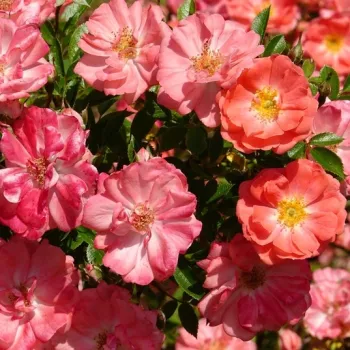
Semi-double, flat flowers with 13–25 petals, borne in clusters; small blooms around 0.5–1.5 inches across; flowers once per season rather than repeating, offering a concentrated display in early summer. |
| Colour data and phenology |
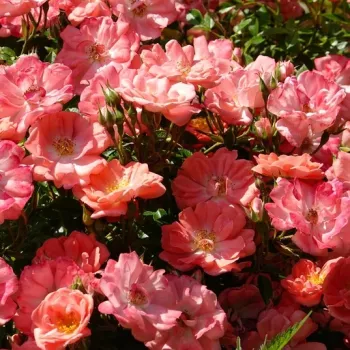
Warm salmon-pink outer petals with a pale, creamy-yellow inner tone; new blooms are vivid, then soften to pastel pink and creamy white as they age; ARS colour PB, RHS 36B outer and 11C inner, with moderate colour retention. |
| Fragrance and aroma |
Mild classic rose fragrance, gentle enough for seating areas; semi-double flower form offers limited pollinator appeal, with reduced access to stamens and nectar resulting in only modest attraction for bees and other insects. |
| Hip characteristics |
Rose hip formation generally sparse; where present, produces small, ellipsoid orange-red hips about 4–7 mm in diameter, developing mainly when spent blooms are not removed and left to mature on the plant. |
| Resistance and winter hardiness |
Hardy to around −21 to −18 °C (RHS H7, roughly USDA Zone 6b; Swedish Zone 3); however, highly susceptible to powdery mildew, black spot and rust, so benefits from proactive, regular plant protection in humid seasons. |
| Horticultural recommendations |
Best on well-drained soil, including raised beds over heavy clay; suitable for partial shade and training as a low climber, groundcover or edging; allow ample spacing, and plan a consistent spray regime to manage fungal diseases. |
KALYKE – salmon-pink climbing rose – Suzuki offers compact climbing habit, gentle fragrance and harmonious pastel colouring in a resilient own-root form that rewards thoughtful siting and care; a refined choice if you favour romantic structure over size.