LEONARDO DA VINCI® – pink nostalgia rose – Meilland
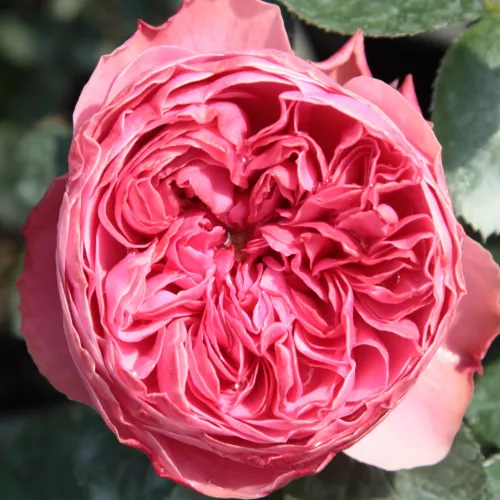
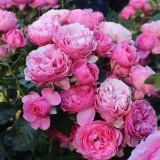
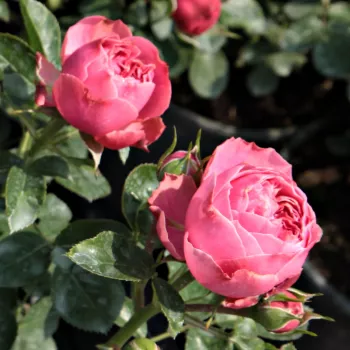
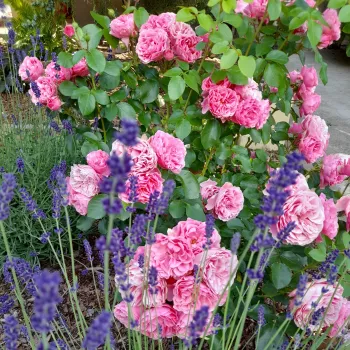
Under a pergola draped with LEONARDO DA VINCI®, your afternoon tea takes on a quietly romantic, storybook charm. This classic floribunda forms a bushy, compact structure, building a dense, leafy screen that fits beautifully into the average family garden and copes well with exposed sites where coastal breezes and rain need reliable anchoring and stability. The large, rosette blooms open in generous flushes of warm, vivid pink, their nostalgic rosette form and excellent colour stability giving borders and cottage-style paths a consistently elegant look. As an own-root plant, it develops gradually but securely, offering dependable regrowth, impressive long-term longevity and stable ornamental value with only straightforward maintenance tasks.
Usage options
| Target area |
Reasoning |
| Cottage-style mixed border in a family garden |
The bushy, compact habit and dense dark foliage give a full, traditional look without demanding intricate pruning, ideal beside perennials and herbs in a relaxed cottage border. The large, warm pink rosette flowers read clearly from a distance, bringing storybook romance to everyday spaces for busy home gardeners. |
| Informal flowering hedge along paths or boundaries |
Planted at the recommended spacing, this variety knits into a leafy, medium-height hedge with season-long clusters of nostalgic pink blooms. The strong colour holds well in sun, so the hedge remains visually coherent, while own-root sturdiness helps it recover from occasional heavier trimming for practical family owners. |
| Feature rose near patio, terrace or seating area |
Positioned by a terrace or seating nook, the full, very double flowers create a refined focal point for afternoon tea or evening relaxation. The clusters of large blooms and glossy foliage provide a “dressy” yet manageable presence, suiting those who want impressive effect from a single shrub for style-conscious beginners. |
| Large containers and terrace planters (40–50 litres +) |
In a 40–50 litre container, the compact yet vigorous bush shape stays balanced and stable, ideal for small town gardens and patios. The reliable reblooming provides repeated displays, while the own-root form supports long-term renewal in the same pot with periodic top-dressing and straightforward seasonal care for space-limited urban gardeners. |
| Small rose groupings for romantic focal beds |
Groups of three plants create a rounded, rose-filled mound with overlapping flushes of medium-deep pink. The uniform flower form and colour give a designed, “rosarium” feel without complex planning, particularly attractive beside lawns or in front-of-house beds where tidy, long-lived structure matters for house-proud homeowners. |
| Borders on heavier or chalky garden soils |
Once established, the strong own-root system underpins a robust shrub that copes well where soil is less than perfect, provided basic drainage is ensured. This supports long-term garden layout planning, with the rose forming a dependable structural element that can be underplanted with herbs or groundcovers for low-fuss planners. |
| Partially shaded sites with afternoon or dappled sun |
Suitability for partial shade allows planting near walls, fences or mature shrubs, where many roses underperform. Here it maintains good flowering and foliage density, helping to soften boundaries and fill awkward spots with classic pink rosettes rather than relying solely on shade perennials for flexible garden designers. |
| Wind-exposed or semi-coastal family gardens |
The bushy, relatively low, well-branched framework provides natural stability in breezier positions, especially helpful in gardens open to the elements where coastal breezes and rain need reliable anchoring and stability. Own-root resilience adds security over years, keeping the planting scheme consistent for weather-aware owners. |
Styling ideas
- Cottage Border Weave – Combine with Alchemilla mollis and lavender for a frothy, soft-edged border where the compact, floriferous habit anchors paths and lawns – ideal for lovers of classic English cottage charm.
- Kitchen-Garden Romance – Line a potager path with a loose hedge of this rose, interplanted with rosemary and chives, letting the structured, repeat-flowering shrubs frame productive beds – suited to home cooks with a rural kitchen garden feel.
- Pastel Patio Corner – In a 50-litre terracotta pot, underplant with trailing thyme and soft pink diascias; the stable colour and generous flushes create a gently romantic patio focal point – perfect for balcony and terrace decorators.
- Front-Garden Welcome – Use three plants in a triangle near the front door, edged with low lady’s mantle; the rounded, leafy structure and nostalgic blooms give a composed, long-lived welcome – good for families prioritising kerb appeal.
- Storybook Seating Nook – Place beside a small bench or arbour, with goldmoss stonecrop at the base; the dense shrub and clustered rosettes frame a cosy reading or tea corner – appealing to romantically inclined garden readers.
Technical cultivar profile
| Parameter |
Data |
| Name and registration |
LEONARDO DA VINCI® Romantica® MEIdeauri; floribunda nostalgia rose in the Romantica collection; ARS exhibition name Leonardo da Vinci; registered cultivar name MEIdeauri. |
| Origin and breeding |
Bred by Alain Meilland, Meilland International, France; parentage ‘Sommerwind’ × (‘Milrose’ × ‘Rosamunde’); bred 1993, registered 1993, introduced commercially in 1994. |
| Awards and recognition |
Widely acclaimed exhibition floribunda; Gold medal Monza 1993, IGA award Stuttgart 1993, Commendation Belfast 1996, Gold medal The Hague 1997, Top Rosen Netherlands 1997. |
| Growth and structural characteristics |
Bushy, compact shrub 110–170 cm tall and 70–120 cm wide, with dense, glossy dark green foliage and moderate prickliness; spent blooms often need deadheading as self-cleaning is weak. |
| Flower morphology |
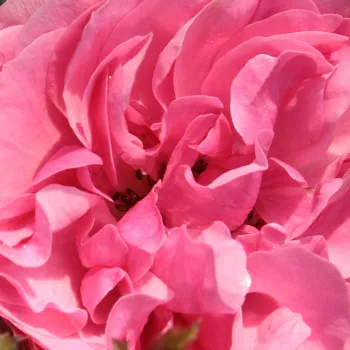
Large, very double rosette flowers, 40+ petals, borne in clusters; floribunda type with strong rebloom, including an abundant second flush; blooms generally 2.75–3.95 inches across. |
| Colour data and phenology |
Uniform vivid deep pink with warm tones; buds raspberry-pink; petals deepen toward the centre, edges softening to pastel pink; excellent colour retention with minimal fading even in strong sunlight. |
| Fragrance and aroma |
Fragrance very weak and barely perceptible; primarily valued for colour, flower form, and garden effect rather than scent; highly double blooms restrict access to stamens and offer low pollinator value. |
| Hip characteristics |
Occasional small spherical hips, 6–10 mm, orange-red with modest ornamental interest; usually incidental in garden display and not a dominant feature of the cultivar’s appearance. |
| Resistance and winter hardiness |
Hardy to approximately −26 to −23 °C (RHS H7, Swedish zone 4, USDA 5b); disease resistance moderate to black spot, mildew and rust; prefers regular watering in dry spells and basic preventative care. |
| Horticultural recommendations |
Suited to borders, edging, hedges, containers and cutting; plant 55–100 cm apart, 2.5–2.9 plants/m² for mass planting; tolerates partial shade; medium maintenance with occasional plant protection advised. |
LEONARDO DA VINCI® offers nostalgic pink rosette blooms, a bushy, compact habit and reliable rebloom on a long-lived own-root framework, making it a thoughtful choice for those planning a romantic, low-complication family garden.