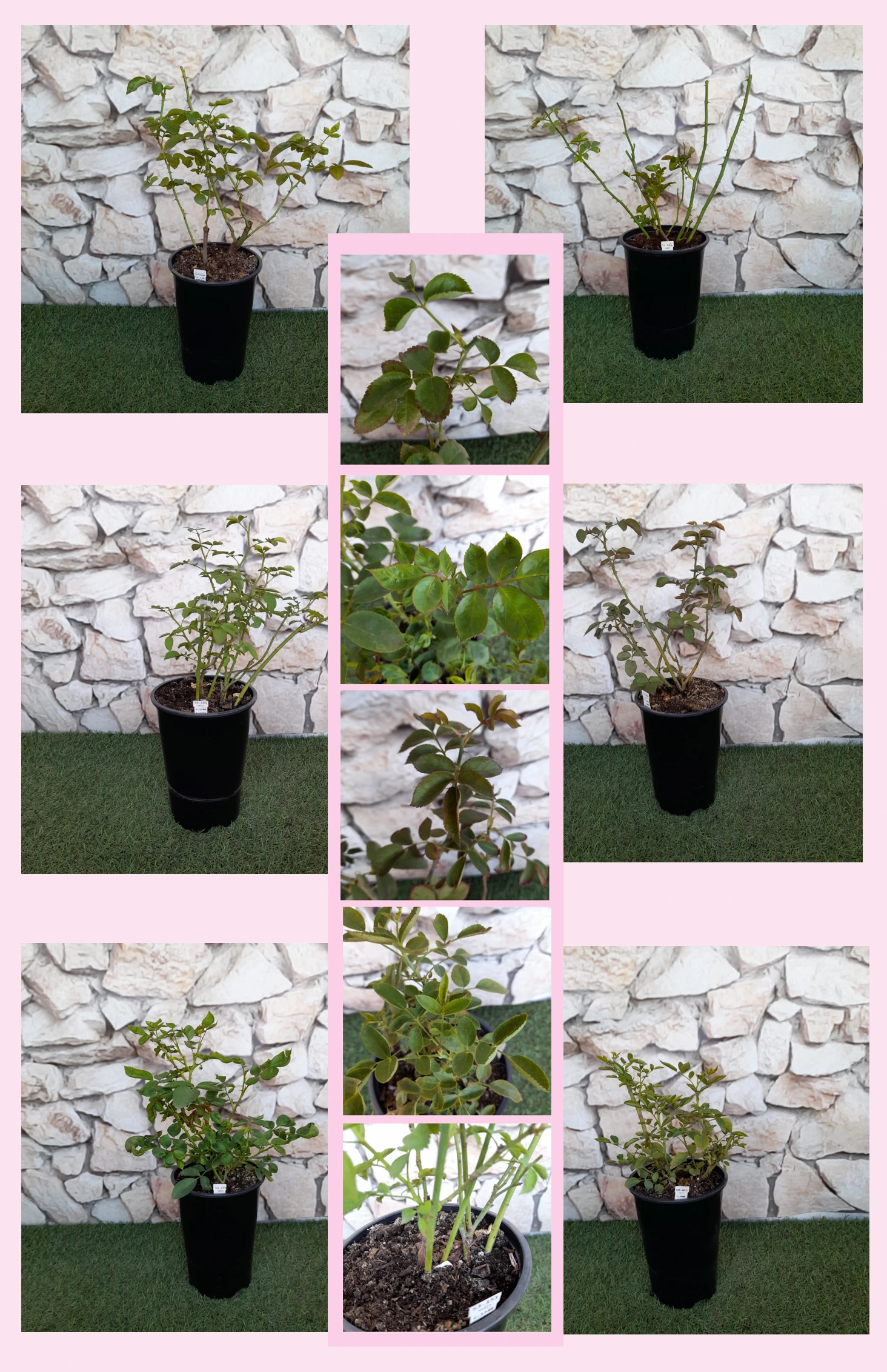
LIMESGLUT™ – carmine-red groundcover rose – Pearce
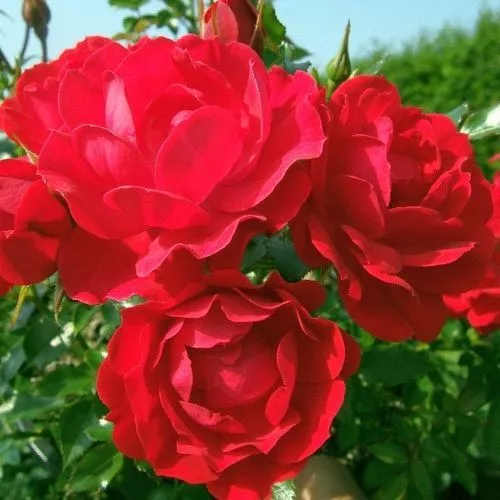
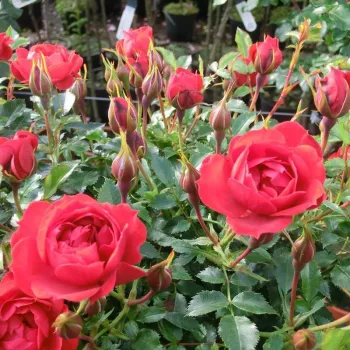
Bred for glowing, low, ground-hugging carpets of carmine-red bloom, Limesglut settles naturally into cottage-style borders and makes even a small family garden feel instantly more romantic. Its compact, spreading habit is ideal for edging paths, softening raised beds and brightening tricky corners, while its own-root form supports quiet longevity in everyday conditions. Over the seasons it becomes a reliable, low, flowering cushion that copes steadily with coastal breezes and unsettled, windy weather, provided you give it a sunny position and reasonable soil drainage. Clusters of cup-shaped blooms repeat generously, their colour holding fast in sun and rain for a consistently vivid display above dark, glossy foliage. You can enjoy its effect from patio or kitchen window in modest containers, or allow it to flow in drifts through cottage planting, combining happily with herbs and perennials for a gently cuddly, storybook look that matures at a reassuringly unhurried pace.
Usage options
| Target area | Reasoning |
|---|
| Low-maintenance family front garden |
Limesglut’s compact, spreading habit quickly knits into a neat, flowering carpet that suppresses many small weeds and reduces the need for fiddly edging. Once established, pruning is optional and can be as simple as an annual light trim, suiting time-pressed householders and busy beginners. |
| Romantic cottage-style borders |
The rich carmine-red flowers and glossy dark foliage give a classic storybook look, perfect at the front of mixed borders among lavender, catmint and cottage perennials. The low, mounding shape frames taller roses and shrubs without blocking views, appealing to lovers of traditional cottage charm. |
| Groundcover on slopes and banks |
The dense, spreading structure forms a low mat of stems and foliage that helps stabilise soil and visually softens awkward changes of level. Over a few seasons the own-root plant thickens into a long-lived clump that can be rejuvenated simply by cutting back, reassuring cautious first-time planters. |
| Raised beds on heavy or clay soil |
Where clay stays wet in winter, Limesglut performs far better in raised beds or mounded borders, where roots enjoy improved drainage yet still hold the soil together. Its horizontal spread soon spills gently over edges, giving soft lines prized by style-conscious urban homeowners. |
| Large containers on patios and terraces |
In a 40–50 litre or larger pot, this rose forms a low, floriferous dome that brings colour right up to the seating area. The modest height keeps views open, while the repeat-flowering clusters extend the season of interest, which suits patio-focused balcony gardeners. |
| Paths, driveways and edging strips |
Planted in a row at 40–50 cm spacings, Limesglut creates a soft, colourful edging that guides the eye and frames gravel or paving. Its compact growth reduces snagging on clothes compared with taller shrubs, making it practical for entrances used daily by family visitors. |
| Kitchen garden and productive plots |
Along vegetable beds, the low, bright bushes bring ornamental structure without casting heavy shade, and their contained size keeps access to crops straightforward. Over time, the own-root base supports regeneration after harder pruning, giving dependable shape for organised home growers. |
| Exposed or coastal-style gardens |
In open sites that catch the breeze, the compact, close-to-the-ground framework is less likely to rock or snap, so plants anchor well when planted in groups and watered in properly, coping steadily with breezy, changeable weather for risk-averse seaside gardeners. |
Styling ideas
- Cottage Edge Ribbon – Run Limesglut in a curving line along a lawn or gravel path, underplanting with low catmint and pink scabious for a soft, storybook border edge – ideal for romantic traditionalists.
- Patio Cushion Pot – Plant one or three plants in a 50 litre terracotta tub, allowing them to spill over the rim, and pair with thyme and chives for a fragrant, informal kitchen-terrace nook – suited to small-garden food lovers.
- Crimson Slope Weave – Mass-plant on a gentle bank at recommended spacing, interlacing with cypress spurge and ornamental grasses to hold soil while creating a tapestry of texture and red blooms – perfect for practical stylists.
- Front-Garden Welcome – Use as a low groundcover beneath taller shrub roses or clipped lonicera, so the carmine-red flowers form a unifying carpet by the front door – appealing to house-proud homeowners.
- Kitchen-Garden Frame – Edge vegetable beds with Limesglut, mixing in calendula and herbs so crops sit within a soft flowering frame that still allows easy access – attractive for organised family gardeners.
Technical cultivar profile
| Parameter | Data |
|---|
| Name and registration |
Groundcover shrub rose from the Limes collection; registered cultivar name Limesglut, marketed as Limesglut™, Limes and Limesglut; carmine-red flowers inspired the historically themed name. |
| Origin and breeding |
Bred by Colin A. Pearce (United Kingdom, 2002), parentage unknown; introduced by Rosen-Union e.G. in Germany in 2004; developed as a compact, spreading groundcover rose for ornamental use. |
| Awards and recognition |
Holds ADR certification from the German General Rose Trial (2005) and received a Certificate of Merit at the Australian National Rose Trials in 2010, confirming strong garden performance. |
| Growth and structural characteristics |
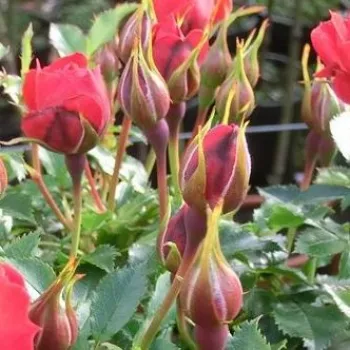
Low, spreading, compact plant about 30–55 cm tall and 40–80 cm wide, with dense, dark green glossy foliage and moderate prickliness; self-cleaning behaviour not well documented to date. |
| Flower morphology |
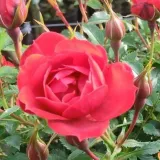
Double, cup-shaped cluster-flowered blooms with 26–39 petals, small in size yet produced abundantly; repeat-flowering with particularly generous second flush, giving a long seasonal display. |
| Colour data and phenology |
Deep carmine-red flowers (RHS 53A outer, 53B inner) with subtle purple overtones; colour holds very well, darkening slightly to crimson-carmine before petals fade, with minimal bleaching in sun. |
| Fragrance and aroma |
Mild, discreetly sweet fragrance; double flowers limit nectar access so pollinator value is modest, making this primarily an ornamental variety chosen for colour and form rather than scent or wildlife use. |
| Hip characteristics |
Occasional small, spherical red hips (about 5–9 mm diameter, RHS 44A) may develop after flowering; these can add a subtle late-season decorative touch where spent blooms are not removed. |
| Resistance and winter hardiness |
Hardy to around –21 to –18 °C (RHS H7, USDA 6b, Swedish Zone 3); tolerates heat and moderate drought with watering in prolonged dry spells; recorded as very susceptible to major fungal diseases. |
| Horticultural recommendations |
Suited to groundcover, edging, beds, parks and large containers; spacing 40–90 cm depending on use; prefers sun, ventilated sites, good hygiene and regular protective care in disease-prone regions. |
LIMESGLUT™ offers romantic carmine-red carpets, compact growth and long-term structure from its own-root form; consider it if you would like a softly glowing, enduring accent in a busy family garden.