LIPPAY JÁNOS – dark pink bedding polyantha rose - Márk
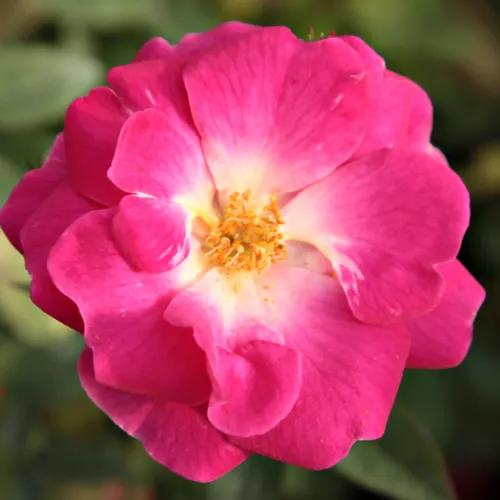
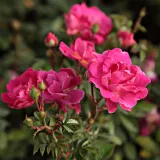
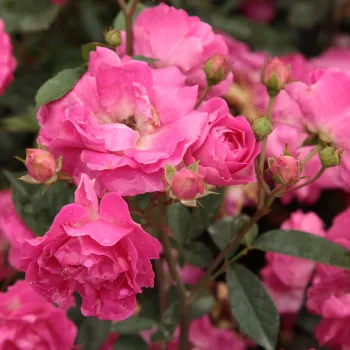
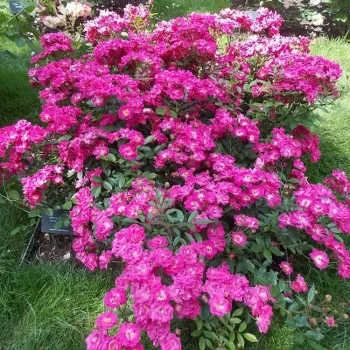
With its clusters of vivid dark-pink blooms and compact, upright habit, LIPPAY JÁNOS brings a quietly romantic, storybook ambience to family gardens while remaining straightforward to live with over the years. This own-root bedding polyantha settles in calmly, developing sound roots first, then stronger shoots, before reaching full ornamental value in its third season, so you can enjoy reliable continuity rather than demanding burst-and-fade display. Once established it copes well with summer heat and drier spells, offering reassuring stability in typical British conditions where good drainage is combined with blustery, rain-laden weather near the coast. The compact size suits smaller plots and front gardens, giving you flexibility for beds, edging or mixed cottage-style borders. Massed clusters of small, semi-double flowers create a soft, textured foreground to hedges and kitchen-garden paths, while the dark green, glossy foliage provides lasting structure. Being grown on its own roots supports long-term regeneration potential and dependable shape, ideal when you prefer relaxed maintenance rather than intensive, show-bench gardening.
Usage options
| Target area | Reasoning |
|---|
| Front-of-border bedding in a family cottage garden |
The compact, upright habit and modest spread make this variety easy to place at the front of mixed borders without overwhelming nearby perennials or herbs, giving a neat, romantic fringe to paths and lawns that remains manageable for beginners. |
| Mass planting for colourful, low edging |
Short planting distances allow you to create a dense, low ribbon of colour along drives, patios or vegetable garden beds; the clusters of dark-pink blooms read strongly from a distance, giving a generous effect even in small gardens for family-buyers. |
| Heat-exposed, sunny spots with lighter soils |
Once established, this rose copes well with heat and short dry spells, so a bright, south-facing site that would stress fussier roses can still host steady colour, supporting dependable flowering for busy gardeners who favour resilience. |
| Small mixed hedge or low divider |
Regular spacing at closer distances creates a low, semi-formal divider between seating, play areas and kitchen beds; the upright shoots and consistent height give a tidy line that still feels soft and cottagey, well suited to traditional-style homeowners. |
| Urban front gardens and street-side beds |
The moderate height and bright, eye-catching flowers give strong kerb appeal without requiring complex pruning; own-root growth helps the plant recover from incidental damage or road-spray stress, suiting time-pressed city-gardeners. |
| Large containers from 40–50 litres on patios |
In a generously sized pot with good drainage, its upright, compact shape and repeated clusters of bloom create a colourful focal point close to seating, particularly effective for those wanting romantic impact from limited paved space for balcony-owners. |
| Cottage-style beds with good drainage in breezier sites |
Settling this variety in raised beds or improved soil gives secure rooting and steadier flowering where winds and frequent rain could challenge less robust roses, supporting relaxed enjoyment in exposed gardens close to the sea for coastal-residents. |
| Low-maintenance long-term planting in mixed borders |
Its own-root nature supports a long lifespan and recovery from harder pruning or accidental damage, so over the years the shrub can be refreshed rather than replaced, appealing to those who prefer durable, once-planted schemes for busy-owners. |
Styling ideas
- Kitchen-path edging – Line vegetable or herb beds with repeated plants to frame gravel or brick paths; the pink clusters soften productive areas and suit cottage-garden cooks and allotment-focused households – ideal for traditionalists.
- Rose-and-yarrow ribbon – Combine this rose with Achillea millefolium hybrids for a textural contrast of fine umbels and clustered blooms, giving a long-season tapestry of pinks and pastels – suited to relaxed, nature-aware gardeners.
- Front-garden welcome – Plant in pairs either side of a gate with low Deutzia gracilis behind to create a layered, storybook entrance that flowers from late spring into summer – perfect for families wanting instant kerbside charm.
- Soft-structure border – Use as a repeating element in a mixed bed with dwarf grasses and cottage perennials to provide consistent height and outline, keeping the border legible through the seasons – appealing to design-conscious homeowners.
- Container focal point – Grow one plant in a 40–50 litre terracotta pot with trailing herbs at the base to bring colour and scent near seating areas – a good option for urban gardeners with mainly paved or courtyard spaces.
Technical cultivar profile
| Parameter | Data |
|---|
| Name and registration |
LIPPAY JÁNOS dark pink bedding polyantha rose, bed rose group; current trade name as listed, bred by Márk Gergely, used chiefly as a compact bedding and edging shrub in decorative schemes. |
| Origin and breeding |
Hybrid of ‘Minililla’ × ‘Titanilla’, bred in Hungary by Márk Gergely in 2002; introduced internationally by PharmaRosa® Ltd. in 2005, reflecting Central European selection under continental conditions. |
| Awards and recognition |
Bronze Medal at the Rome International New Rose Competition in 2005 and Bronze Medal at Bundesgartenschau (BUGA) Gera-Ronneburg in 2007, confirming ornamental performance in formal trials. |
| Growth and structural characteristics |
Compact, upright shrub reaching about 45–65 cm in height and 40–55 cm spread, moderately thorny, with moderately dense, glossy dark green foliage providing a neat, low, structural presence. |
| Flower morphology |
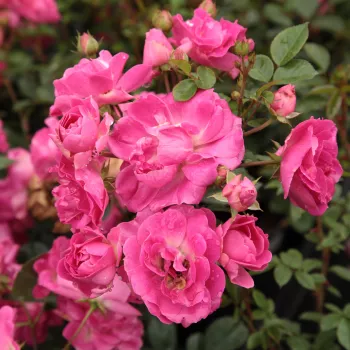
Semi-double, cup-shaped clusters of small flowers (around 0.5–1.5 in), with 13–25 petals; produced repeatedly with a notably abundant second flush, borne freely in tight polyantha-style inflorescences. |
| Colour data and phenology |
Dark pink blooms with RHS 53A outer and 60A inner tones, pale whitish centre and yellow stamens; colour softens slightly toward a mauve-pink yet retains good saturation without marked fading in normal garden conditions. |
| Fragrance and aroma |
No noticeable fragrance; flowers are mainly visual features, with semi-double form offering some access to pollen for insects but less attraction than single-petalled, strongly scented varieties. |
| Hip characteristics |
Produces small, bright red, spherical hips around 6–9 mm in diameter; moderately set and mainly of incidental ornamental interest rather than a primary feature in typical garden use. |
| Resistance and winter hardiness |
Hardy to approximately −21 to −18 °C (RHS H7, USDA 6b, Swedish Zon 3); tolerates heat and short drought, but has medium susceptibility to powdery mildew and black spot and high sensitivity to rust. |
| Horticultural recommendations |
Best in full sun with well-drained soil; plant 30 cm apart in beds, 25 cm for low hedging, or 50 cm as specimens; plan a regular plant-protection programme where fungal pressure is high and ensure steady watering in containers. |
LIPPAY JÁNOS offers compact structure, generous clustered flowering and dependable long-term growth on its own roots, making it a thoughtful choice for gardeners seeking enduring cottage-garden colour with manageable care.