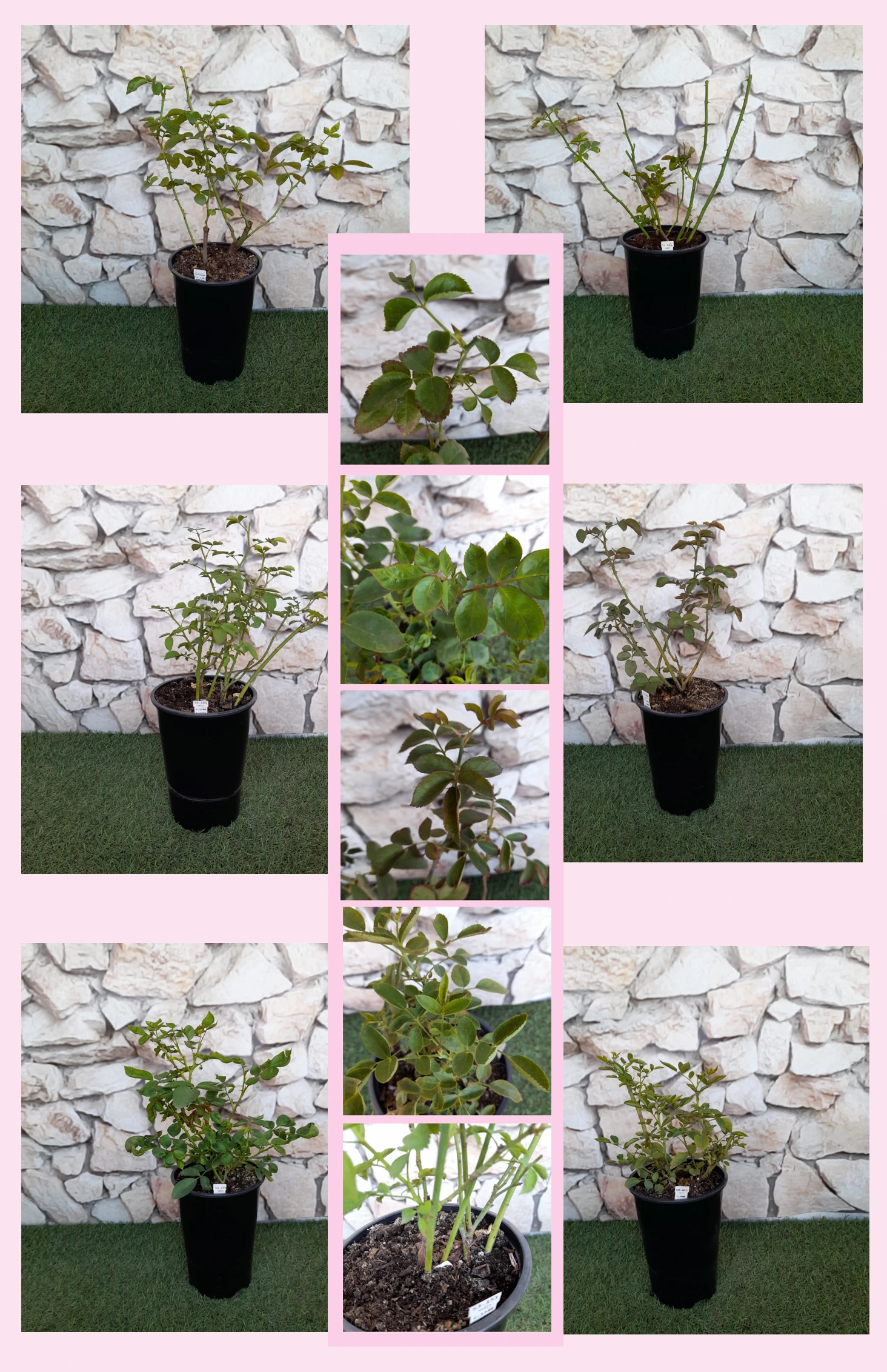
LÜBECKER ROTSPON – dark red bedding floribunda rose – Evers
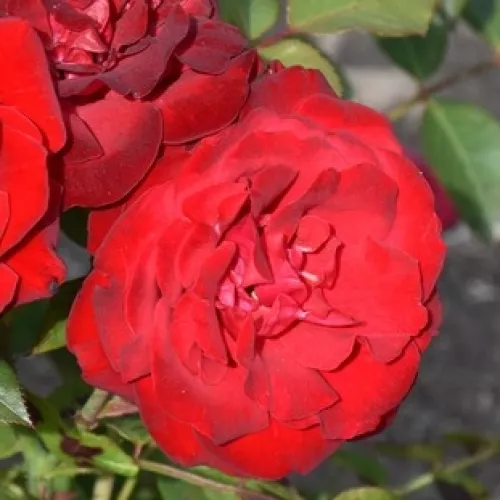
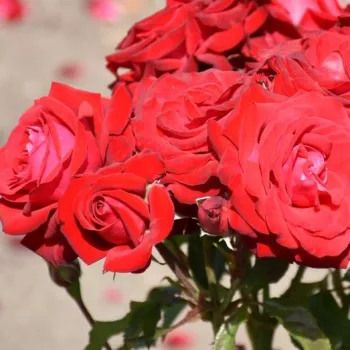
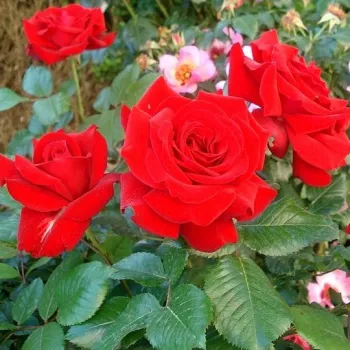
Choose LÜBECKER ROTSPON if you dream of romantic afternoons and cosy family gatherings framed by velvety, dark red blooms that look at home in an English cottage border. This bushy floribunda offers reliability of colour with deep burgundy buds opening to ruby-red, cupped flowers that repeat through summer and early autumn, creating a steady, storybook display rather than a brief flush. Bred for garden use, it forms a compact, dense shrub that anchors borders securely even where strong coastal breezes and frequent rain can challenge less sturdy roses, while its own-root character quietly supports longevity, steady renewal and dependable performance year after year. In typical family gardens with clay or chalky soils, it settles in with modest care: a sunny spot, sensible watering and simple winter pruning are enough to keep the plant healthy and well-shaped. Over time, you will see roots establish, then top growth strengthen, and by its third season the rose will display its full ornamental value in a richly coloured, low-maintenance border or hedge, matching the classic cottage feel of hedging, kitchen gardens and mixed plantings.
Usage options
| Target area | Reasoning |
|---|
| Front and mid-border in a family cottage garden |
The compact 65–95 cm height and 50–75 cm spread make this floribunda ideal for a low to mid-level layer in mixed borders, giving a dense, bushy structure that is easy to maintain and unlikely to outgrow a small family plot. Its rounded habit forms a natural “cushion” of foliage and bloom, creating a soft visual edge along paths or lawns with minimal shaping work – a strong fit for busy beginners. |
| Traditional dark-red rose hedge along paths or boundaries |
Regular, repeat flowering and a consistent deep burgundy-red tone allow you to plant an even, storybook-style hedge at 35–40 cm spacing, with flowers carried in clusters along the top and sides. Once established on its own roots, the hedge thickens from the base and recovers well from occasional harder pruning or accidental damage, holding its form and colour for many years – well suited to family homeowners. |
| Statement specimen rose near seating, pergolas or arbours |
As a solitary plant at around 65 cm spacing from neighbours, its glossy dark green foliage and velvety flowers stand out beautifully beside seating areas where you enjoy afternoon tea. The slightly sweet fragrance is discreet rather than dominant, so it will not overwhelm a small terrace, while the compact yet full habit frames benches and arbours gracefully – attractive to romantic gardeners. |
| Colour anchor in small urban gardens and entrance beds |
The strong colour retention and slow, dignified fading from burgundy to ruby red give a dependable dark-red “anchor” for small, high-visibility spaces such as front gardens or pots by the door. Because the shrub remains relatively low and bushy, it adds form without blocking windows or narrowing paths, and simple deadheading is usually all that is required to keep it tidy – ideal for busy city-dwellers. |
| Kitchen garden edges and productive plots with ornament |
Planted along vegetable beds, its compact, structured growth and glossy foliage provide a neat visual boundary that does not cast excessive shade over crops. The moderate production of small red hips extends interest into autumn and echoes traditional kitchen garden aesthetics, while the plant’s hardy root system copes well with typical allotment or vegetable-plot care levels – appealing to cottage growers. |
| Mixed perennial and shrub beds in varied UK soils |
This variety settles reliably in many ordinary garden soils, including heavier clays or chalky conditions, provided drainage is reasonable, and it rewards basic care with season-long flowering. Once the roots are well-developed, the plant shows stable vigour, rebuilding shoots after winter pruning and keeping its outline without complex training, so the overall maintenance remains manageable for time-poor gardeners. |
| Roses in larger containers on patios and roof terraces |
In a generously sized container of at least 40–50 litres, its moderate height and bushy habit create a well-proportioned potted shrub that looks instantly “full” without overcrowding the pot. Own-root growth supports long-term container use, as the plant can be rejuvenated by pruning and top-dressing rather than frequent replacement, making it a sound, lasting choice for balcony owners. |
| Weather-resilient focal points in exposed or breezy gardens |
The dense foliage and bushy structure help the plant maintain shape and coverage even in gardens where strong winds and frequent rain can make roses look battered, offering a steadier display in such conditions. Moderate disease resistance, especially good black spot resistance, supports a healthy look with only occasional preventative sprays as needed – a reassuring option for coastal gardeners. |
Styling ideas
- COTTAGE BORDER DUO – Repeat LÜBECKER ROTSPON along a border with clumps of Liatris spicata 'Alba' to contrast vertical white spires against deep red clusters – for lovers of classic cottage-romantic schemes.
- FRONT-GARDEN WELCOME – Line a short path with evenly spaced plants, underplanted with low lavender or catmint to soften the edge and add fragrance – for homeowners wanting smart but easy kerb appeal.
- KITCHEN-GARDEN FRAME – Plant short rows at the ends of vegetable beds, interspersed with herbs like chives and thyme, to bring colour and structure into productive plots – for gardeners who mix ornament and harvest.
- CONTAINER ACCENT – Use a single rose in a 50-litre terracotta pot with trailing white bacopa or nepeta for contrast, creating a tidy, repeat-flowering feature near seating – for balcony and patio gardeners.
- MIXED-PERENNIAL TAPESTRY – Combine with airy Verbena bonariensis and compact St John’s wort for layered heights and textures around 80–100 cm – for those who enjoy informal, natural-looking plantings.
Technical cultivar profile
| Parameter | Data |
|---|
| Name and registration |
Floribunda bedding rose registered as TANtide, marketed as LÜBECKER ROTSPON Bedding rose TANtide; ARS exhibition name ‘Glad Tidings’, in the bed rose commercial group. |
| Origin and breeding |
Bred by Hans Jürgen Evers at Rosen Tantau from Seedling × Seedling; bred circa 1986, registered 1988, introduced 1990, with distribution originating from Rosen Tantau in Germany. |
| Awards and recognition |
Recognised as UK Rose of the Year 1989, confirming strong garden performance, and awarded the Durbanville Gold Medal in South Africa in 1992 for landscape and bedding qualities. |
| Growth and structural characteristics |
Bushy, shrub-like habit reaching about 65–95 cm high and 50–75 cm wide, with dense dark green glossy foliage, moderate prickles and a compact outline suitable for borders and low hedges. |
| Flower morphology |
Double, cupped flowers with approximately 26–39 petals, borne in clusters; large bloom size around 7–10 cm, remontant with abundant repeat flowering and strong second flush in season. |
| Colour data and phenology |
Deep, saturated burgundy-red with silky, velvety sheen; buds almost black-burgundy; colour fades slowly to ruby with darker margins, demonstrating very good colour retention in garden conditions. |
| Fragrance and aroma |
Fragrance is very weak, with only a slightly sweet note detectable at close range; selected primarily for visual impact and bedding performance rather than strong perfume in garden settings. |
| Hip characteristics |
Produces moderate numbers of small, ellipsoidal red hips around 6–10 mm wide, extending seasonal interest into autumn while remaining visually discreet within the shrub’s overall outline. |
| Resistance and winter hardiness |
Hardy to approximately −26 to −23 °C (RHS H7, USDA 5b, Swedish Zone 4); black spot resistant with moderate susceptibility to mildew and rust, needing occasional preventive care in humid seasons. |
| Horticultural recommendations |
Suited to sunny sites with average garden soil; plant 35–40 cm apart for hedges or mass, 65 cm as specimen; moderate maintenance, occasional disease sprays and deadheading improve flowering continuity. |
LÜBECKER ROTSPON offers compact, repeat flowering, richly coloured bedding on a long-lived own-root shrub that settles reliably into ordinary family gardens, making it a thoughtful choice if you favour romantic structure with modest upkeep.