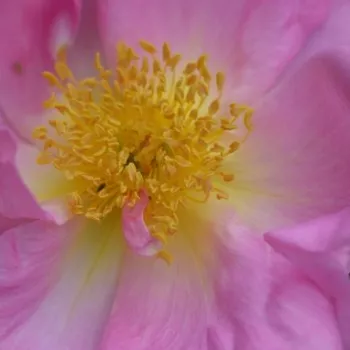
MARGUERITE HILLING – pink park rose - Hilling
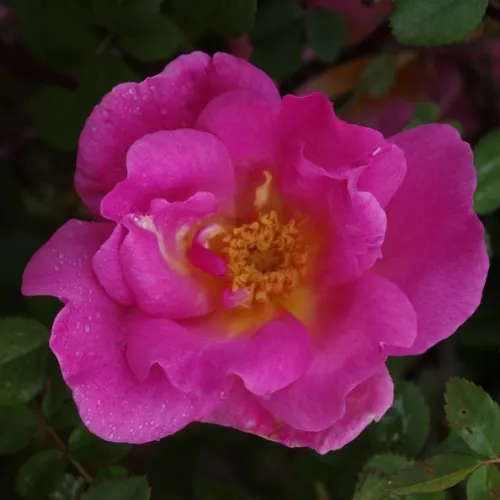
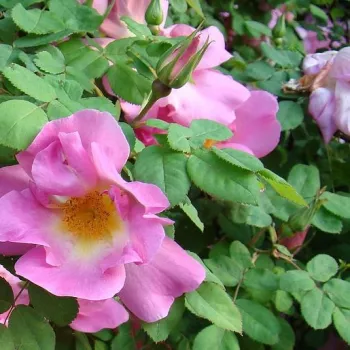
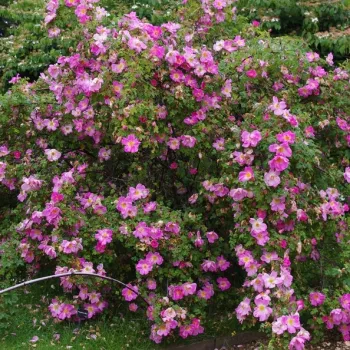
With its generous, arching habit and clouds of mid-pink blossom, MARGUERITE HILLING brings a quietly romantic cottage feel to family gardens while remaining reassuringly robust in typical British conditions. This mature shrub rose forms a bushy, leafy framework that anchors borders and screens boundaries, yet its maintenance is pleasingly simple: occasional deadheading and a light annual prune keep it flowering from early summer into autumn. Semi-double, open blooms invite bees, adding gentle wildlife interest around patios and kitchen gardens, and their mild rosy scent suits relaxed afternoons under an arbour. Own-root plants establish steadily and are naturally long-lived, giving dependable structure that regrows well if ever cut back hard. Ideal for heavier soils where raised beds help manage winter wet and improve drainage, this rose copes well with cool, breezy sites and fits beautifully into layered, softly coloured planting schemes. Over time, the shrub’s dense, mid-green foliage and pastel ageing flowers create a storybook backdrop for family life, offering a reassuring sense of permanence without demanding advanced gardening skills.
Usage options
| Target area |
Reasoning |
| Feature shrub in a small to medium family garden |
MARGUERITE HILLING develops into a tall, bushy shrub that quickly gives a sense of scale and maturity, yet needs only moderate care. Its generous height and spread create year-round structure with dense foliage that looks full even between flushes of bloom – ideal for those wanting a strong garden framework without constant pruning or cosseting, especially busy homeowners. |
| Romantic cottage-style mixed border |
The arching branches and soft mid-pink flowers suit informal cottage borders with perennials, herbs and soft grasses, creating an easy storybook look. Semi-double blooms repeat through the season, and colour fades gently to pastel tones, blending well with traditional countryside schemes and avoiding clashing brights – attractive for cottage-garden enthusiasts. |
| Loose flowering hedge along a boundary or path |
The tall, bushy habit and dense foliage make this variety well suited to a flowering hedge that defines a boundary while still feeling welcoming. Planted at the recommended spacing, it knits into a visually continuous screen with good winter outlines, benefiting from its own-root resilience if sections ever need hard renovation, reassuring practical garden planners. |
| Low-maintenance focal point near seating or terrace |
Placed by a terrace or lawn seating area, the repeat-flowering clusters and mild rosy fragrance add charm without demanding intensive care. Moderate self-cleaning reduces deadheading, and simple yearly pruning keeps it in shape, making it a dependable feature plant for relaxation spaces used by families who prefer straightforward upkeep, appealing to time-pressed gardeners. |
| Pollinator-friendly corner in a kitchen or wildlife garden |
Semi-double, open flowers expose pollen-rich stamens that are easily reached by bees and other beneficial insects. Regular flushes through summer provide a long nectar season, supporting a more biodiverse garden without complicated planting plans or specialist knowledge, a natural choice for wildlife-conscious families. |
| Traditional park-style planting in urban or suburban settings |
This shrub’s heritage character, tall outline and repeat flowering evoke classic park plantings while remaining adaptable to private gardens. It performs well as a specimen or in loose groups, tolerating typical urban conditions when given reasonable soil preparation, suiting householders who want a refined yet unfussy rose reminiscent of public gardens, especially quality-focused buyers. |
| Raised bed or improved heavy-soil border |
The rose responds well where heavier soils have been improved with compost or raised slightly, helping mitigate winter wet and providing reliable anchoring in exposed suburban sites while keeping care simple for the long term, aligning nicely with clay-soil gardeners. |
| Large container on patio, courtyard or roof terrace |
In a substantial container of at least 40–50 litres, this variety will form an elegant, upright shrub that softens hard surfaces with blossom and foliage. The own-root form gives security if winter or pruning reduces top growth, as the plant re-sprouts from its own wood, reassuring space-limited urban gardeners. |
Styling ideas
- Arbour romance – Train a pair of shrubs loosely around a wooden arbour, underplant with lavender and catmint for pastel froth – for lovers of dreamy afternoon tea corners.
- Kitchen-border – Place at the back of a kitchen garden bed with sage, chives and calendula edging – for home cooks who enjoy a soft, traditional backdrop.
- Hedged-haven – Create a low, informal hedge along a play lawn, weaving between box or yew for structure – for families wanting gentle screening without feeling shut in.
- Cottage-layering – Combine with foxgloves, hardy geraniums and ornamental grasses for a naturalistic, tiered border – for beginners aiming at a classic English-countryside feel.
- Courtyard-centrepiece – Grow in a large terracotta pot with trailing thyme and violas at the base – for urban gardeners seeking a single, generous focal shrub.
Technical cultivar profile
| Parameter |
Data |
| Name and registration |
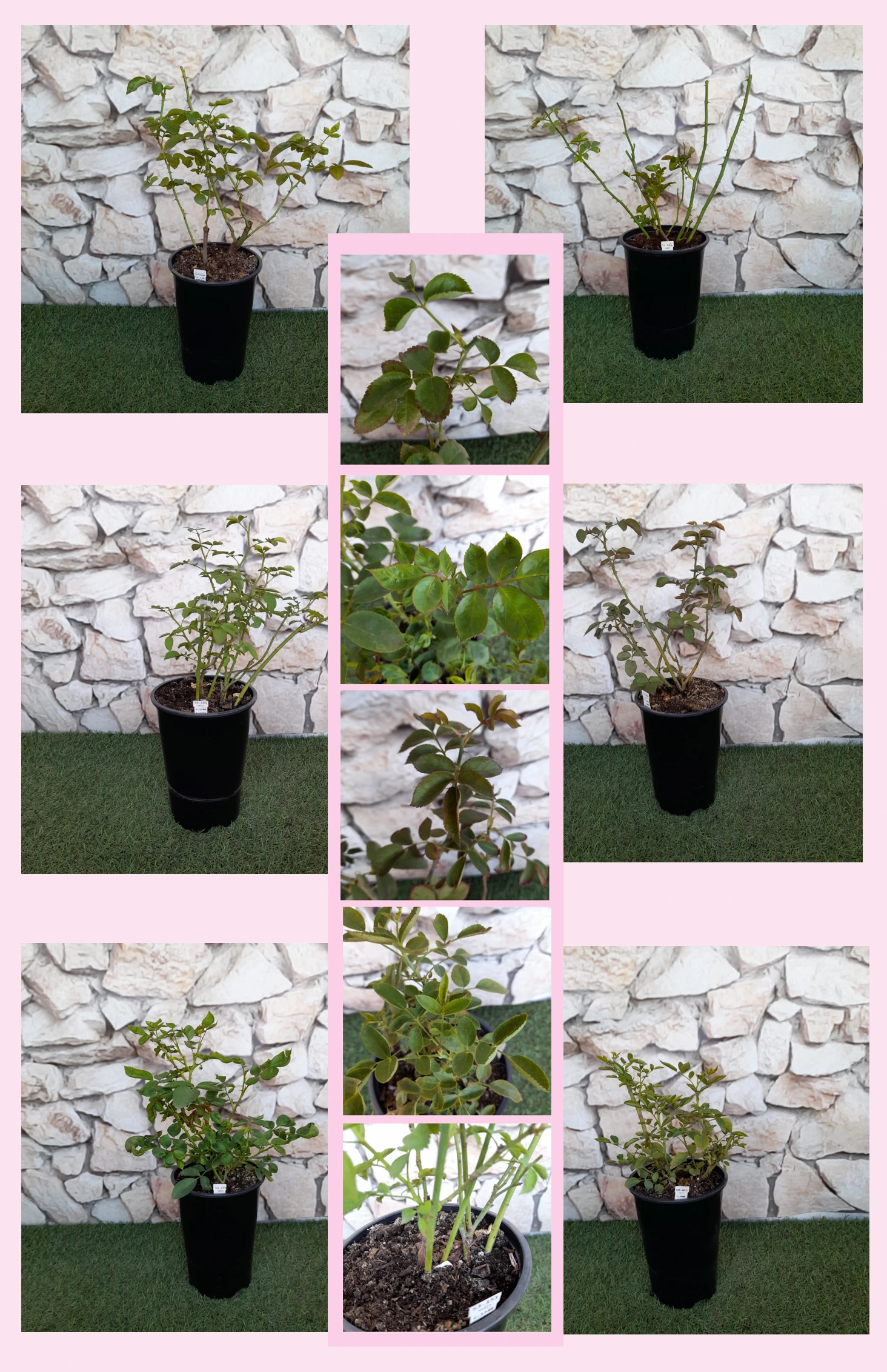
MARGUERITE HILLING, Hybrid Moyesii shrub rose, commercial park rose type; ARS exhibition name MARGUERITE HILLING; unregistered sport of ‘Nevada’, supplied own-root in 2-litre containers. |
| Origin and breeding |
Sport of ‘Nevada’ selected by Thomas Hilling, United Kingdom; bred and introduced around 1959 by T. Hilling & Co., Chobham, with current material verified as authentic clone. |
| Growth and structural characteristics |
Vigorous, bushy shrub 200–280 cm tall and 170–250 cm wide, with slightly thorny canes and dense, mid-green, lightly glossy foliage providing substantial structural presence in borders or hedges. |
| Flower morphology |
Semi-double, flat, medium-sized cluster blooms with around 13–16 petals; moderately self-cleaning with most spent flowers dropping, though occasional deadheading enhances appearance and repeat. |
| Colour data and phenology |
Mid-pink flowers (RHS 65B–65C) opening vivid then fading to pastel with paler, almost whitish petal edges; remontant habit with a strong second flush and further bloom in suitable seasons. |
| Fragrance and aroma |
Pleasant, gentle rosy scent of mild strength, noticeable at close quarters without overpowering; suitable near seating areas for a light perfume that complements, rather than dominates, other plantings. |
| Hip characteristics |
Occasional spherical hips, approximately 14–22 mm diameter, developing to a dark red to almost black colouring; primarily ornamental and appearing sporadically rather than in heavy crops. |
| Resistance and winter hardiness |
Hardy to about −32 to −29 °C (RHS H7, USDA 4b, Swedish zone 5); moderate disease resistance with good black-spot tolerance and average resistance to mildew and rust in normal seasons. |
| Horticultural recommendations |
Best in well-prepared soil with reasonable drainage; medium maintenance with occasional plant protection in high disease pressure areas; suitable for partial shade, hedging, specimen use and naturalistic schemes. |
MARGUERITE HILLING offers tall, romantic structure, repeat pink flowering and reassuring winter hardiness in a resilient own-root form; a thoughtful choice if you favour long-lived, characterful roses.