MILROSE – pink bedding floribunda rose - Chabert
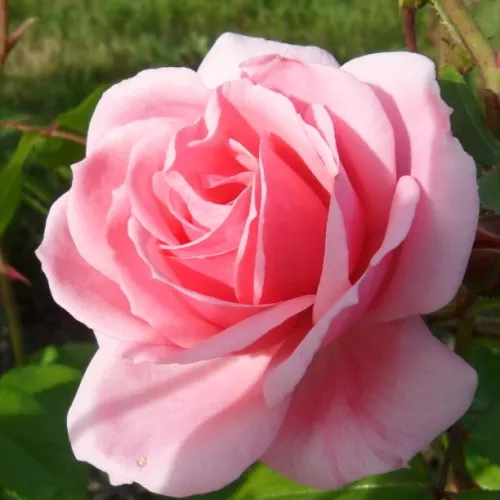
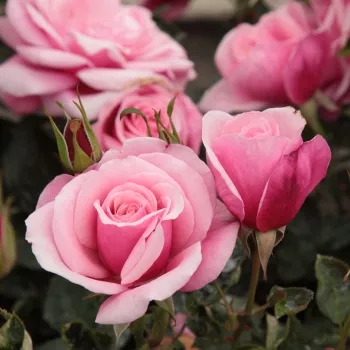
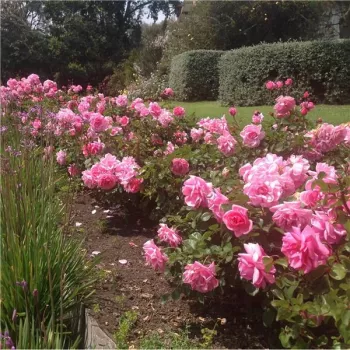
Under a cottage-style arbour, Milrose brings softly cupped, mid-pink blooms that fade to pearly pastel tones, creating a romantic border along paths and terraces. Its bushy, dense foliage and floribunda habit give generous clusters of flowers through summer, while naturally resistant leaves stay fresh and glossy even in changeable, damp weather and brisk coastal breezes. As an own-root shrub, its structure matures steadily, supporting a long-lived, reliable planting that copes well with ordinary family-garden conditions and clay soils in simple raised beds or improved borders. You can tuck this low-maintenance bedding rose into mixed cottage plantings, edging a kitchen garden or softening a paved seating area, knowing it will settle in quickly and enhance your garden’s storybook ambience.
Usage options
| Target area |
Reasoning |
| Front-of-border cottage edging |
The bushy, low shrub form and 70–100 cm height make this cultivar ideal for neat front-of-border edging that still feels romantic and informal, with mid-pink clusters softening lawn or path edges for beginners and time-poor homeowners. |
| Small mixed borders in family gardens |
Its floribunda habit and remontant second flush provide dependable colour in modest beds without complicated care; own-root plants re-shoot strongly if pruned harder or nipped by frost, suiting flexible, relaxed gardeners. |
| Low, traditional rose hedge |
Planted at around 35 cm spacing, it forms a continuous, dense, thorny line of foliage and flowers that defines play areas or vegetable plots, offering classic cottage style with minimal maintenance for safety-conscious families. |
| Mass bedding and driveway planting |
At 40 cm spacing in groups, its repeat flowering and uniform habit create a carpet of pink, visually anchoring drives and front gardens; own-root stock ensures long-term filling of gaps with little intervention for practical householders. |
| Feature shrub near seating or terrace |
The light, classic rose fragrance and generous flower size suit planting close to a bench or terrace, where the semi-double blooms can be enjoyed at eye level with simple annual pruning for mindful relaxation-seekers. |
| Large containers (from 40–50 litres) |
In substantial pots, its compact yet bushy habit and glossy foliage give a tidy, long-lived feature on patios; own-root resilience supports recovery if watering is irregular, which suits busy urban balcony-owners. |
| Informal kitchen and cutting corner |
Stems with medium-sized, cup-shaped flowers are suitable for casual indoor vases, while the plant’s remontant flowering and low input needs keep a productive yet pretty edge to kitchen plots for cottage-style cook-gardeners. |
| Raised beds on heavier soils |
Its robust root system and disease resistance adapt well where drainage has been improved in raised beds, bringing reliable flowering even where heavier soils and wetter spells are common, reassuring cautious new planters. |
Styling ideas
- Pastel Border Ribbon – run Milrose in a sinuous front line with soft geraniums and silvery sedges for a romantic, low-maintenance pastel ribbon – ideal for cottage-style enthusiasts.
- Kitchen-Garden Charm – edge vegetable beds with Milrose, weaving between herbs and low alliums to echo traditional potager planting – perfect for practical home cooks.
- Driveway Welcome – plant repeated Milrose groups along drives with sea thrift and dwarf junipers for a neat yet storybook entrance – suited to tidy-minded homeowners.
- Patio Tea Corner – set a large Milrose-filled container by a bistro set, underplanted with trailing thyme for fragrance at ankle height – appealing to afternoon-tea lovers.
- Soft Hedge Backdrop – create a loose hedge behind a lawn bench, mixing Milrose with lavender and catmint for a buzzing, gently scented frame – for relaxed family sit-out spaces.
Technical cultivar profile
| Property |
Data |
| Name and registration |
Floribunda bedding shrub rose; registered as DELbir, marketed as Milrose – pink bedding floribunda rose – Chabert; exhibition name Milrose in the floribunda bed rose group. |
| Origin and breeding |
Bred by André Chabert, Pépinières & Roseraies Georges Delbard, France; ‘Orléans Rose’ × (‘Français’ × ‘Lafayette’); introduced by Georges Delbard SA in 1965. |
| Awards and recognition |
Recognised with four medals at international rose competitions, indicating reliable garden performance and ornamental value proven under varied European trial conditions. |
| Growth and structural characteristics |
Bushy, dense shrub 70–100 cm high and 50–70 cm wide, with light green, glossy foliage and dense prickles, suited to edging, low hedges and mass bedding schemes. |
| Flower morphology |
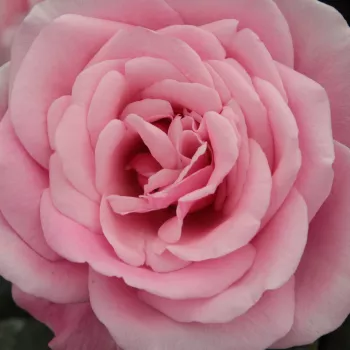
Semi-double, cup-shaped blooms with 13–25 petals, borne in corymbose clusters; large flowers around 7–10 cm, repeat-flowering strongly with an abundant second flush. |
| Colour data and phenology |
Mid-pink blooms (RHS 55C outer, 62D inner) opening rich with darker edging, then lightening to even pink and finally pearlescent, pastel shades as the flowers age. |
| Fragrance and aroma |
Light but noticeable, classic rose scent best appreciated near seating areas or paths; gentle enough for family gardens while still adding a traditional rose character. |
| Hip characteristics |
Produces moderately abundant, spherical red hips 5–8 mm across, giving fine-grained seasonal interest after flowering and subtle colour through late summer into autumn. |
| Resistance and winter hardiness |
Good overall disease resistance, rated resistant to powdery mildew, black spot and rust; hardy to about −21 to −18 °C (RHS H7, Swedish zone 3, USDA zone 6b). |
| Horticultural recommendations |
Best in full sun with improved drainage; plant 35–65 cm apart depending on use; low maintenance, suiting borders, edging, mixed beds, park plantings and casual cutting. |
MILROSE – pink bedding floribunda rose - Chabert offers reliable repeat flowering, compact bushy growth and durable own-root strength for long-term cottage-style borders, making it a thoughtful choice for relaxed family gardens.