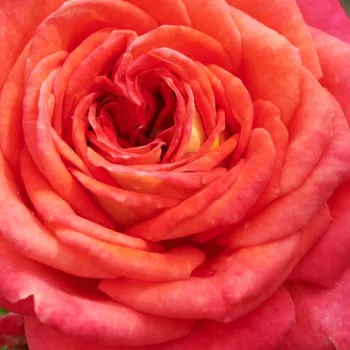
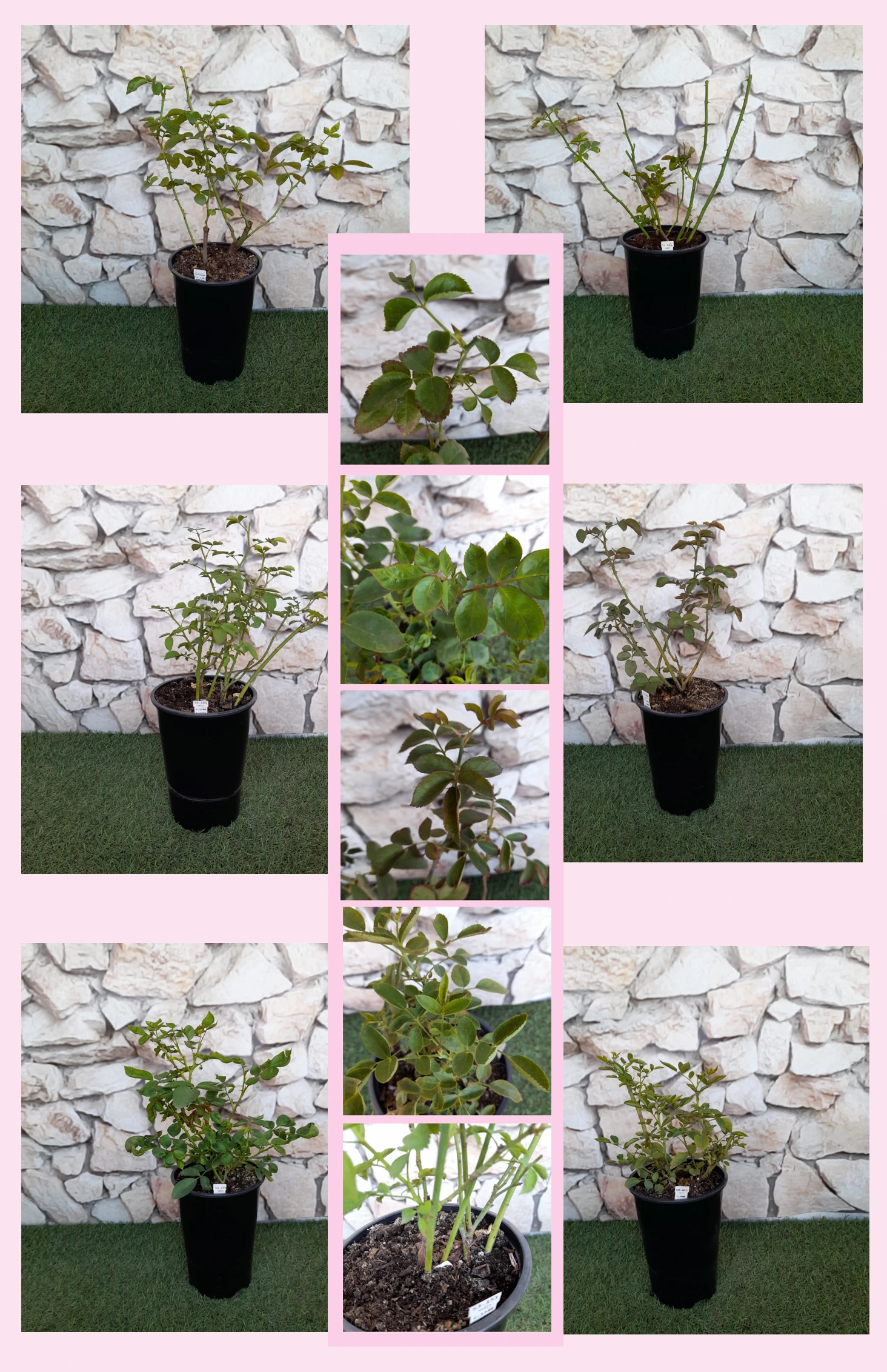
NAJAC™ – red bedding floribunda rose
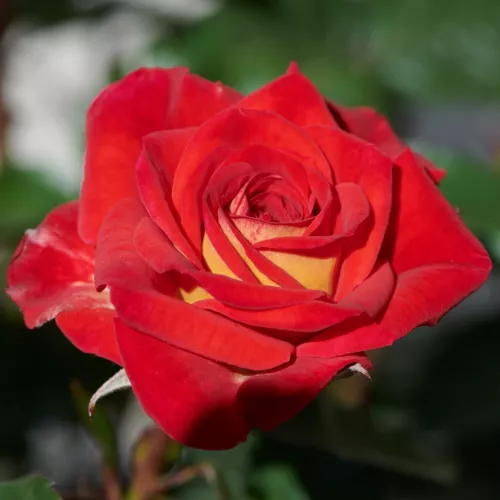
Under an arbour or beside your kitchen garden path, NAJAC™ brings a quietly romantic, storybook atmosphere to family gardens without demanding complicated care. Its compact, bushy habit fits easily into small borders, raised beds or cottage-style front gardens, where its ruby-red, orange-glowing blooms add warm colour from early summer onwards. Bred for strong, modern health, it shrugs off common rose diseases even in changeable, humid weather and blustery coastal breezes, so you can enjoy reliable flowering with minimal spraying or fuss. As an own-root plant, NAJAC™ establishes steadily and lives for many years, regenerating well after pruning or mishaps, which supports a stable garden structure over time. Simple planting into improved clay or chalk soils is all it usually needs, while regular, clustered flowering makes it ideal for cutting a few stems for indoor vases. In the first season it concentrates on roots, the second on strong new shoots, and by the third year it reaches its full ornamental potential.
Usage options
| Target area | Reasoning |
|---|
| Cottage-style mixed border in a family garden |
The compact, bushy growth and medium height allow NAJAC™ to sit comfortably at the front or mid‑border, weaving between perennials without overwhelming them. Its dependable, season-long flowering keeps borders lively even when other plants pause, adding consistent structure and colour for cottage-garden lovers. |
| Front garden or low flowering hedge |
Planted at the recommended spacing for hedging, this floribunda forms a neat, low line of glossy foliage and ruby-red blooms that reads clearly from the street. Strong disease resistance keeps the foliage clean, so even time-pressed owners can maintain a smart frontage that suits busy home gardeners. |
| Raised beds and heavy-clay or chalky soils |
NAJAC™ performs well when given reasonable drainage and a sunny site, making it suitable for raised beds over heavy clay or improved chalk. Its root-own origin helps it anchor and regenerate in real-world conditions with minimal interventions, which works well for practical family gardeners. |
| Accent planting near terrace, bench or arbour |
The warm red and yellow-orange blend creates an intimate, welcoming feel near seating areas, ideal for afternoon tea corners. Clustered, remontant flowering ensures there are always fresh blooms close by without constant deadheading, appealing to romantic garden owners. |
| Large containers and patio planters |
In a container of at least 40–50 litres, this compact shrub keeps a tidy outline and repeats well, giving a long season of colour on patios or balconies. Its own-root nature supports good longevity in pots when watered and fed sensibly, suiting space-conscious urban gardeners. |
| Low-maintenance family flower bed |
With low maintenance needs and very good resistance to key fungal diseases, NAJAC™ simplifies rose care in busy households. Regular cluster flowering provides plenty of visual return for basic pruning and feeding, making it a sound choice for time-poor beginners. |
| Coastal or wind-exposed gardens |
The sturdy, bushy framework and dense foliage cope reliably with exposed sites, while its disease resistance proves valuable in damp, wind-driven conditions often found near the sea, where clean foliage and persistent colour matter to coastal garden planners. |
| Cutting for small indoor arrangements |
Medium-sized, double, cup-shaped blooms borne in clusters are easy to pick for informal jugs and jam-jar posies. The deepening ruby tones and warm reverse give a rich, romantic effect indoors, adding home-grown charm for fans of simple arrangements. |
Styling ideas
- Cottage-Border Drift – Plant in soft drifts with Gypsophila repens 'Knuddel' and clumps of catmint to echo English-countryside borders – ideal for romantic cottage-style gardeners
- Kitchen-Garden Edge – Use as a low hedge along vegetable beds, pairing with chives and lavender to blur the line between productive and ornamental – perfect for rural kitchen-garden owners
- Patio-Focus Pot – Grow one plant in a 50‑litre terracotta container with trailing thyme and lobelia to create a long-flowering focal point – suited to balcony and small-patio keepers
- Evening-Tea Corner – Group three plants near a bench, underplanted with Penstemon digitalis 'Husker Red' to deepen the colour scheme – appealing to those who cherish quiet seating nooks
- Front-Garden Welcome – Line a short path with evenly spaced plants, interspersed with Lychnis viscaria 'Alba' for contrast and a welcoming first impression – ideal for family homes seeking kerb appeal
Technical cultivar profile
| Property | Data |
|---|
| Name and registration |
Najac™ Castle® POUlcas075; floribunda bedding rose in the Castle® collection, registered as POUlcas075 and introduced under the Najac™ – red bedding floribunda rose name. |
| Origin and breeding |
Bred in Denmark in 2021 by L. Pernille and Mogens Nyegaard Olesen for Poulsen Roser A/S; introduced and registered in 2024 as a modern floribunda shrub rose selection. |
| Growth and structural characteristics |
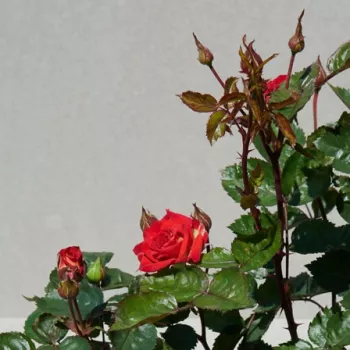
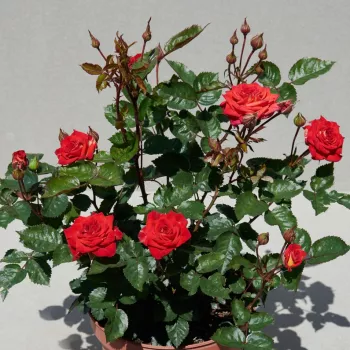
Bushy, compact floribunda shrub reaching about 70–95 cm high and 60–85 cm wide, with dense, dark green glossy foliage and moderate prickliness, suitable for beds, borders and low hedging. |
| Flower morphology |
Medium-sized, double, cup-shaped blooms with roughly 26–39 petals, borne in clusters; remontant habit with a profuse second flush providing sustained ornamental value through the flowering season. |
| Colour data and phenology |
Ruby red petals with warm orange-yellow tones toward the centre; outer petals RHS 46C, inner 40B, colours deepening as blooms open, with very good colour retention and a lively, glowing effect. |
| Fragrance and aroma |
Fragrance is very weak, with a barely perceptible sweet, spicy character; flowers are primarily valued for their rich colour and form rather than for strong scent in the garden. |
| Hip characteristics |
Occasionally forms small hips up to about 5 mm in diameter; hips are not a major ornamental feature and have limited influence on overall garden performance and appearance. |
| Resistance and winter hardiness |
Classed as resistant to black spot, powdery mildew and rust; reliably hardy to approximately −26 to −23 °C (RHS H7, Swedish zone 4, USDA 5b), suiting most temperate family gardens. |
| Horticultural recommendations |
Best in full sun with well-drained soil; recommended spacing 50 cm for mass planting, 40 cm for hedging and 75 cm as a specimen; low maintenance, generally requiring minimal spraying and routine pruning. |
NAJAC™ combines compact, bushy growth, season-long ruby-red colour and strong disease resistance in a long-lived own-root form that rewards patient gardeners over many years, making it a thoughtful choice for relaxed, romantic family gardens.