DRACO – red climbing rose – Noack
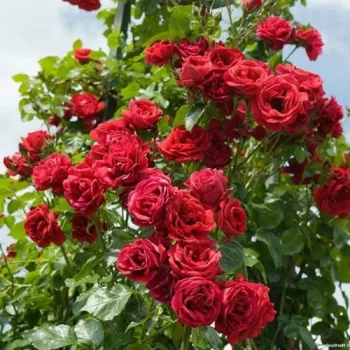
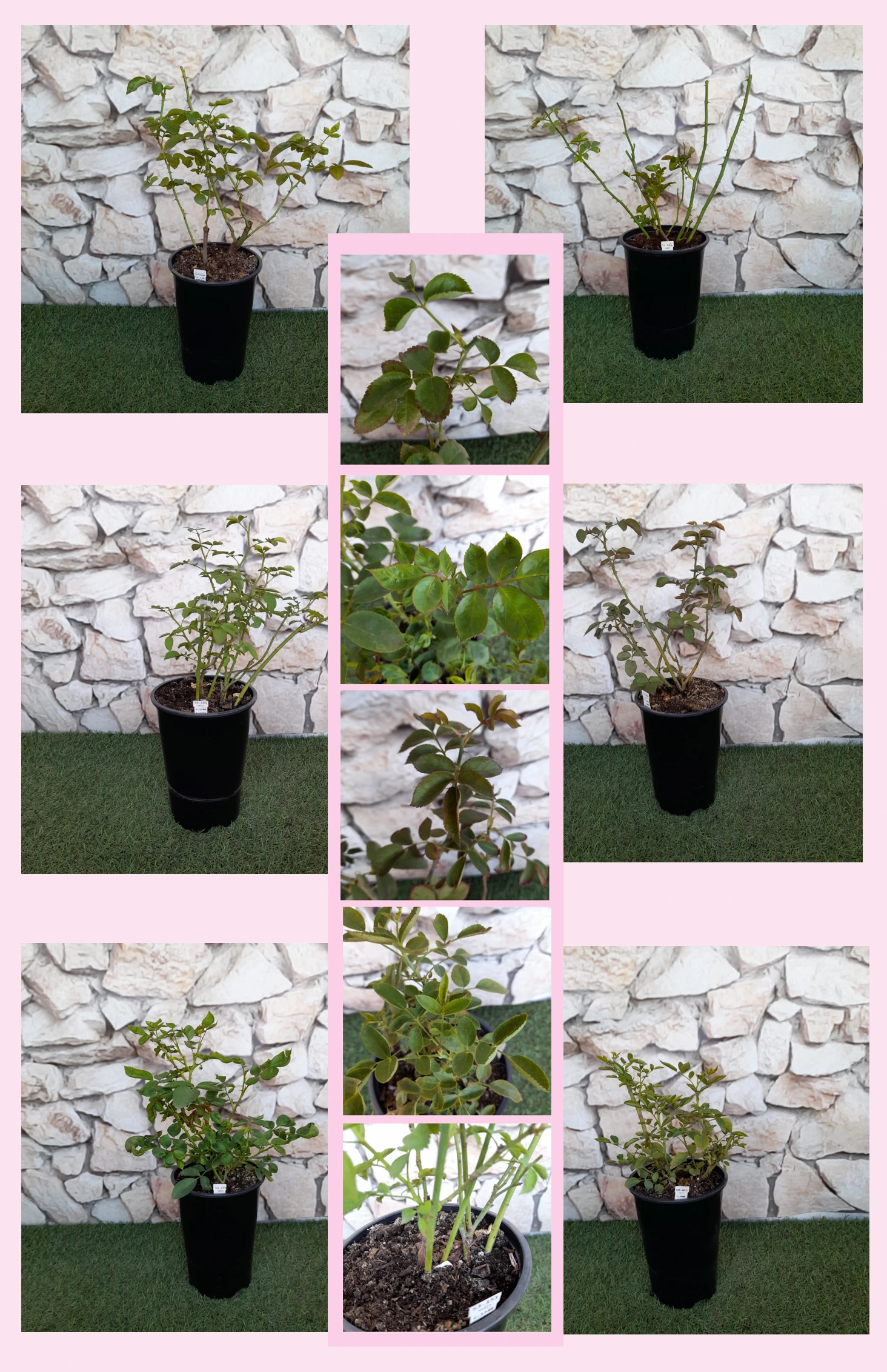
Create a corner of romantic storybook calm with this large-flowered climbing rose, ideal for arches, arbours and fences where you want dependable, repeat flowering rather than complicated upkeep. Dense, glossy foliage frames clusters of velvety red, very double blooms that shed neatly, helping your seating area stay naturally orderly with minimal deadheading. As an own-root plant it builds strength from within, quietly extending its lifespan and recovering well after pruning or weather setbacks. Plant once and enjoy a structure-filling climber that copes steadily even in breezy, unsettled, coastal-style conditions, provided the roots are well drained. Its medium maintenance needs suit real family gardens, where you want beauty to feel reassuringly effortless. Over the first seasons it knits in gradually – first establishing roots, then pushing stronger shoots, before reaching its full ornamental potential in about three years, giving you lasting, classical charm with a modern ease of care balance.
Usage options
| Target area | Reasoning |
|---|
| Arbour or arch over a seating area |
The medium-height climbing habit and abundant, velvety red clusters create a romantic canopy that feels intimate without overwhelming a small family garden. Reliable repeat bloom gives a long season of colour around your favourite chair, with only basic tying-in and pruning – ideal for those who want cottage-garden atmosphere without complex training, especially beginners. |
| Sunny house wall or warm fence |
On a south or west-facing wall, this climber makes steady, upright growth to 2–3.2 m, clothing supports with dense, glossy foliage and flushes of large, double flowers. It is best in full sun and tolerates typical British coastal breezes provided the roots are in well-drained soil, giving dependable cover and colour for householders who prefer low-fuss structure, particularly homeowners. |
| Cottage-style pergola in a family garden |
Trained along a pergola beam, the combination of rich red blooms and medium-green foliage delivers a traditional, “girly” cottage look that pairs easily with climbers or shrubs in soft pinks, whites and purples. The rose responds well to flexible pruning styles, from light shaping to harder cuts, so you can keep pathways clear without specialist skills, suiting time-pressed families. |
| Feature rose in a kitchen-garden or potager |
Used as a vertical accent near raised beds, the rose draws the eye upward, adding romance to productive corners without stealing ground space. Own-root growth ensures that, once established, the framework thickens and regenerates after winter pruning, so you can treat it robustly while it rebounds year after year – ideal for practical gardeners who value durability, especially allotment-keepers. |
| Informal boundary or screen on posts and wires |
Planted at recommended spacings along a fence, it forms a soft, flowering screen rather than a rigid hedge, with clusters of red blooms repeating through the season. Moderate vigour and self-cleaning flowers help keep the line looking tidy with only seasonal tying-in and a winter tidy, fitting busy lifestyles where long-term, living boundaries are wanted by many commuters. |
| Large container on terrace or courtyard |
In a 40–50 litre or larger container with good drainage, this climber can be trained up an obelisk or trellis to bring vertical interest and colour to paved spaces. Regular watering and feeding are the main tasks; the rose itself is structurally stable and long-lived on its own roots, making it a sound choice for small-plot or balcony gardeners who need reliable impact, particularly urbanites. |
| Mixed cottage border with shrubs and perennials |
Set at the back of a border, it weaves through light frameworks or neighbouring shrubs, its rich, stable red tones harmonising with classic companions such as wallflowers, catmint or smoky-leaved shrubs. As the plant matures, flowering becomes more generous without a big increase in day-to-day care, rewarding gardeners who prefer simple seasonal routines, especially hobbyists. |
| Small park corner, shared or front-garden space |
Where several users enjoy the same planting, this climber offers consistent visual impact with only moderate maintenance: periodic pest checks, a winter prune and tying-in new growth. Own-root vigour and structural resilience mean it copes well with occasional neglect, wind or pruning differences, giving long-term ornamental value for shared, semi-public spaces tended by community-minded neighbours. |
Styling ideas
- Teatime-arch – Train Draco over a metal arch with a simple bistro set beneath, underplanting with lavender and catmint to soften the base – perfect for homeowners wanting a romantic afternoon-tea nook.
- Cottage-fence – Let the rose climb a picket fence, interplanted with wallflowers and hardy geraniums, for a relaxed English-country lane effect – ideal for families who like a traditional, colourful front garden.
- Kitchen-pergola – Grow it along a timber pergola edging raised vegetable beds, mixing in sweet peas and herbs to blur boundaries between ornamental and productive – suited to cottage-style kitchen-garden enthusiasts.
- Courtyard-column – Plant in a 50-litre pot with an obelisk, adding trailing thyme at the rim, to bring vertical velvet-red flowers into a paved courtyard – good for urban gardeners with limited ground space.
- Parkland-niche – Use several plants on posts and wires near a bench, backed by smoke bush and evergreen ivy, to give a long-flowering, low-fuss retreat – attractive for shared communal or small park areas.
Technical cultivar profile
| Parameter | Data |
|---|
| Name and registration |
Large-flowered climbing rose; registered as NOA92199, commercial name Draco Climbing rose NOA92199, ARS exhibition name Belkanto, marketed as DRACO – red climbing rose – Noack. |
| Origin and breeding |
Bred by Werner Noack, Noack Rosen, Gütersloh, Germany; parentage unknown; bred and introduced in Germany in 2004, with registration in the same year via the originating nursery. |
| Growth and structural characteristics |
Climbing habit with dense, glossy medium-green foliage; height typically 200–320 cm with a spread of 120–200 cm; moderately thorny canes; self-cleaning flowers help maintain ornamental neatness. |
| Flower morphology |
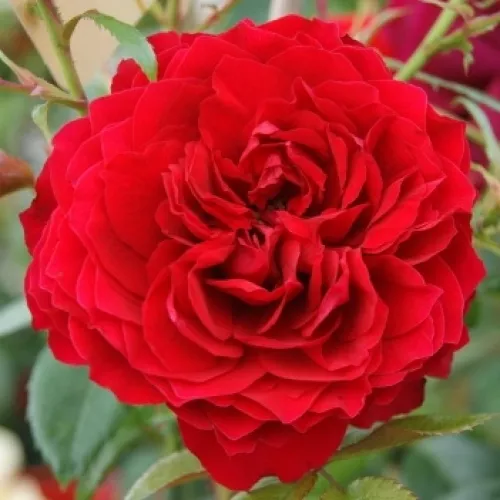
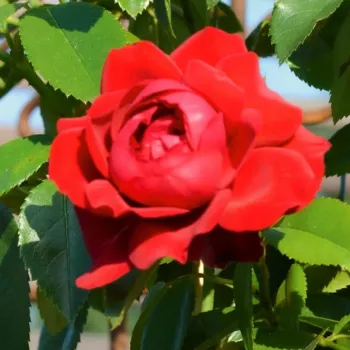
Large, very double, cup-shaped blooms with 40+ petals, produced mainly in clusters; repeat flowering with a strong second flush; individual flower size generally between 2.75 and 3.95 inches across. |
| Colour data and phenology |
Dark, velvety red blooms; buds deep crimson, opening rich scarlet red then deep ruby; RHS 53A outer, 53B inner; colour holds well with only slight lightening in intense sun during the flowering period. |
| Fragrance and aroma |
Fragrance is mild with a delicate, classic rosy character; primarily grown for visual effect rather than scent; strongly double flowers limit stamen access and make it of low interest to pollinating insects. |
| Hip characteristics |
Due to very double blooms, hip set is generally sparse; where formed, hips are small, spherical, 8–13 mm in diameter and red when ripe, adding occasional discreet seasonal interest in late season. |
| Resistance and winter hardiness |
Rated RHS H7, broadly hardy to around −21 to −18 °C; USDA zone 6b, Swedish zone 3; disease resistance moderate to black spot, mildew and rust; best performance with regular watering and basic monitoring. |
| Horticultural recommendations |
Suited to pergolas, fences, walls, arbours, specimens and park plantings; prefers sunny positions; plant 140–250 cm apart depending on use; typical densities 0.4–0.5 plants/m² in structured designs. |
DRACO – red climbing rose – Noack offers romantic repeat flowering, a manageable climbing habit and long-lived own-root reliability; consider it if you would like lasting vertical colour with straightforward care.