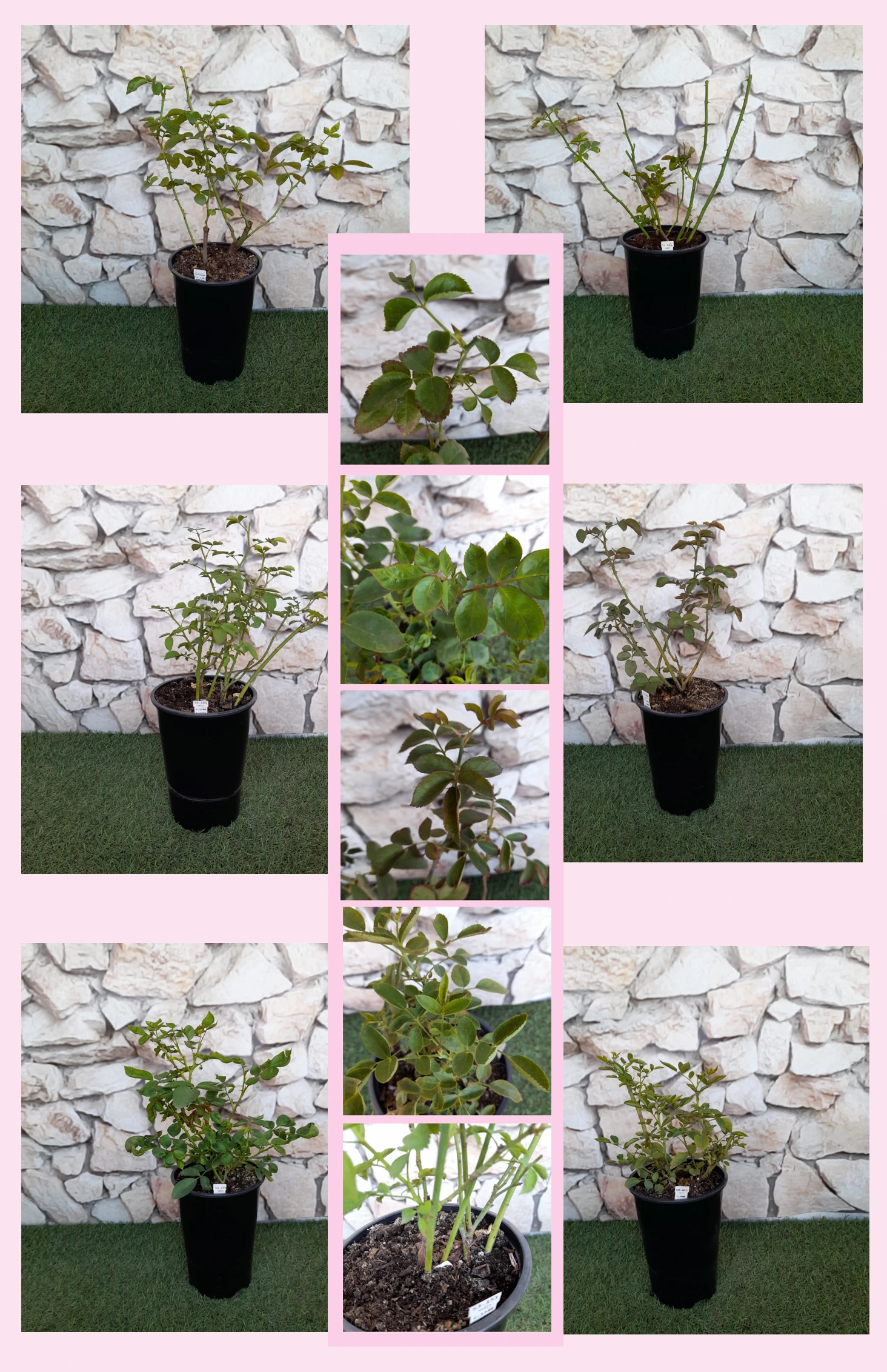
ROSA WATSONIANA – pink ground-covering rose
Rosa watsoniana brings a quietly romantic, storybook note to small and medium gardens, combining fern-like foliage with tiny blush flowers and decorative red hips. This botanical shrub thrives in ordinary garden conditions, coping well even where wind and rain buffet exposed plots, and settles into borders or informal hedges with minimal fuss. Its naturally spreading habit creates a soft, ground-hugging carpet effect that suits cottage paths, orchard edges and kitchen gardens alike. Planted as an own-root rose in a 2‑litre pot, it establishes steadily and is capable of regenerating from its own base, building long-term stability and ornamental value without complicated techniques. Over the first few seasons it develops a dense, textured canopy of mid‑green, slightly glaucous, variegated leaves that look almost ferny from a distance, staying attractive long after the brief flush of blossom. The dainty single flowers open in soft pink clusters, then drop cleanly to reveal pea-sized hips that shine red into autumn, extending interest for family gardens and wildlife. Self-cleaning clusters help to keep maintenance simple, leaving you more time to enjoy the view, while pollinator-friendly open blooms support bees and garden life around your terrace or lawn seating.
Usage options
| Target area | Reasoning |
|---|
| Low-maintenance cottage-style groundcover |
The naturally spreading, ground-hugging habit gradually knits into a soft, living carpet that suppresses much of the weedy look between shrubs and along paths, with self-cleaning flowers reducing deadheading tasks for relaxed cottage gardeners and busy beginners |
| Romantic family seating corner |
Compact clusters of tiny pink flowers followed by red hips bring a gentle, romantic feel around benches and arbours without overwhelming a small family garden, while the moderate size is easy to keep in bounds near play areas for practical homeowners |
| Feature shrub for striking foliage |
The finely cut, variegated, glaucous foliage gives a fern-like texture that stands out even when the plant is not in flower, providing a long-season focal point that pairs elegantly with perennials in beds for design-conscious gardeners |
| Pollinator-friendly wildlife corner |
The single, open blooms with easily accessible stamens offer nectar and pollen to visiting insects, while the clusters of small hips provide additional seasonal interest, supporting a more biodiverse planting for nature-loving families |
| Long-lived own-root planting |
Supplied on its own roots, this rose forms a stable base that can reshoot from below if stems are damaged, supporting a long-lived planting that matures steadily over several seasons in typical family borders for forward-planning owners |
| Coastal or wind-exposed gardens |
The dense, low, spreading framework helps the plant anchor itself and remain visually tidy where more upright roses might rock or snap, making it suitable for breezier, rain-swept sites common in many British gardens for coastal households |
| Flexible pruning and shaping |
This shrub responds well to light formative pruning or occasional thinning rather than strict shaping, so you can simply trim back wayward shoots or reduce height as needed to suit paths, edges or mixed borders for low-fuss gardeners |
| Raised beds and larger containers |
In deeper raised beds or large containers of at least 40–50 litres, its medium vigour and spreading form create a soft cascade of foliage and blooms, ideal near patios where drainage can be managed more easily for urban balcony owners |
Styling ideas
- COTTAGE RIBBON – Drift Rosa watsoniana along a sunny path with Alchemilla mollis and bearded iris, creating a soft, pink-and-lime froth that feels like an English country lane – ideal for cottage-style traditionalists
- KITCHEN BORDERS – Use as a low hedge around a kitchen garden, its fine foliage and hips framing herbs and vegetables while keeping maintenance manageable – suited to home growers who like order with romance
- WILDLIFE STRIP – Combine with nectar-rich perennials in a narrow border by a lawn or shed, where the open flowers and hips complement other pollinator-friendly plants – attractive to families encouraging children’s nature watching
- FOCAL FOLIAGE – Plant as a stand-alone specimen in a small front garden bed where its unusual variegated, fern-like leaves are visible from the pavement – perfect for collectors seeking something subtly different
- PATIO CASCADE – In a substantial 50‑litre terracotta pot, underplant with trailing thyme for a fragrant, textural mix that softens paving edges – appealing to busy urban gardeners wanting impact in limited space
Technical cultivar profile
| Parameter | Data |
|---|
| Name and registration |
Botanical shrub rose marketed as Rosa watsoniana, also known in exhibition circles as Rosa alba cymbaefolia; unregistered cultivar within the botanical rose collection for garden use. |
| Origin and breeding |
Historic Japanese botanical rose, a spontaneous intraspecific mutation of Rosa multiflora recorded before 1870; exact breeder, parent clone and original introduction details are no longer documented. |
| Growth and structural characteristics |
Vigorous, spreading shrub with dense, matte, mid‑green glaucous foliage and distinctive variegation; forms low, groundcovering thickets with relatively sparse prickles, suitable for informal hedging and banks. |
| Flower morphology |
Small, flat, single to semi-single blooms, typically 5–12 petals in loose clusters; once-flowering in early summer, self-cleaning, leaving decorative pea-sized hips that reduce the need for manual deadheading. |
| Colour data and phenology |
Very small flowers in pale pink to pinkish-white tones, ARS LP, RHS 62D outer, 65C inner; colour retention moderate, with petals dulling as they age and stamens browning as the brief flowering period concludes. |
| Fragrance and aroma |
Primarily ornamental for foliage and form rather than scent; flowers have little to no noticeable fragrance, so it is best combined with more strongly scented plants if fragrance is a key design requirement. |
| Hip characteristics |
Produces abundant, spherical red hips around 6–8 mm across; hips follow self-cleaning flowers, adding fine-textured late-season interest and sometimes grown specifically for small-fruited decorative use. |
| Resistance and winter hardiness |
Rated H6, hardy approximately to –21 to –18 °C, suitable for much of the UK; disease resistance medium, with balanced susceptibility to common rose diseases, so basic preventive care is recommended. |
| Horticultural recommendations |
Best in sunny sites with reasonably drained soil; space plants 60–150 cm depending on use, with 1.0–1.2 plants/m² for mass planting; responds well to light pruning and general-purpose rose feeding. |
ROSA WATSONIANA offers spreading groundcover beauty, distinctive foliage and decorative hips in a long-lived own-root form that suits relaxed family gardens; consider it if you want gentle cottage character with modest upkeep.