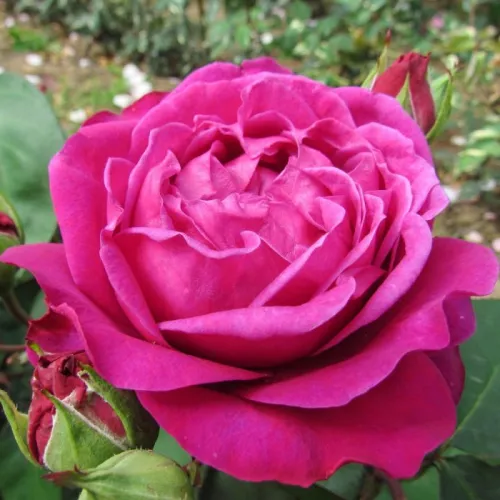
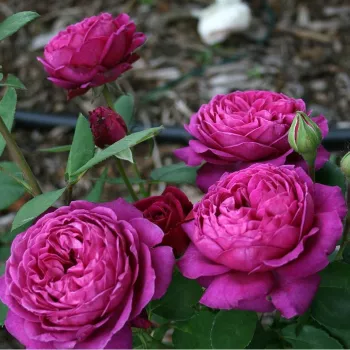
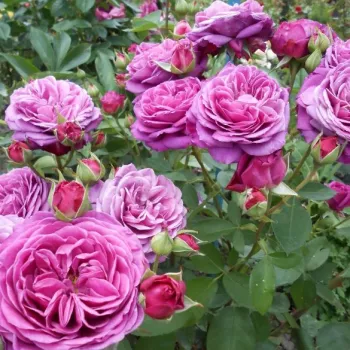
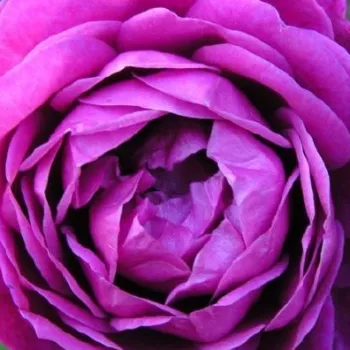
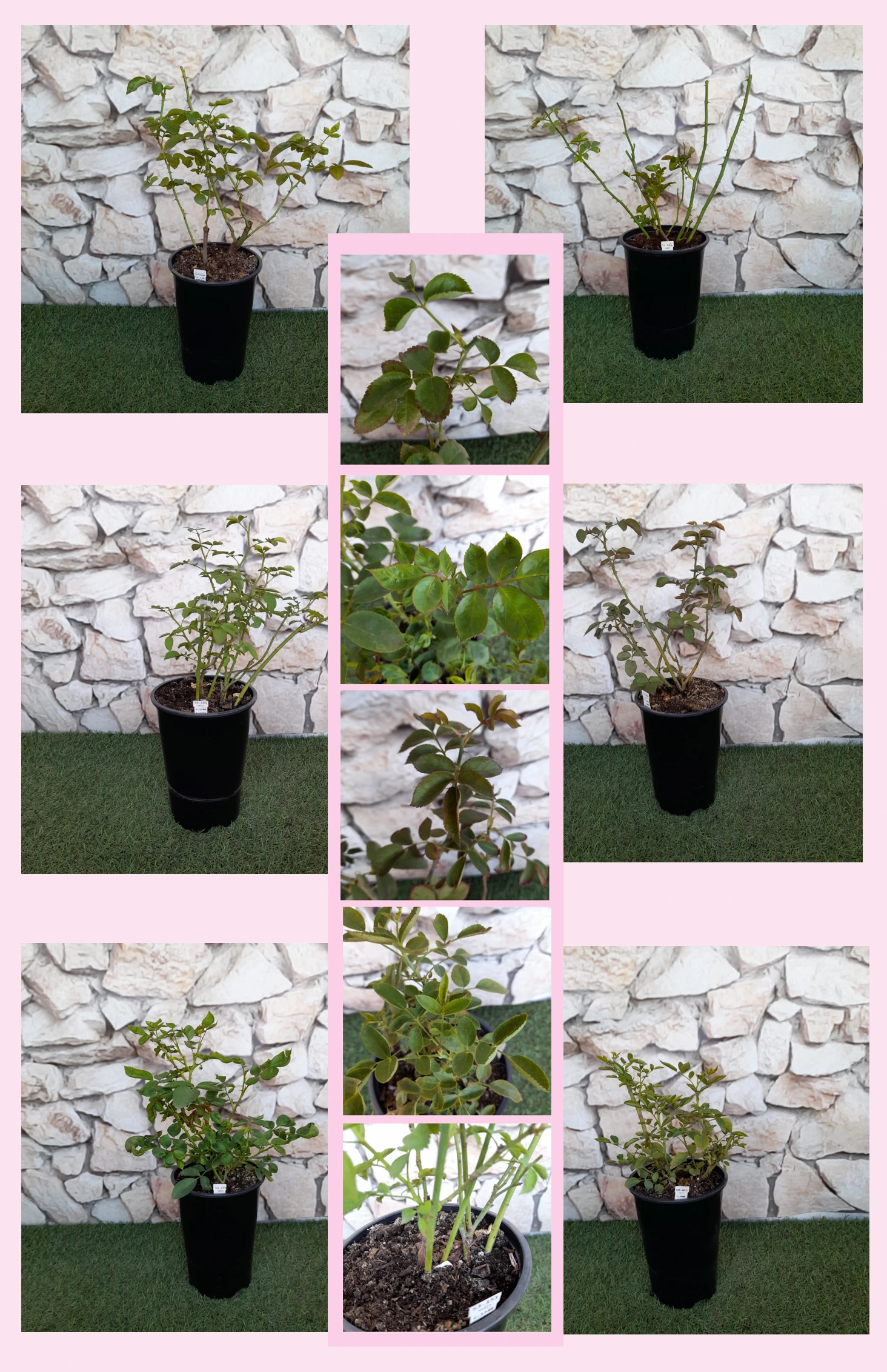
OLD PORT – deep purple bedding floribunda rose – McGredy
Sink into the romance of OLD PORT, a richly coloured floribunda that brings an intimate, storybook feel to small family gardens and cottage-style borders. Its deep, Port‑wine blooms and strong, lingering fragrance create the perfect backdrop for afternoon tea under an arbour, while the bushy, upright habit stays compact enough for modest beds and front gardens. This own-root shrub establishes gradually yet reliably, settling securely even where soils are heavier and drains slowly after rain, and its branching structure is long-lived, regenerating well from the base over time. With remontant flowering that brings generous second flushes and flexible pruning options, you can keep it neat with simple annual cuts or let it form a fuller shrub. In a large 40–50 litre container near the house or beside a kitchen-garden path, OLD PORT’s moody purple clusters weave effortlessly into an English-countryside, “girly” cottage scheme without demanding complex care.
Usage options
| Target area | Reasoning |
|---|
| Small cottage front garden border |
The bushy, upright habit and moderate height make OLD PORT ideal for narrow front borders, where it provides depth of colour without overpowering the space. Its branching form matures steadily, giving a long-lived framework that suits a traditional cottage frontage with minimal structural work from the gardener, particularly appealing to the occasional beginner. |
| Romantic seating corner or arbour edge |
Strong, long-lasting fragrance turns a simple bench or arbour into a sensory retreat, especially in late afternoon and evening. Planted close to seating, the perfumed clusters of blooms create a classic, storybook atmosphere without needing intensive upkeep, a natural fit for those who want a cosy spot to unwind after work, perfect for the time-poor homeowner. |
| Mixed cottage border with perennials |
Remontant flowering with generous second flushes helps keep colour running through the border between perennial peaks. OLD PORT’s reliable rebloom means that, with basic deadheading, the bed rarely looks empty, supporting that full, “girly” English-countryside mood even when other plants pause, well suited to relaxed hobby-gardeners. |
| Feature shrub in a family back garden |
The long-lived, own-root structure stands up well in the same spot for years, renewing shoots from the base and coping better with occasional neglect than grafted plants. This makes it a dependable focal shrub in everyday family gardens, where children play and time for detailed maintenance is limited, reassuring for busy families. |
| Large patio pot near the kitchen door |
In a substantial 40–50 litre container, OLD PORT forms a compact yet lush shrub, bringing fragrance and colour right up to the house. Its moderate size and upright habit suit terraces and small paved spaces, allowing even flat dwellers with a modest patio to enjoy a classic rose look with simple watering and feeding, attractive to urban balcony-owners. |
| Part-shaded side path or north-east aspect |
Suitability for partial shade means OLD PORT can flower well where many roses sulk, such as along a side return or by a boundary fence that only gets sun for part of the day. This flexibility helps fill awkward garden corners that still deserve romance, particularly for those working with overlooked suburban plots, helpful for practical planners. |
| Traditional rose-and-herb kitchen garden |
The classic shrub form and easy integration with edging plants like lady’s mantle or wallflowers allow OLD PORT to slip naturally into kitchen plots and productive gardens. As an own-root rose it settles in for the long term, so beds need less replanting, leaving more time for vegetables and herbs, suiting down-to-earth growers. |
| Exposed, breezy garden in need of colour focus |
Once established, the sturdy structure and moderate foliage density help OLD PORT stay anchored and balanced, even in gardens where wind and weather quickly test plants, and its root system benefits from thoughtful establishment in heavier soils that shed water slowly after persistent coastal showers, giving confidence to cautious buyers. |
Styling ideas
- Portico – Line a cottage-style front path with OLD PORT underplanted with lady’s mantle and low catmint for soft contrast – ideal for homeowners wanting instant romance from the gate.
- Teatime – Place a single OLD PORT in a 50 litre pot beside a bistro table, adding lavender and thyme nearby for scent layers – perfect for urban gardeners creating a compact afternoon-tea nook.
- Harbour – Combine OLD PORT with Japanese creeper on a fence to echo old harbour walls in plum and green – suited to those drawn to moody, story-inspired planting.
- Storybook – Mix OLD PORT in a long border with foxgloves, wallflowers and old-fashioned pinks to keep colour and perfume flowing through summer – for lovers of traditional cottage borders.
- Kitchen – Use OLD PORT as a focal shrub at the end of a vegetable row, edged with chives and marigolds, blending ornamental charm with productivity – ideal for families with a rustic kitchen garden.
Technical cultivar profile
| Name and registration |
Floribunda bedding rose, registered as MACkati, marketed as Old Port – deep purple bedding floribunda rose – McGredy; classified as a shrub rose for exhibition, with own-root plants offered in 2-litre containers. |
| Origin and breeding |
Bred by Samuel Darragh McGredy IV (McGredy Roses International, Auckland), from ‘Macsupple’ × ‘Big Purple’; registered in 1992 and introduced after 1992 via Egmont Roses, reflecting modern floribunda breeding. |
| Growth and structural characteristics |
Bushy, upright shrub 80–100 cm high and 70–90 cm wide, with moderately dense, matt dark green foliage and sparse prickles; forms a well-branched structure that lends itself to low hedging, borders and specimen use. |
| Flower morphology |
Large, very double rosette blooms with over 40 petals, usually borne in clusters of 1–3 per stem; remontant, providing repeated flowering with a notable second flush given reasonable feeding, watering and deadheading. |
| Colour data and phenology |
Closed buds are dark, velvety purple; newly opened flowers show purplish-magenta outer petals and cooler lilac inner tones, deep crimson-purple at full bloom, fading towards lilac-grey; colour retention is moderate, warmer weather speeding softening. |
| Fragrance and aroma |
Strong, long-lasting scent with a full, perfumed character, most apparent in still, warm conditions; dense petals hold fragrance well, making the variety suitable for planting close to paths, doors or seating areas. |
| Hip characteristics |
Hip set is generally sparse due to the very double flowers; when present, hips are small, spherical, 6–10 mm across, orange-red (RHS 43A), and of mainly ornamental interest late in the season. |
| Resistance and winter hardiness |
Rated to approximately -21 to -18 °C (RHS H7), USDA Zone 6b and Swedish Zone 3; disease resistance is moderate overall, with good black spot resistance but some susceptibility to mildew and rust in humid or crowded conditions. |
| Horticultural recommendations |
Suited to borders, low hedging, specimen planting and cutting; prefers well-drained soil with regular watering in drought; plant 50–55 cm apart in groups, or 90 cm for solitary specimens; partial shade is tolerated without major loss of bloom. |
OLD PORT – deep purple bedding floribunda rose – MACkati offers fragrant, repeat flowering, a compact shrub form and the long-term reliability of an own-root plant, making it a thoughtful choice for quietly romantic family gardens.