ORIGAMI ® – cream-red bedding floribunda rose – Meilland Richardier
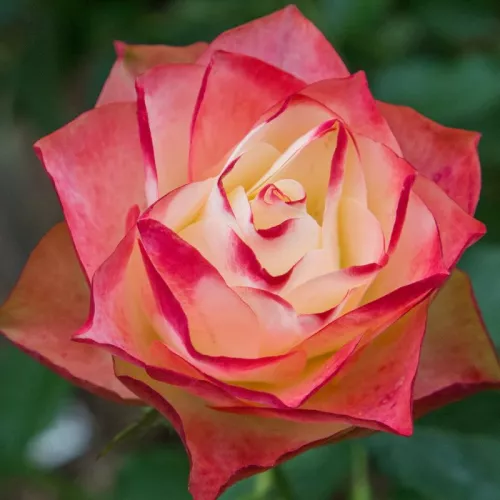
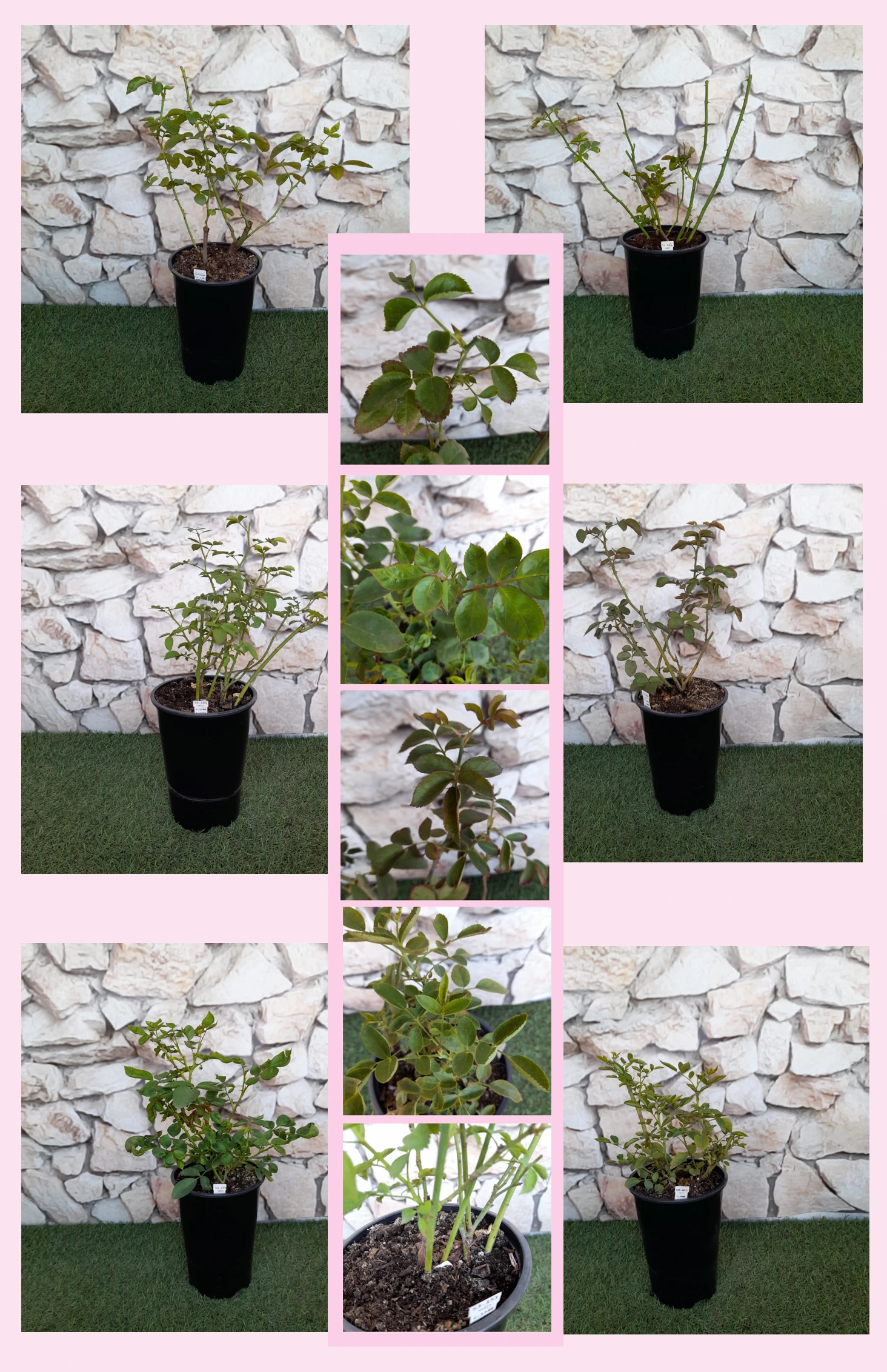
With its unusual, folded-petal blooms and bicolour contrast, Origami ® brings a quietly theatrical, romantic note to family gardens, whether in a flower bed, a front border or a generous container. The dense, dark green foliage frames the starry flowers beautifully, while the bushy habit keeps plants compact, tidy and easy to place, even in smaller plots. Once settled, its good tolerance of heat and moderate dryness lets it cope reliably with bright, exposed spots and those occasional dry spells that everyday life can bring. This own-root rose is supplied as an established, container-grown plant, ready for straightforward planting into borders or large pots, and designed to reward patient gardeners as roots, then shoots, then full display build up over the first three seasons, creating a long-lived, slowly maturing feature that sits comfortably alongside other perennials in gardens where wind and rain can be frequent visitors, supporting relaxed, cottage-style planting, borders, containers, structure, colour, continuity and character.
Usage options
| Target area |
Reasoning |
| Front-of-border focal point in a romantic cottage bed |
The compact, bushy habit and dense foliage mean Origami ® naturally forms a neat, rounded mound that sits perfectly at the front or mid-front of a mixed border. Its distinctive folded-petal flowers read clearly from a path or terrace, giving a “storybook” focal point without dominating the whole bed, especially in small to medium family gardens frequented by romantic-style enthusiasts. |
| Formal or informal bedding schemes in family gardens |
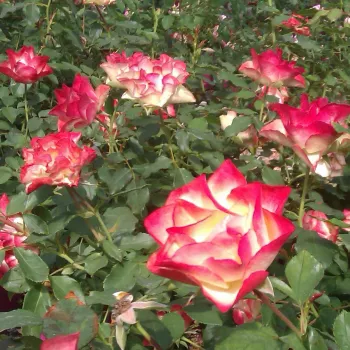
As a bedding floribunda, Origami ® is ideal planted in groups at the recommended spacing, building a low, even ribbon of colour that works in both traditional and relaxed layouts. Clustered blooms on each stem help create a strong visual block from a distance, suiting front gardens and drive-side beds tended by owners seeking classic impact. |
| Feature container on terrace, balcony or patio |
The variety’s moderate height and bushy structure suit large containers, where its striking bicolour flowers can be appreciated up close near seating areas. In a pot of at least 40–50 litres, own-root plants have room to develop a stable framework and dependable display, ideal for busy balcony gardeners. |
| Heat-exposed spots in sunny, sheltered gardens |
Origami ® copes well with summer warmth once established, tolerating heat and moderate short dry periods without quickly losing its structure. In a typical UK garden with sunny, south-facing aspects, this makes it a reassuring choice for terraces and open beds maintained by sunny-plot homeowners. |
| Mixed planting with perennials and ornamental grasses |
The dark, slightly glossy foliage and sculptural flowers pair well with airy grasses and upright cottage perennials, giving a layered, “girly” countryside look. Grouped with echinacea or switchgrass, it becomes a soft, romantic anchor for informal schemes appreciated by cottage-border creators. |
| Small gardens where space is limited |
With a typical height of 70–90 cm and spread of 40–60 cm, Origami ® offers a generous floral presence without overwhelming narrow beds or compact front gardens. The defined outline helps planning around paths, play spaces and seating, suiting space-conscious families. |
| Long-term planting as a slowly maturing garden feature |
As an own-root rose, Origami ® develops from a strong, established young plant into a long-lived shrub that can regenerate from its own base if pruned harder. Over time this supports a stable, enduring garden feature for forward-thinking gardeners. |
| Borders in gardens exposed to coastal weather |
Once well established in suitably prepared soil, Origami ® forms a well-anchored bush whose tidy, bushy structure copes respectably with blustery, wet conditions, helping maintain an attractive outline even when storms roll in, especially valued by coastal-region owners. |
Styling ideas
- Pastel Cottage Drift – Plant Origami ® with pale pink roses, nepeta and soft geraniums to echo an English cottage border along a front path – ideal for romantic-style homeowners.
- Terrace Tea Corner – Use a single plant in a 50-litre terracotta pot beside outdoor seating, underplanted with white lobelia for a relaxed “afternoon tea” feel – perfect for balcony and patio users.
- Colour-Banded Ribbon – Mass-plant in a narrow bed along a driveway, alternating with white flowering perennials to create a low, bicolour band of interest – suited to neat, traditional front gardens.
- Prairie Romance Mix – Combine with Echinacea ‘Delicious Nougat’, Panicum ‘Sangria’ and airy grasses for a modern, meadow-like but feminine border – attractive to design-conscious cottage gardeners.
- Kitchen-Garden Edge – Line the boundary of a rural kitchen garden with small groups, weaving among herbs and low fruit bushes for a storybook potager – appealing to country-plot families.
Technical cultivar profile
| Attribute |
Data |
| Name and registration |
Origami ® – cream-red bedding floribunda rose from the Classics collection, registered as MEImozahiq, with the American Rose Society approved exhibition name Origami for show purposes. |
| Origin and breeding |
Bred by Michèle Meilland Richardier, Meilland International, France, from unknown parentage; breeding work completed in 1999, introduced to the market in 2015 by Meilland Richardier. |
| Awards and recognition |
Highly regarded floribunda, winning Gold Medal and Rose Hills Trophy at the Australian National Rose Trial Garden 2010, plus Silver Medal at Tokyo International Rose & Gardening Show the same year. |
| Growth and structural characteristics |
Bushy, compact shrub reaching about 70–90 cm high and 40–60 cm wide, with dense, slightly glossy dark green foliage and moderate prickliness, forming a tidy, rounded, well-filled outline in beds or containers. |
| Flower morphology |
Floribunda type, bearing medium-sized, densely double, cup- to star-shaped blooms with more than 40 petals, produced in clusters, with remontant flowering and a reliable second flush through the season. |
| Colour data and phenology |
Striking cream-red bicolour; cream-white base with vivid red margins on opening, later softening toward pale white in strong sun, with ARS code rb, RHS 155D and 46A, and more pronounced fading in full light. |
| Fragrance and aroma |
Primarily grown for its visual effect rather than scent; available information indicates fragrance is very weak to barely noticeable, with heavily doubled flowers that keep stamens largely concealed from pollinating insects. |
| Hip characteristics |
Hip production is usually low due to the densely double blooms, but where formed they are small, spherical, orange-red hips about 8–12 mm across, offering modest late-season decorative interest among the foliage. |
| Resistance and winter hardiness |
Hardy to approximately –21 to –18 °C (RHS H7, USDA 6b, Swedish zone 3); tolerates heat and moderate drought when established, but is very susceptible to powdery mildew, black spot and rust, needing regular protection. |
| Horticultural recommendations |
Best in well-prepared beds, borders or large containers, 30–55 cm spacing; thrives in full sun or light shade with consistent care, high maintenance needs and a regular plant protection programme in humid regions. |
Origami ® – cream-red bedding floribunda rose – offers compact, bushy structure, distinctive bicolour blooms and the regenerative security of an own-root plant; consider it if you value long-term garden character from a single rose choice.