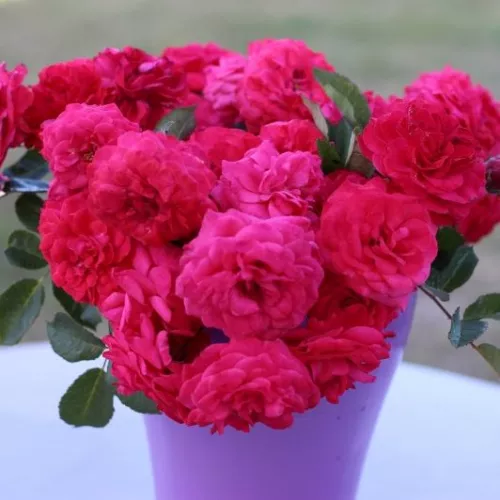
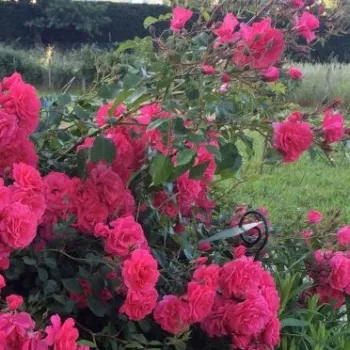
PÉTILLANTE DE SAINT-GALMIER – raspberry-pink bedding polyantha rose
Imagine settling into a quiet corner of your garden for afternoon tea, with the bushy, flower-laden forms of PÉTILLANTE DE SAINT-GALMIER creating a softly romantic, storybook backdrop. This compact polyantha rose is ideal for typical British family plots, coping well with breezier sites where roses must stand firm and stable during unsettled coastal-style weather. Its clusters of cupped blooms shift from rich crimson to vivid raspberry-pink, giving a long, changing season of colour with minimal intervention. Grown on its own roots, it offers reassuring longevity, steady regrowth after pruning or winter, and dependable structure over the years. Once planted, it quickly settles into a natural rhythm of repeat flowering, allowing you to enjoy cottage-garden romance and relaxed cosiness without complex rose skills – simply plant, water, mulch, and let this polyantha quietly earn its place as a reliable companion in beds, borders or larger containers.
Usage options
| Target area | Reasoning |
|---|
| Front of mixed cottage border |
The bushy, compact habit fills the front of a border with rounded, natural mounds that look at home among herbs and perennials. Its masses of raspberry-pink clusters create a cottage feel with simple pruning and light feeding, suiting busy beginners. |
| Low flowering hedge along a path |
Regular, medium-height growth and dense foliage allow an even, low hedge at around knee to mid-thigh height, guiding paths or edging lawns. Plant at the recommended spacing for a continuous line of colour with only occasional shaping, ideal for family homeowners. |
| Mass planting in a bedding scheme |
Reliable repeat flowering and uniform structure make it excellent for groups where you want a bold splash of colour from many smaller blooms rather than a few large ones. Square or hexagonal planting gives a “carpet of roses” effect, attractive for urban gardeners. |
| Large container on terrace or patio |
The moderate size and bushy form suit a generously sized pot of at least 40–50 litres, where roots have room to develop and support plenty of blooms. This allows romantic rose colour even on paved spaces, particularly appreciated by balcony owners. |
| Informal rose-and-kitchen garden mix |
Its natural habit blends well with box, yarrow and lady’s mantle near vegetable beds, giving a relaxed, “girly” cottage feel without looking over-manicured. Own-root resilience means it copes well with everyday family use around working plots, pleasing country cooks. |
| Wind-exposed or open suburban sites |
A relatively low, bushy framework and good anchoring from own-root growth help it stand steadily in more exposed gardens, with less risk of rocking in winter gales and showery summer weather that typical UK gardens often experience, reassuring for coastal residents. |
| Low-maintenance family flowerbed |
Moderate disease resistance and a remontant blooming habit mean that with simple watering, mulching and occasional pest control, you can enjoy months of colour. Over roughly three seasons it builds roots, then shoots, then full display, which suits time-pressed parents. |
| Long-term structure in a small garden |
Own-root growth provides a stable framework that can be rejuvenated by harder pruning if needed, without worrying about graft failure or suckers. This long-lived backbone lets you replant around it over the years, an advantage for long-term planners. |
Styling ideas
- Cottage-Romantic Row – Plant a soft edging line with PÉTILLANTE DE SAINT-GALMIER and weave in lady’s mantle and box for a low, billowing border – ideal for lovers of classic cottage charm.
- Kitchen-Garden Accent – Nestle one or two shrubs near herbs and salad beds, where their raspberry-pink clusters add colour without overwhelming useful crops – perfect for practical cooks who enjoy a pretty potager.
- Storybook Corner – Combine with yarrow hybrids and old-style garden accessories beside a bench for an “afternoon tea” nook – suited to those wanting a gentle, nostalgic feel in a small space.
- Patio Feature Pot – Grow a single plant in a 40–50 litre container with trailing thyme or lobelia at the rim for layered texture – attractive for balcony and terrace owners seeking easy romance in limited space.
- Raspberry Bed Drift – Mass-plant several shrubs in a loose drift through a front garden, echoing the flower colour with pink perennials – a good option for homeowners aiming for instant kerb appeal with simple care.
Technical cultivar profile
| Property | Data |
|---|
| Name and registration |
PÉTILLANTE DE SAINT-GALMIER, Flowerbed polyantha rose; group: Polyantha / bed rose; exhibition category shrub rose; commemorates Saint-Galmier and its renowned sparkling mineral water. |
| Origin and breeding |
Bred by Fabien Ducher, Roseraie Ducher, Charly, France; parentage unknown; bred and first introduced in France in 2020, distributed initially by Roseraie Ducher. |
| Growth and structural characteristics |
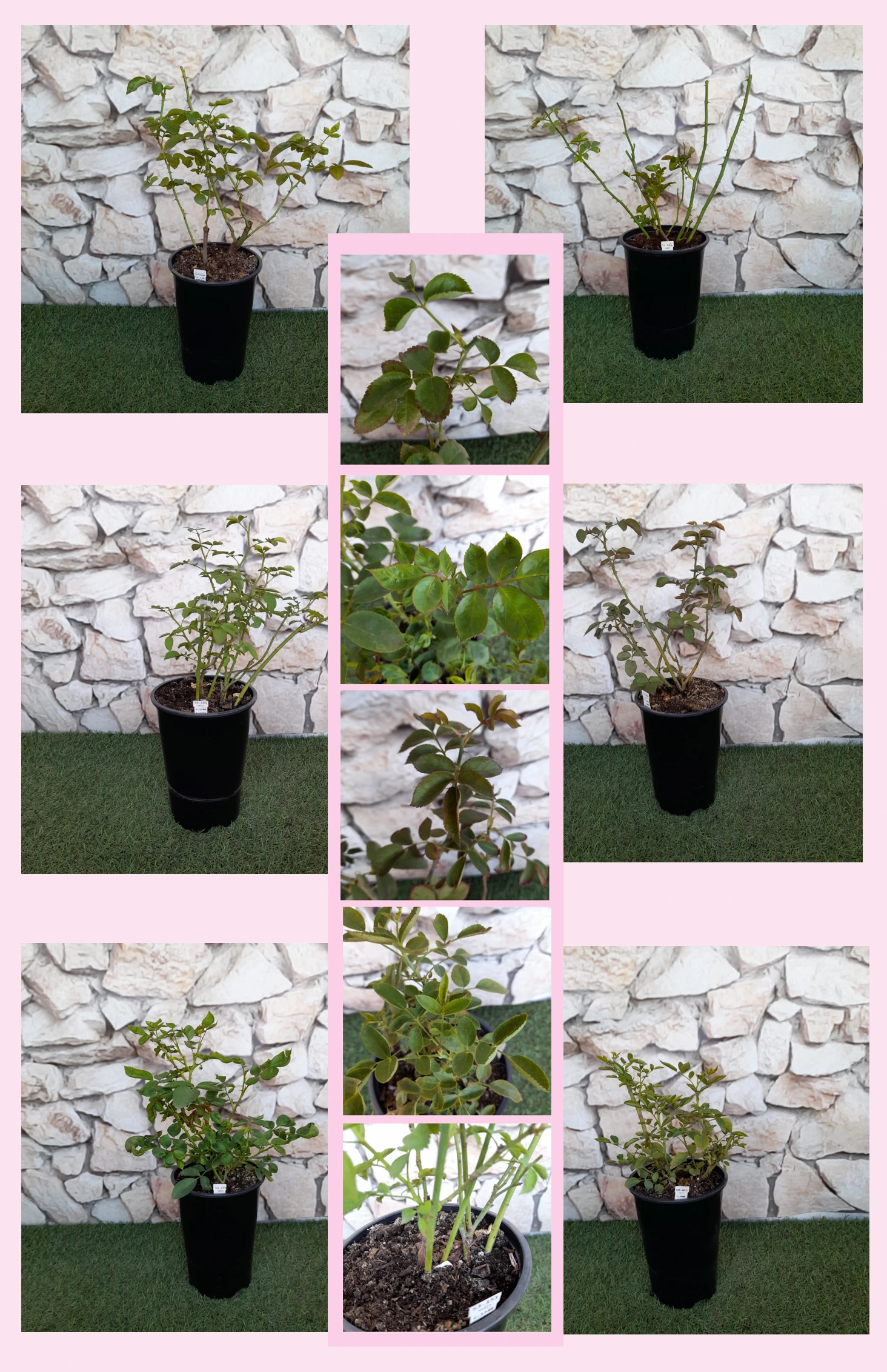
Bushy, naturally rounded shrub, around 85–115 cm tall and 65–95 cm wide; dense, slightly glossy mid‑green foliage; moderately thorny shoots suitable for beds, borders and low hedges. |
| Flower morphology |
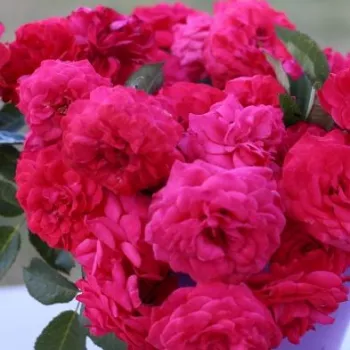
Medium-sized, double, cupped blooms with roughly 26–39 petals, borne in clusters; remontant with a particularly abundant second flush, providing a long ornamental season in average conditions. |
| Colour data and phenology |
Closed buds deep crimson-pink; opens vivid raspberry-red, then saturated raspberry-pink; later softens to muted pink with a bluish-red cast; ARS DP, RHS 53A outer, 53C inner petals. |
| Fragrance and aroma |
Very weak, discreet fragrance, often barely noticeable in the garden; chosen primarily for its colour display and flowering habit rather than scent, suiting sites where strong perfume is not essential. |
| Hip characteristics |
Limited hip set expected due to full, double flowers; occasional small, globular red hips around 6–10 mm diameter (RHS 53A), with little impact on overall ornamental performance. |
| Resistance and winter hardiness |
Hardy to around −21 to −18 °C; RHS H7, Swedish zone 3, USDA 6b; moderate resistance to black spot, powdery mildew and rust, requiring occasional monitoring and targeted protection in humid seasons. |
| Horticultural recommendations |
Plant at about 55 cm for bedding, 50 cm for hedges, 90 cm as a specimen; medium maintenance with occasional pest control; prefers well-drained soil and regular watering during establishment. |
PÉTILLANTE DE SAINT-GALMIER offers abundant raspberry-pink clusters, a compact, bushy shape and dependable long-term structure from its own-root form; a thoughtful choice if you would like lasting cottage character with straightforward care.