PINK GROOTENDORST – pink park rose - Grootendorst
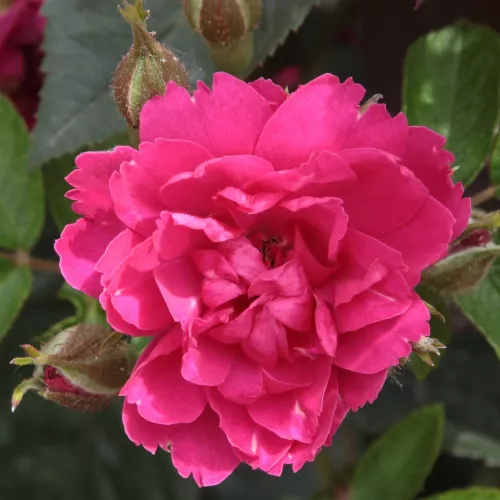
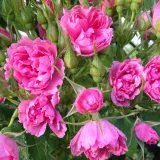
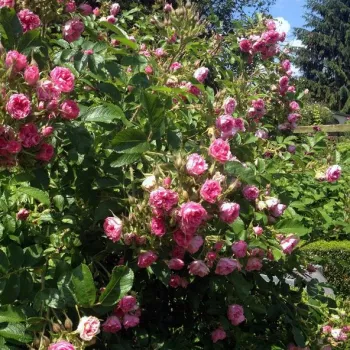
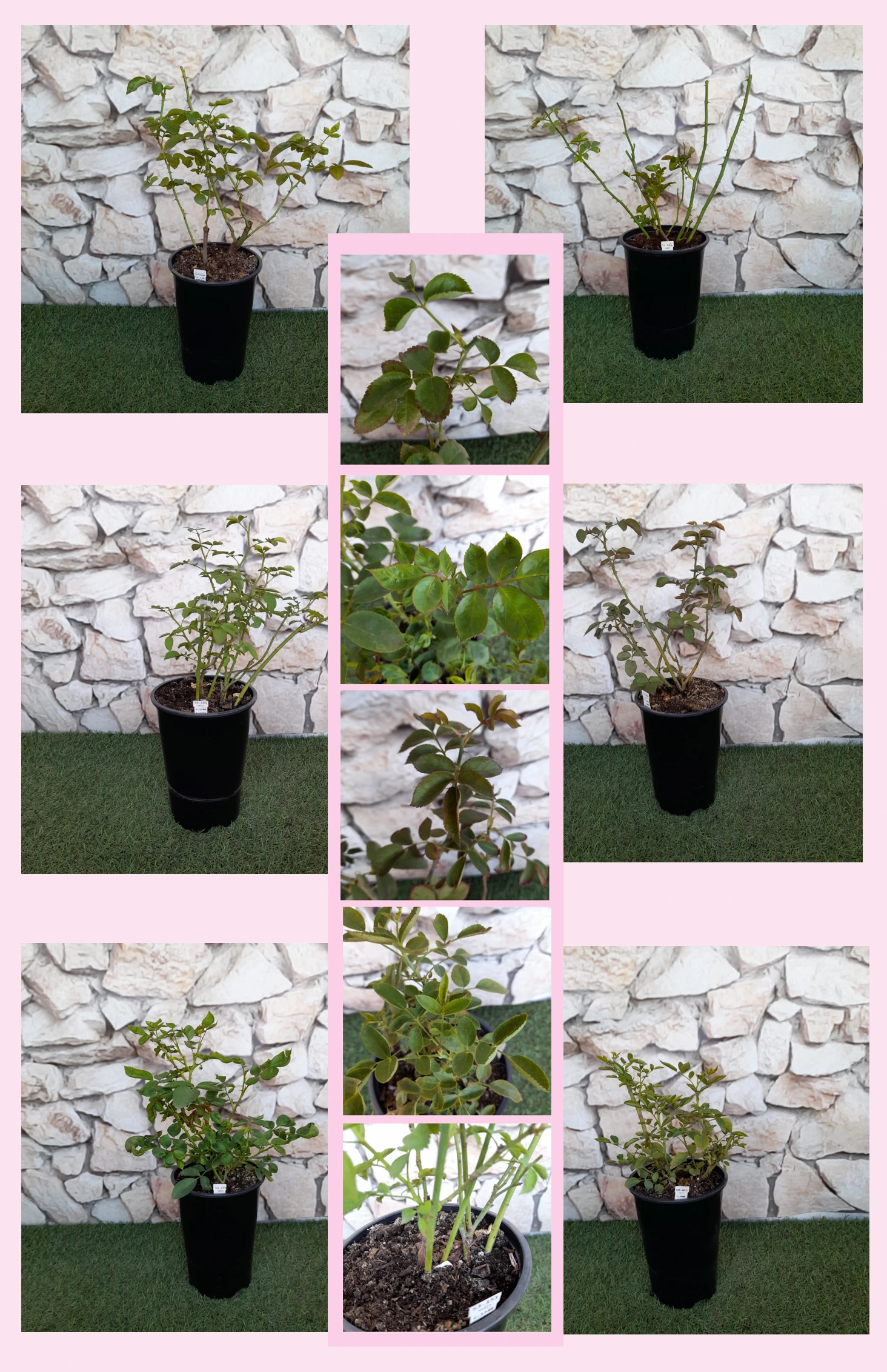
In a small family garden or cottage-style plot, PINK GROOTENDORST settles into a relaxed, storybook rhythm, its neat clusters of ruffled pompon blooms bringing a sense of afternoon-tea romance to hedges, borders and kitchen-garden paths. This hybrid Rugosa shrub balances old-fashioned charm with reassuring endurance, thriving even in exposed spots where breezes test less robust roses and coping reliably with damp spells and summer showers in coastal districts. The dense, bushy framework and mid-green foliage provide year-round structure, while its steady repeat flowering from early summer into autumn adds soft colour without demanding constant attention. Own-root cultivation supports long-term stability and easy regeneration after harder pruning or weather damage, suiting busy gardeners who want classic cottage character from a rose that does not fuss. Over its first seasons it quietly expands, becoming an increasingly confident presence, giving you more time to enjoy the ambience of your garden rather than managing it, as roots establish, shoots strengthen and the full ornamental effect unfolds by the third year into a mature, dependable display.
Usage options
| Target area |
Reasoning |
| Low to medium informal hedge along boundaries |
The bushy habit, dense foliage and vigorous growth form a semi-formal, flowering screen that feels traditional rather than rigid. Moderate maintenance and good hardiness make it practical for family plots where privacy, shelter and a soft, romantic look are all welcome for the homeowner. |
| Mixed cottage-style border in a family garden |
The rounded outline and mid-height presence give a strong backbone for cottage plantings, while the ruffled pink clusters echo old garden roses without their fussy care needs. It repeats well with simple deadheading, providing dependable colour for the cottage-lover. |
| Feature shrub near seating or “afternoon tea” corner |
Planted by a bench, arbour or patio, its nostalgic pompon flowers and leafy volume frame a cosy sitting area without taking over the space. Once its own-root system is established, it offers a long-lived, low-fuss focal point that suits the relaxed pace of the busy-gardener. |
| Row planting beside paths or kitchen garden beds |
Regular spacing along a path or vegetable plot creates a gentle, old-fashioned avenue, the pink clusters softening utilitarian areas. The sturdy framework and moderate thorniness discourage stray feet while needing only straightforward pruning, ideal for the practical family. |
| Screening in exposed or breezier sites |
The Rugosa background supports robust wood and reliable leaf cover, so it copes better than many roses with wind and unsettled weather. Over time the shrub anchors itself strongly, offering a resilient living screen that suits more challenging spots valued by the coastal-gardener. |
| Traditional front garden structure |
One or several shrubs can be used as permanent “bones” of a front garden, keeping their outline through the year and flowering generously in season. The Award of Garden Merit underlines its reliability, offering reassurance for the style-conscious yet time-limited beginner. |
| Large container or half-barrel planting (40–50 litres minimum) |
In a spacious container, its bushy habit and repeat flowering bring cottage colour to paved courtyards or terraces. A generously sized pot supports good root depth, making care straightforward and watering more forgiving, which suits the lifestyle of the urban balcony-owner. |
| Low-maintenance park-style group or mass planting |
Planted in loose drifts, its reliable second flush and steady growth build a soft, unified effect, even when individual care is minimal. Own-root plants knit into long-lived, easily renewed groups, suiting those who want lasting structure with simple upkeep for the planner. |
Styling ideas
- Cottage-Hedge – weave PINK GROOTENDORST into a mixed hedge with hawthorn and box, letting the pink pompons punctuate green structure – for lovers of traditional boundary lines and soft-screened family spaces
- Kitchen-Path – line a vegetable or herb path with spaced shrubs, underplanting with chives and marigolds for a working garden edged in romantic pink – for home cooks who enjoy a productive yet pretty plot
- Arbour-Tea – place a pair of shrubs flanking a simple wooden arbour, combining with clematis viticella to climb above – for those dreaming of afternoon tea corners and storybook seating
- Pastel-Border – mix this rose with lavender, nepeta and white foxgloves to create a soft, airy frame around lawns – for gardeners seeking calm colour harmony and relaxed maintenance
- Courtyard-Tub – grow a single plant in a 50-litre half-barrel with trailing vinca at the rim for greenery even out of bloom – for urban owners wanting long-lived structure from one dependable container rose
Technical cultivar profile
| Characteristic |
Data |
| Name and registration |
Pink Grootendorst is a shrub, Hybrid Rugosa park rose; current trade use includes PINK GROOTENDORST – pink park rose - Grootendorst; exhibition name recognised by the American Rose Society. |
| Origin and breeding |
A sport of ‘F.J. Grootendorst’ (Rosa rugosa rubra × ‘Madame Norbert Levavasseur’), bred by F. J. Grootendorst & Sons Nursery in Boskoop, Netherlands, with introduction in 1923 as an unregistered cultivar. |
| Awards and recognition |
Holds the Royal Horticultural Society Award of Garden Merit (1993), signalling dependable performance, ornamental value and garden worthiness under typical British conditions when grown with normal care. |
| Growth and structural characteristics |
A bushy shrub to around 120–180 cm high and 100–150 cm wide, with dense, mid-green slightly glossy foliage and strongly thorned stems; forms a solid structural presence suited to hedging or specimen roles. |
| Flower morphology |
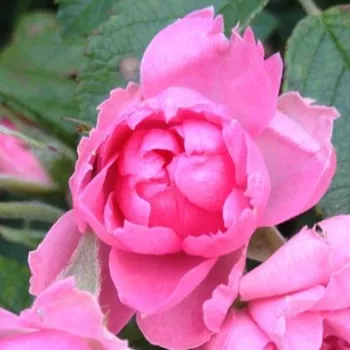
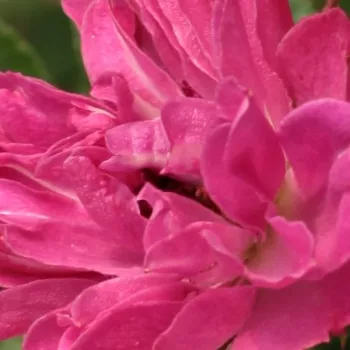
Clusters of medium-sized, double, pompon-like blooms with 26–30 petals; flowers are spherical with a distinctive frilled effect and produce a solid second flush, especially when regular deadheading is carried out. |
| Colour data and phenology |
Mid-toned, saturated pink (ARS mp; RHS 62C outer, 62D inner); new blooms vivid, then edges lighten to pastel while centres stay medium pink, with only modest fading in strong sun and generally uniform display. |
| Fragrance and aroma |
Fragrance is very weak and often barely perceptible, making it suitable where strong scent is unnecessary or might conflict with nearby seating or dining areas; primary appeal is visual and structural. |
| Hip characteristics |
Forms moderate numbers of small, spherical hips, about 14–23 mm across, in an orange-red shade that can add subtle seasonal interest after flowering if spent blooms are not removed late in the year. |
| Resistance and winter hardiness |
Hardy to around −37 to −34 °C (RHS H7; Swedish Zone 6; USDA 3b); disease resistance is medium to major foliar diseases; tolerates heat and moderate drought once well established in suitable soil. |
| Horticultural recommendations |
Best at 110–120 cm spacing for hedges or groups, 180 cm for specimens; moderate care with some pest and disease monitoring; suitable for partial shade and adaptable to beds, borders and urban green spaces. |
PINK GROOTENDORST offers long-lived structure, repeat pink flowering and reliable hardiness in an own-root form that matures steadily into a stable, easy-care shrub, making it a thoughtful choice for relaxed, traditional gardens.