RAUBRITTER® – pink park rose - Kordes
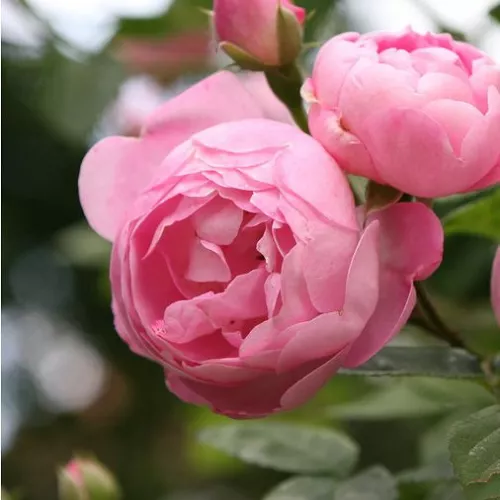
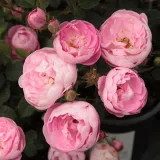
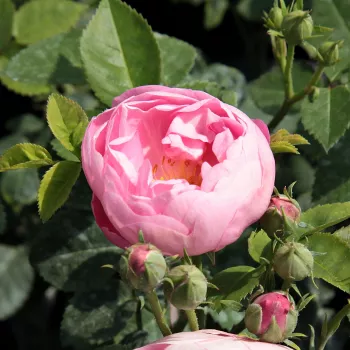
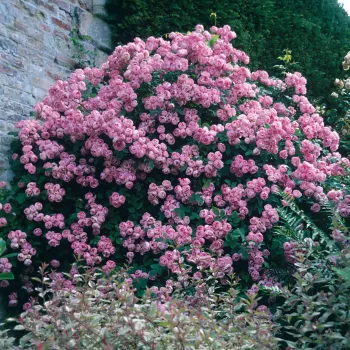
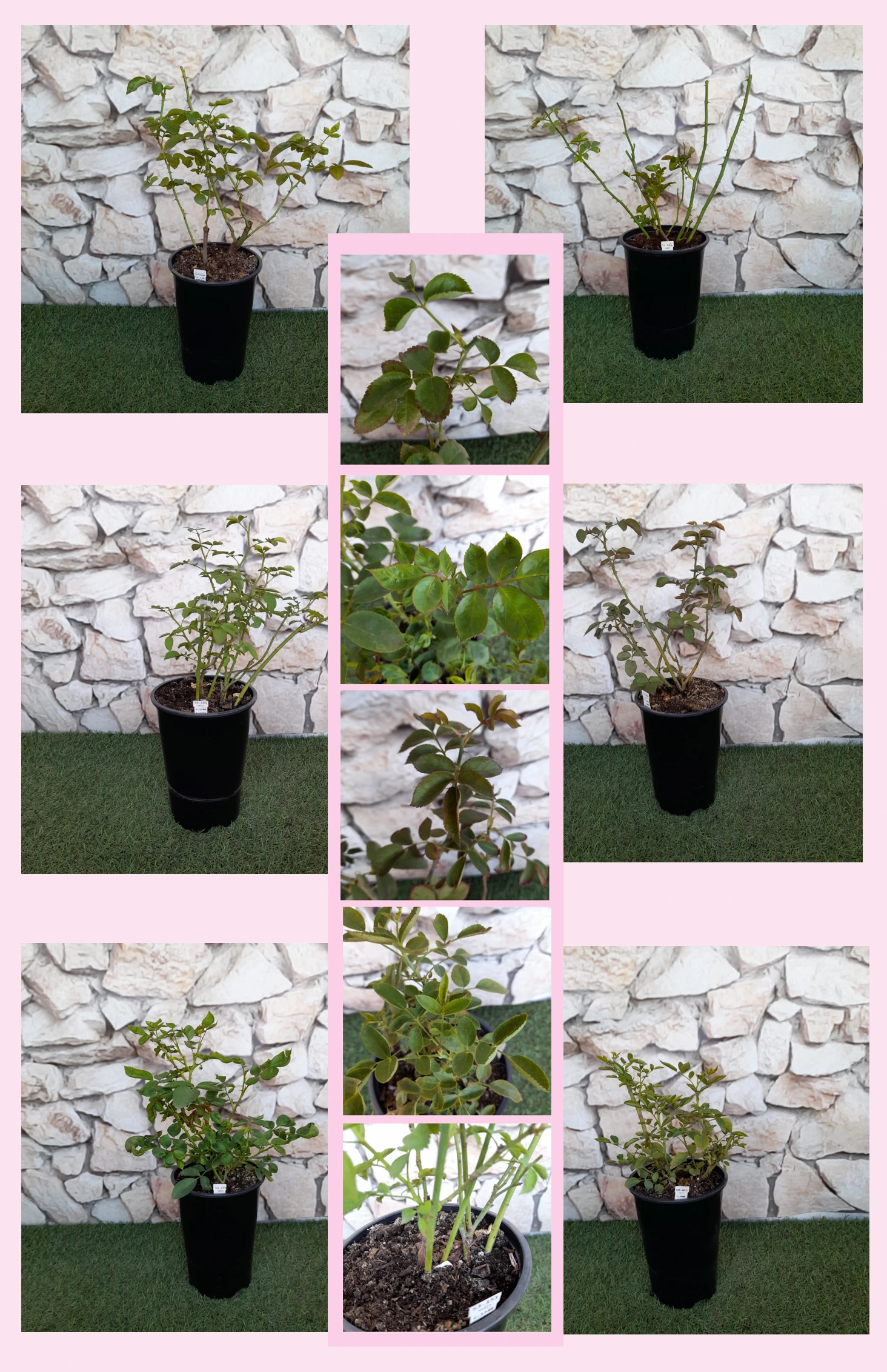
RAUBRITTER® brings a storybook sense of romance to an ordinary family garden, covering arches, fences or low walls with cascades of small, perfectly rounded, deep pink rosettes in early summer. Its bushy, arching habit creates a natural screen, ideal for softening boundaries or disguising sheds and bins, while the once-a-year flowering is so abundant that it feels like a planned garden event. Bred in 1930s Germany and now supplied on its own roots, it builds strength steadily for a long, reliable life, the plant using its first year to root, its second to throw more shoots and its third to reach full character in your border. Good disease resistance and tolerance of typical British summers – including blustery days and heavy downpours near the coast – mean less spraying and worry, more quiet pleasure. RAUBRITTER® copes well with heat once established, yet its matte dark foliage and arching form retain their charm without constant fuss. It can also be kept a little smaller with light pruning or allowed to spill freely down a bank or over a low wall for that relaxed cottage look. In larger containers of at least 40–50 litres it will still express its graceful habit, adding a cosy, intimate feel to patios and courtyards.
Usage options
| Target area | Reasoning |
|---|
| Cottage-style pergola or rose arbour |
The naturally arching, bushy habit of RAUBRITTER® makes it ideal for training over a simple wooden pergola or arbour, where its once-a-season mass of pink pompon blooms creates a romantic “afternoon tea” canopy with minimal ongoing pruning for beginners. |
| Soft boundary hedge or fence line |
Planted at 120 cm intervals along a fence, this shrub forms a relaxed, flowering screen, with moderately dense foliage that offers privacy without feeling formal; its own-root toughness and low maintenance suit busy homeowners. |
| Groundcover on a slope or bank |
With a broad spread and arching stems, RAUBRITTER® flows beautifully down a sunny or lightly shaded bank, helping to anchor the soil while providing a carpet of pink clusters; own-root vigour means it knits in reliably for practical, pretty families. |
| Feature rose in a mixed cottage border |
Used as a solitary specimen at about 220 cm spacing, it becomes a romantic focal point among herbs, perennials and kitchen-garden planting, its once-flowering pink clouds pairing well with traditional cottage plants for nostalgic gardeners. |
| Large patio container or courtyard tub |
In a 40–50 litre container with good drainage, RAUBRITTER® offers an easy-care solution for small urban spaces, giving a generous early-summer display without demanding constant deadheading, ideal where time and room are limited for city residents. |
| Low-intervention family garden rose bed |
Good resistance to common rose diseases and moderate self-cleaning of spent blooms mean fewer sprays and tidying sessions, fitting neatly into a low-effort planting plan that still feels special for time-pressed parents. |
| Informal park-style planting or large lawn island |
At the recommended 140 cm mass-planting distance, groups of RAUBRITTER® create a sweeping, park-like effect with a single, enchanting flush of blossom, giving long-term structure and seasonal drama for romantic-style planners. |
| Exposed or coastal-influenced family plots |
Once established, its robust structure, heat tolerance and reliable own-root growth provide a stable feature that stands up well to typical British blustery, wet spells near the coast, reassuring less-experienced but enthusiastic owners. |
Styling ideas
- Storybook Arbour – Train RAUBRITTER® over a simple timber arch, underplant with lavender and catmint for scent and soft blues, and place a small bistro set beneath – ideal for romantic cottage-garden lovers.
- Kitchen-Garden Edge – Use a loose hedge of RAUBRITTER® to frame a vegetable plot, weaving through chives and thyme so the pink rosettes contrast with edible greens – perfect for home growers who like traditional charm.
- Bank of Blossom – Let the arching stems spill down a sunny slope, interspersed with low grasses and Liatris ‘Kobold’ to extend interest after flowering – suited to gardeners taming awkward levels with beauty.
- Pastel Patio Corner – Plant one in a 50-litre terracotta pot with light, free-draining compost, adding white violas or soft-pink pelargoniums around the base – good for small-plot owners wanting impact from one key container.
- Park-Style Drift – Create a sweeping drift in a lawn island, mixing RAUBRITTER® with blue-flowering Ceanothus and Caryopteris for layered height and colour – appealing to those planning a classic, long-view family garden.
Technical cultivar profile
| Property | Data |
|---|
| Name and registration |
RAUBRITTER® – pink park rose - Kordes; shrub, Hybrid Macrantha group, park rose type; ARS exhibition name ‘Raubritter’; unregistered cultivar used under its longstanding commercial name. |
| Origin and breeding |
Bred by Wilhelm J. H. Kordes II in Germany, 1936; parentage ‘Daisy Hill’ × ‘Solarium’; introduced by W. Kordes’ Söhne as a robust shrub for parks and large gardens. |
| Growth and structural characteristics |
Bushy, arching shrub 80–130 cm high, spreading 160–260 cm; moderately dense, matte dark grey-green foliage; densely thorned shoots; suitable for hedging, groundcover and specimen planting. |
| Flower morphology |
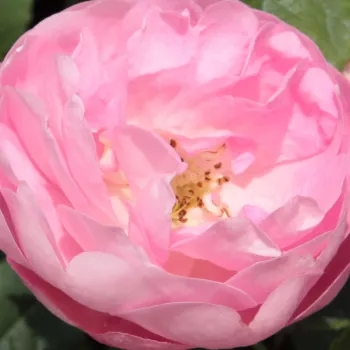
Very full, small pompon to ball-shaped blooms (0.5–1.5 in), borne in large clusters; more than 40 petals per flower; once-flowering, giving one impressive main flush in early summer. |
| Colour data and phenology |
Deep pink with slight purplish tone; RHS 68B outer, 68C inner; centre paler than petal edges; colour deepens in cool weather, lightens in hot sun, finally fading evenly to soft pastel pink. |
| Fragrance and aroma |
Mild, subtly rosy fragrance with a soft, traditional character; primarily ornamental impact is visual rather than scented; heavy petal count gives romantic effect despite gentle perfume level. |
| Hip characteristics |
Forms small, spherical red hips about 6–10 mm in diameter; produced in moderate quantities after flowering, adding discrete late-season interest without overwhelming the plant’s overall appearance. |
| Resistance and winter hardiness |
Good resistance to powdery mildew, black spot and rust; copes well with heat and moderate drought when established; very hardy (approx. –34 to –32 °C), equivalent to RHS H7 and USDA zone 4a. |
| Horticultural recommendations |
Low maintenance, with moderate self-cleaning; plant 120–140 cm apart in sun or partial shade; ensure decent drainage on heavy clay, or use raised beds; water in prolonged drought, particularly in containers. |
RAUBRITTER® offers romantic once-a-season masses of pink rosettes on a long-lived, low-maintenance shrub supplied on its own roots for lasting strength and easy care, making it a thoughtful choice for relaxed cottage-style gardens.