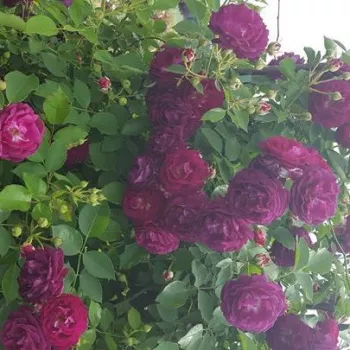
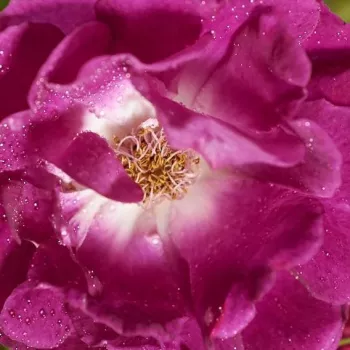
ROSENGARTEN ZWEIBRÜCKEN – purple-lilac climbing rose – Warner
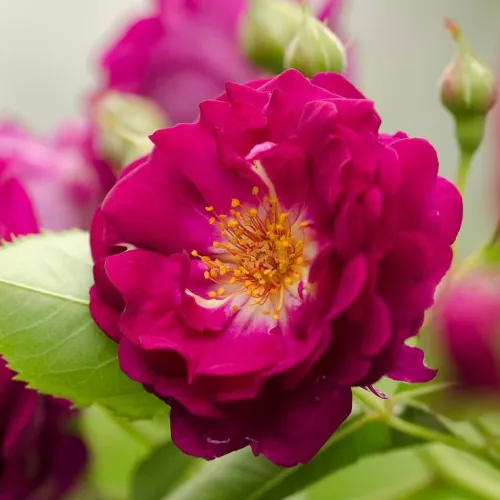
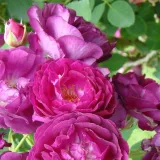
Bring a touch of storybook romance to your garden with Rosengarten Zweibrücken, a richly fragrant climbing rose that suits relaxed family spaces as easily as classic cottage borders. Its velvety crimson‑purple blooms, flushed with lilac, create a cosy backdrop for afternoon tea under an arbour or against a sun‑warmed wall, while the semi‑double flowers offer a subtly wildlife-friendly feel. Bred for reliability and long life, this own‑root climber forms a stable framework that regenerates well from the base and copes admirably where strong winds and rain regularly sweep in from the coast. Remontant flowering keeps the colour coming in generous flushes, and the very strong, spicy‑berry perfume gives each sitting spot a sense of luxury. Moderate maintenance needs and partial shade tolerance make it a practical choice for busy gardeners: simply give it a firm support, good preparation and patient seasonal care and you will see roots establish in the first year, framework shoots build in the second, and full ornamental impact from around the third – a graceful investment in long‑term garden character that stays manageable even in smaller family plots.
Usage options
| Target area |
Reasoning |
| Family pergola or arbour seating area |
Use this climbing rose to frame a bench or bistro set, where its very strong spicy, berry‑fruited fragrance and romantic crimson‑purple clusters create a calm retreat with minimal complicated care beyond yearly tying‑in and light pruning – ideal for the relaxed cottage‑style homeowner. |
| House wall or sheltered fence in a small to medium garden |
Trained on horizontal wires, its 220–340 cm height and moderate spread give reliable vertical colour without overwhelming the space, while own‑root vigour and long lifespan mean the structure matures steadily rather than surging, suiting the busy urban gardener. |
| Rose arch at a garden entrance |
Its remontant, cluster‑flowered habit provides generous repeat flushes that welcome you home for much of the season; planted as an own‑root pair it anchors the arch long term, regenerating well if stems are renewed, a reassuring choice for the cottage‑loving beginner. |
| Traditional mixed cottage border with perennials |
Crimson‑purple, semi‑double blooms with moderate pollinator appeal combine beautifully with blues and whites, while partial shade tolerance and medium maintenance needs keep care simple; own‑root growth preserves ornamental value over decades, suiting the romantic‑border enthusiast. |
| Large container on terrace or patio (minimum 40–50 litres) |
In a generously sized pot with good drainage, its manageable spread and steady framework make training straightforward, and own‑root resilience lets it recover if top growth suffers, offering lasting scent and colour for the time‑pressed balcony or terrace owner. |
| Pillar or obelisk in a kitchen or cutting garden |
When spiralled up a pillar, the moderately thorned canes and medium maintenance requirement allow easy tying‑in and selective cutting of stems for fragranced indoor arrangements, an appealing solution for the productive yet decorative garden planner. |
| Exposed, wind‑touched family plot needing a stable feature |
Anchored in well‑prepared soil with improved drainage, its own‑root system and hardy framework stand up to blustery days and frequent rain, giving a long‑term vertical accent without fussy care, reassuring for families gardening in weather‑beaten locations. |
| Small park corner or shared communal garden seat |
Gold medal recognition at Baden‑Baden, strong fragrance, and repeat flowering give a quietly prestigious focal point; once the three‑year establishment arc is past, light seasonal maintenance keeps it impressive yet uncomplicated for the community‑minded planner. |
Styling ideas
- Arbour Retreat – Train it over a wooden arbour with soft underplanting of obedient plant and low marigolds, using its strong fragrance and repeat flowering to frame an intimate tea corner – perfect for romantic cottage‑garden lovers
- Kitchen Walkway – Let it climb a simple rose arch leading to the vegetable patch, pairing with blue globe thistle to echo its rich purple shades – ideal for those blending productive beds with traditional charm
- Patio Statement – Grow in a 50‑litre terracotta container with airy grasses, where its steady growth and own‑root longevity create a low‑fuss vertical accent – suited to busy urban terrace owners
- Storybook Fence – Tie along rustic wires on a boundary, softened with cottage perennials, using its medium maintenance needs and hardy nature to keep care straightforward – good for family gardens wanting classic structure
- Pillar Focus – Spiral canes around a metal obelisk surrounded by herbs, enjoying cut stems and scent while relying on its reliable framework – appealing to beginners seeking a clear, easy focal point
Technical cultivar profile
| Parameter |
Data |
| Name and registration |
Rosengarten Zweibrücken – Climbing rose – CHEwpurplex; registered as CHEwpurplex, a crimson‑purple climbing rose within the Climbing rose group, commercial type climbing rose. |
| Origin and breeding |
Bred by Christopher H. Warner, United Kingdom, in 2009; introduced after 2013 via Rosen‑Union e.G., Germany; registration year 2013 in New Zealand with plant variety protection. |
| Awards and recognition |
Goldmedaille at the renowned Baden‑Baden rose trials in 2010, indicating strong ornamental appeal and performance under trial conditions, valuable for both private gardens and representative plantings. |
| Growth and structural characteristics |
Climbing habit reaching about 220–340 cm in height with 150–260 cm spread; moderately dense, mid‑green, slightly glossy foliage; sparsely thorned canes support easier training and maintenance. |
| Flower morphology |
Semi‑double, cup‑shaped, cluster‑flowered blooms of medium size (about 1.5–2.75 in) with 13–25 petals; remontant, with particularly abundant second flowering, giving good seasonal continuity. |
| Colour data and phenology |
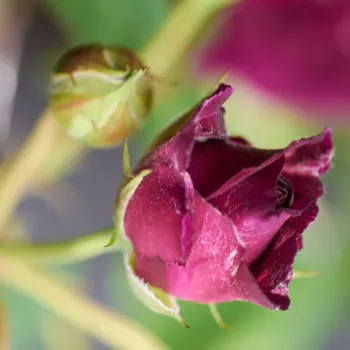
Deep crimson‑purple flowers with subtle violet tones; RHS 77A outer, 77B inner; colour lightens gradually to lilac‑pink with mauve tinges, retaining a velvety effect from bud through full bloom to fading. |
| Fragrance and aroma |
Very strongly scented, garden‑filling perfume described as full‑bodied, spicy and berry‑fruited; fragrance is a key ornamental feature, especially valuable near paths, seating areas and well‑used garden spaces. |
| Hip characteristics |
Forms spherical red hips in moderate quantities; approximately 6–10 mm in diameter; hips add a subtle seasonal extension of interest in late season and can complement informal, wildlife‑oriented plantings. |
| Resistance and winter hardiness |
Hardy to about −21 to −18 °C (RHS H7; Swedish Zone 3; USDA 6b); disease resistance moderate to powdery mildew, black spot and rust, benefiting from standard preventative care in humid regions. |
| Horticultural recommendations |
Suitable for arches, pergolas, walls, fences, pillars and large containers; plant about 140 cm apart for mass or hedge use, 220 cm as specimens; maintenance medium, with occasional plant protection advisable. |
Rosengarten Zweibrücken Climbing rose CHEwpurplex offers fragrant repeat flowering, space‑saving vertical impact and long‑lived own‑root reliability; consider it where you want romantic structure with reassuringly straightforward care.