ROSIGE LANDDROSTEI® – red bedding floribunda rose - Kordes
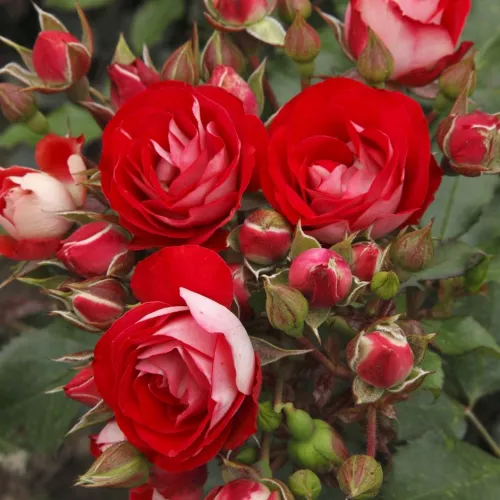
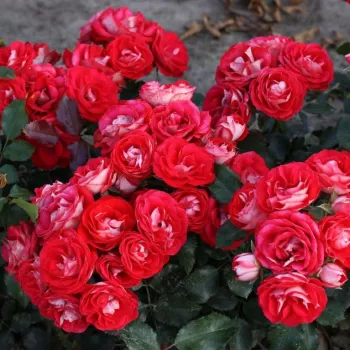
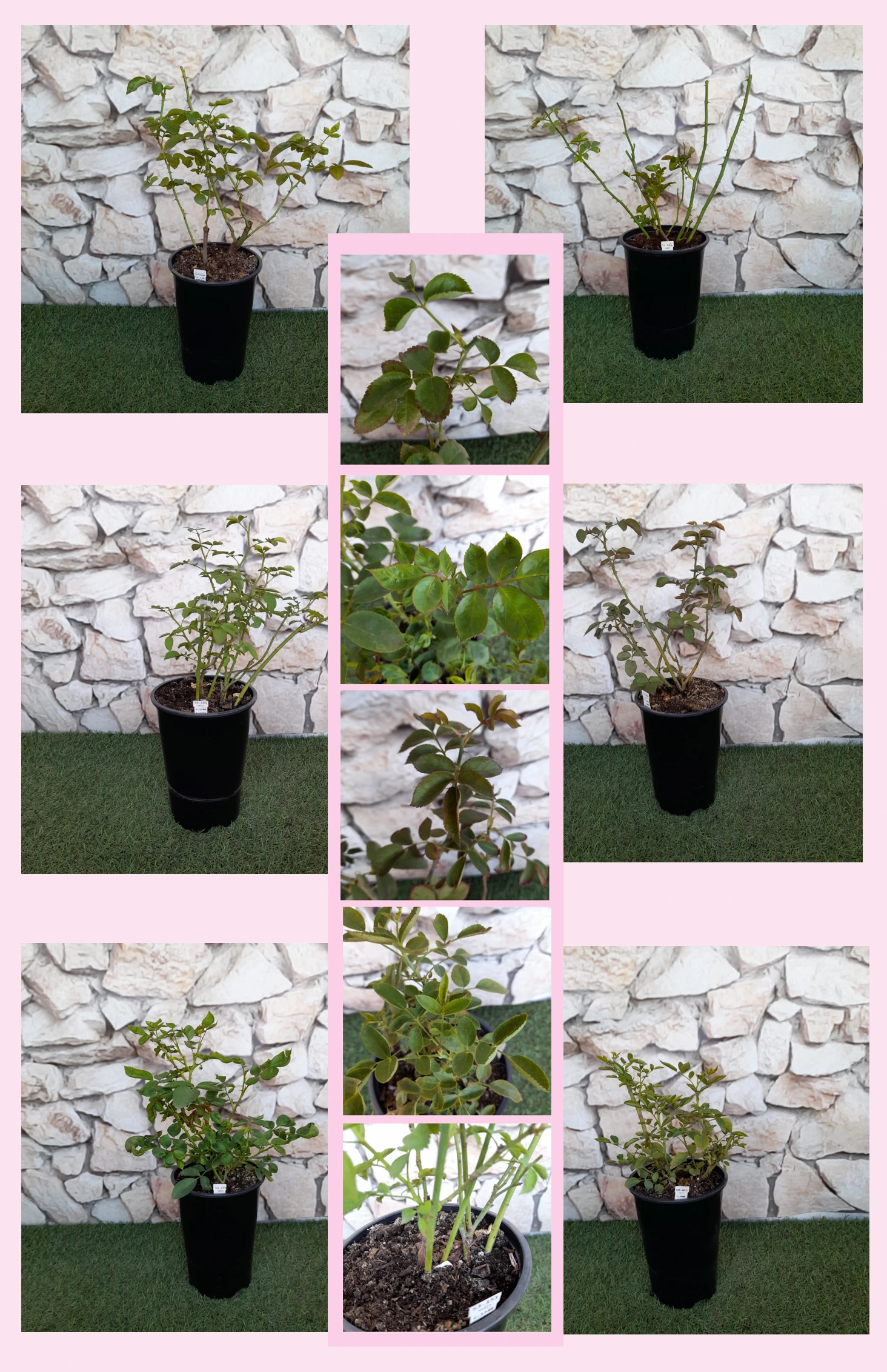
Bring a touch of storybook romance to even the smallest British garden with Rosige Landdrostei®, a compact, bushy floribunda that slips effortlessly into cottage-style borders and neat front gardens. Its rounded habit and dense dark green foliage make it naturally orderly, ideal for edging paths or shaping a low, traditional hedge along a lawn. Clusters of ball-shaped, double blooms in vivid mid-red with a creamy-white reverse create a soft contrast that pairs beautifully with lavender, catmint or kitchen-garden herbs. In an average family plot, this rose offers reassuring reliability: it performs steadily in typical changeable UK summers with wind and rain, especially when planted where the soil drains freely in wetter spells by the coast. In its pharmaROSA® ORIGINAL 2-litre own-root form, it settles quickly and shows long-term resilience, building a framework that is easy to prune lightly or more boldly as you prefer. Because it stays pleasantly compact, it is as suitable beside patios, paths and play areas as in mixed perennial beds. With moderate care needs and only light, occasional pruning, Rosige Landdrostei® supports genuine low-input maintenance, leaving you more time to enjoy afternoon tea beneath your own romantic arbour as the planting matures over the seasons.
Usage options
| Target area | Reasoning |
|---|
| Front-of-border cottage edging |
Its bushy, compact, slightly spreading habit and 80–120 cm height make a tidy, storybook edge in mixed cottage borders, with dark glossy foliage forming a structured backdrop for perennials and herbs; ideal for homeowners seeking traditional charm, especially beginners. |
| Small family gardens and town plots |
The moderate final size and controlled spread fit well into typical UK front or back gardens, giving strong colour without overwhelming narrow beds; this scale works particularly well where you want a neat, long-lived feature for busy owners. |
| Season-long colour in mixed beds |
Clusters of small, double, pompon-like flowers repeat reliably with a generous second flush, so the planting stays lively from summer onwards without constant deadheading; a practical choice for those who enjoy flowers but prefer simplicity. |
| Cottage-style low hedge or border line |
Regular spacing at 30–35 cm quickly creates a low, romantic hedge, the dense foliage knitting together into a soft but defined line along paths or vegetable plots, well suited to families wanting an easy, traditional boundary with character. |
| Raised beds and improved clay soils |
Its compact framework anchors well in typical garden soils, and in heavier clay it does best when drainage is improved or a raised bed is used, helping it cope with wetter spells and wind while staying stable for urban gardeners. |
| Feature rose in large containers |
In a 40–50 litre or larger container, its manageable height, rounded form and repeat-flowering clusters give dependable patio colour, especially on terraces or balconies where space is tight yet a single, well-behaved focal point suits newcomers. |
| Flexible pruning and training options |
The naturally compact, branching structure tolerates both light annual shaping and more decisive cutting back, so you can keep it low, refresh older plants or adapt it to changing layouts without specialist skills, ideal for homeowners. |
| Long-term, own-root planting schemes |
As an own-root rose it matures into a stable shrub that regenerates well from the base if cut back hard or after winter damage, maintaining ornamental value for many years, a reassuring investment for cottage borders planned by families. |
Styling ideas
- Kitchen-border – Line a vegetable or herb patch with Rosige Landdrostei® for a compact, low hedge, weaving in chives and thyme to echo its red-and-cream blooms – perfect for families who like a productive, pretty plot.
- Patio-focal – Plant a single shrub in a 50-litre terracotta pot with trailing lobelia and white bacopa to soften the rim – ideal for balcony or courtyard gardeners wanting impact from just one easy-care rose.
- Cottage-ribbon – Run a narrow ribbon of these roses along a front path, underplanting with Geranium ‘Rozanne’ to spill through the stems – suited to those seeking a romantic, welcoming entrance without complex planting plans.
- Soft-screen – Use a staggered row beside a seating area, interspersed with dwarf Weigela and lavender, to create a gentle visual screen – a good fit for homeowners wanting privacy with a traditional, floral feel.
- Colour-accent – Drop small groups into a mixed perennial bed with hardy cranesbills and ornamental grasses so their vivid clusters punctuate softer textures – appealing to hobby gardeners who enjoy curated but manageable borders.
Technical cultivar profile
| Parameter | Data |
|---|
| Name and registration |
Floribunda bed rose, registered as KORteidros; traded as Rosige Landdrostei® Bedding rose KORteidros. Grouped as a shrub-type floribunda for beds and borders in family gardens. |
| Origin and breeding |
Bred by Wilhelm-Alexander Kordes at W. Kordes’ Söhne, Germany, from (Unknown seedling × ‘KORpeligo’) × ‘KORfloci08’; introduced and registered in 2017 in European markets. |
| Growth and structural characteristics |
Compact, bushy, slightly spreading shrub reaching about 80–120 cm high and 40–60 cm wide, with dense, dark green, glossy foliage and moderate prickles; well suited to edging, beds and low hedges. |
| Flower morphology |
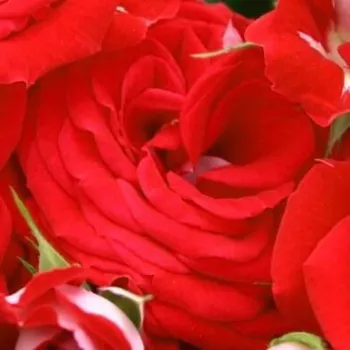
Small, double, ball-shaped to pompon blooms with roughly 26–39 petals, produced in clusters of three to ten per stem; flowers repeat well, with a particularly generous second main flush in season. |
| Colour data and phenology |
Vivid medium-red upper petal surfaces with a creamy-white reverse and silvery sheen; colour holds moderately well, fading slowly towards raspberry tones in strong sun, maintaining a fresh, two-tone contrast in the garden. |
| Fragrance and aroma |
Light, classic rose fragrance described as very faint but pleasantly delicate; scent is noticeable at close range without dominating nearby seating or dining areas in smaller urban or suburban gardens. |
| Hip characteristics |
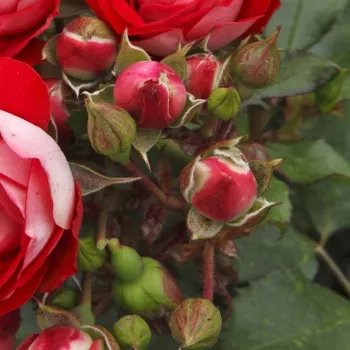
Hip set is generally sparse due to the double flower form; where formed, small spherical hips around 6–10 mm develop, coloured orange-red (RHS N30A), adding only a minor seasonal accent in late season. |
| Resistance and winter hardiness |
Rated to approximately −26 to −23 °C (RHS H7, Swedish zone 4, USDA 5b); disease resistance is medium to powdery mildew, black spot and rust, benefitting from good air circulation in humid sites. |
| Horticultural recommendations |
Suitable for beds, edging, specimen and containers; plant 30–55 cm apart depending on use. Performs best with average watering, partial shade tolerance and basic plant protection in enclosed, humid urban courtyards. |
Rosige Landdrostei® offers compact structure, repeat red-and-cream flowering and long-term stability from its own-root form, making it a thoughtful choice for relaxed, romantic family gardens you plan to enjoy for years.