SCARMAN'S GOLDEN RAMBLER – yellow rambler climbing rose - Scarman
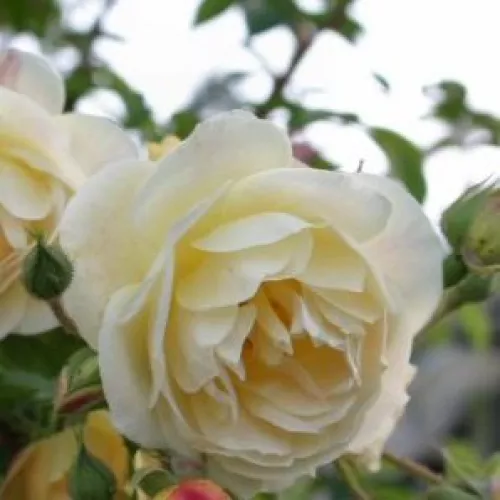
Bring a touch of storybook romance to your garden with Scarman’s Golden Rambler, a climbing rose that pours golden light over arches and arbours in a relaxed, cottage‑garden style. Its long, flexible canes and semi‑double blooms are ideal for framing a seating area or creating a rosy backdrop for family life, while the strong, classic rose scent drifts around you at afternoon tea. As an own‑root plant it settles in reliably, building a long‑lived framework that is easy to maintain with simple tying‑in and light pruning. It copes well with exposed, breezy spots where rain and wind can be a challenge, making it a good choice for many UK gardens. Over the seasons the rich yellow flowers soften to apricot‑cream, blending beautifully with herbaceous borders and hedging for that softly feminine, “girly” cottage look. You can plant the 2‑litre plant throughout the season, and it will steadily develop from firming in its roots, to building extension shoots, to giving you the full climbing display in just a few years, all with minimal fuss for the busy or beginner gardener who still dreams of a traditional, romantic garden retreat.
Usage options
| Target area |
Reasoning |
| Rose arch over a path |
Its long, supple rambler canes easily cover a rose arch, creating a tunnel of yellow that softens to creamy apricot as the flowers age, giving depth and movement. Own‑root vigour means it steadily thickens up with age, providing a lasting, low‑effort arch for those who love a romantic cottage entrance but do not want complicated training tasks – busy homeowners |
| Arbour or pergola for afternoon tea |
The strong, classic rose scent and generous, repeat flowering make it ideal for clothing a seating arbour, where the fragrance and filtered light create that cosy, storybook atmosphere. Simple tying‑in and light annual pruning are usually enough to keep it in shape, so you can enjoy long summer afternoons outdoors without high‑maintenance demands – beginners |
| Family garden boundary or screen |
With a height of up to 6,5 m and good spread, it forms a soft, flowery screen on fences or wires, helping to divide family spaces or hide functional areas. Own‑root resilience allows gradual renovation if stems are damaged, giving a long lifespan and stable ornamental value with just occasional thinning and feeding – family gardeners |
| Cottage‑style mixed border backdrop |
The glowing yellow blooms that fade to peach‑cream combine beautifully with soft pinks, whites and blues in a cottage border, while the mid‑green, slightly glossy foliage gives a calm background for perennials and herbs. It offers a generous vertical accent without fussy shaping, ideal behind kitchen‑garden beds or along paths – cottage‑style lovers |
| Coastal or breezy suburban gardens |
This rambler anchors well once established and copes with exposed, airy sites where persistent rain and brisk winds can batter more delicate climbers, especially when given decent soil preparation and support. Medium disease resistance is usually adequate in such ventilated positions, keeping upkeep straightforward for non‑specialists – urban and coastal owners |
| Low‑input, long‑term feature plant |
As an own‑root plant it is not dependent on a graft union, so the framework ages gradually and can be renewed from the base if ever cut back hard. After the initial establishment years, it provides dependable flowering with modest care, suiting gardeners who prefer a single, durable statement rose rather than frequent replacements – practical planners |
| Season‑round planting in existing gardens |
The 2‑litre container size allows planting through most of the season whenever the ground is workable, making it easy to add to an already planted family garden without major disruption. The plant settles in steadily, moving from root establishment to structural growth to full ornamental effect over its first three years – time‑pressed gardeners |
| Large decorative container near the house |
Where soil is poor or very heavy, it can be grown in a large 40–50 litre container with a sturdy obelisk or wall support, letting you enjoy fragrance and flower colour close to doors or patios. This avoids difficult ground preparation while still giving the height and romance of a climber in tighter urban plots – small‑garden owners |
Styling ideas
- Golden arbour retreat – Train it over a timber arbour with white or pale pink clematis to share the space, creating a shaded, scented nook above a bench for afternoon tea – ideal for romance‑seekers and readers.
- Cottage kitchen walk – Place it on an arch leading to the vegetable patch, underplanted with chives, lavender and catmint, to merge productive beds with ornamental charm – perfect for kitchen‑garden enthusiasts.
- Soft boundary veil – Let it run along a post‑and‑wire fence with foxgloves, nepeta and tall campanulas in front, giving a gently blurred boundary instead of a hard line – suited to family gardens wanting privacy with softness.
- Sunlit patio focal point – Grow it in a 50‑litre terracotta container on an obelisk, partnered with low thyme and trailing violas, so the yellow flowers and fragrance greet you at the back door – great for small, paved spaces.
- Storybook seat corner – Use two plants on either side of a corner bench, weaving canes along trellis and mixing with old‑fashioned perennials like hollyhocks and lady’s mantle – made for lovers of nostalgic, English‑countryside style.
Technical cultivar profile
| Parameter |
Data |
| Name and registration |
Scarman’s Golden Rambler is a rambler‑type climbing rose; current trade name SCARMAN'S GOLDEN RAMBLER – yellow rambler climbing rose - Scarman; ARS exhibition name Scarman’s Golden Rambler. |
| Origin and breeding |
Selected by John Scarman in Germany, bred around 2003 from unknown parentage; introduced via Landhaus Ettenbühl in Switzerland and Scarman Roses in the United Kingdom from 2003 onwards. |
| Growth and structural characteristics |
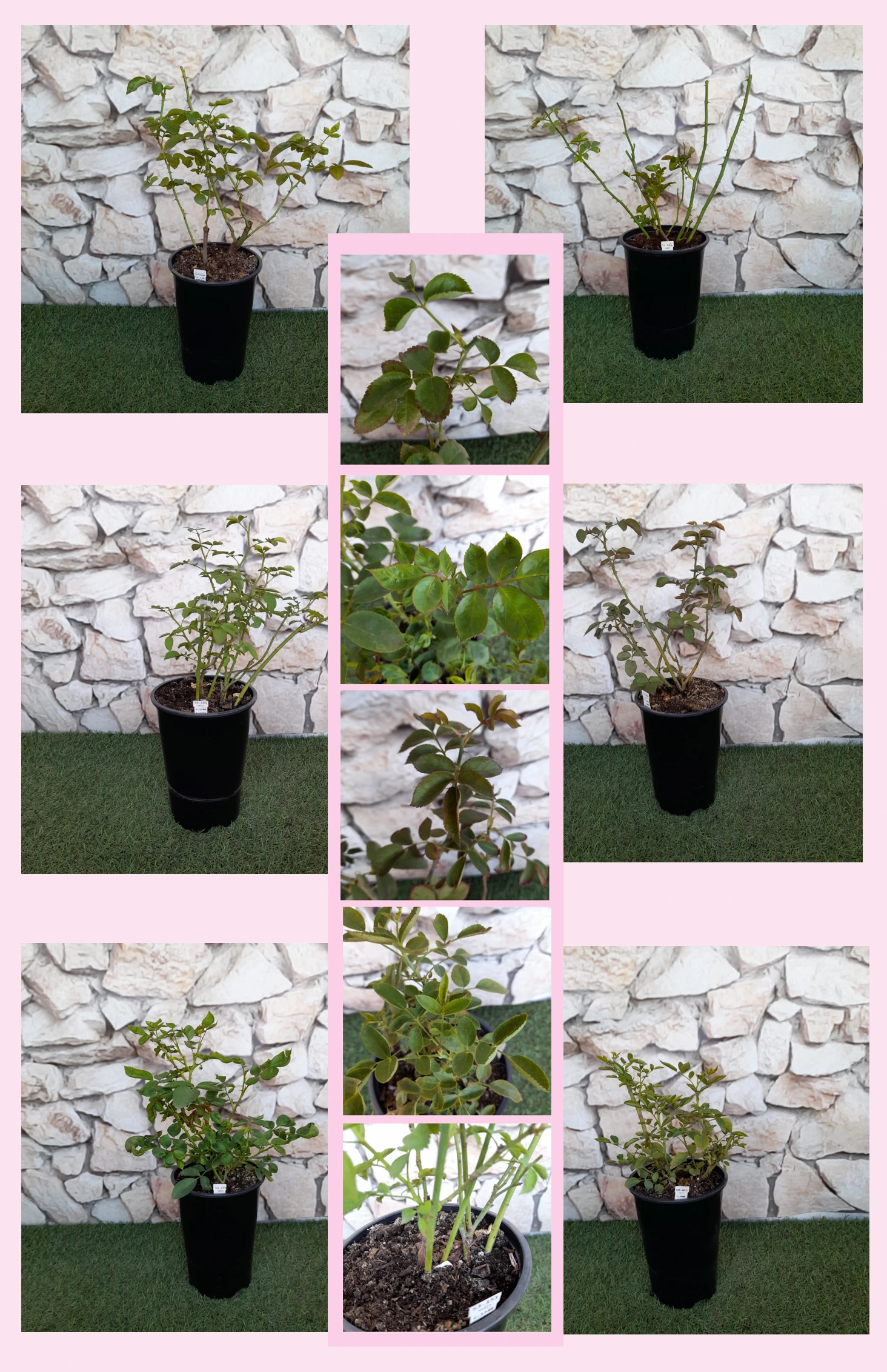
Strong, climbing rambler with flexible canes, reaching about 4,0–6,5 m in height and 2,5–4,5 m spread; mid‑green, slightly glossy foliage; moderately thorny stems, suited to arches, pergolas and tall supports. |
| Flower morphology |
Semi‑double, pompon to ball‑shaped blooms, typically 13–25 petals and medium size (about 4–7 cm), borne in clusters; remontant habit with a notably abundant second flush in suitable conditions. |
| Colour data and phenology |
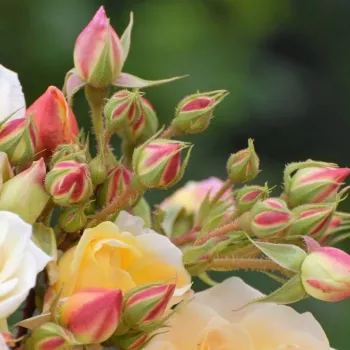
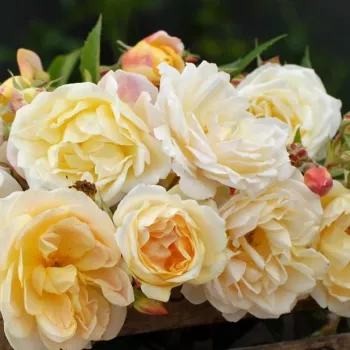
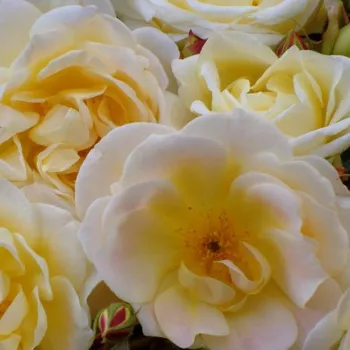
Closed buds show orange outer petals; newly opened flowers are vivid golden yellow (RHS 14A/14C) that gradually fade through creamy yellow to soft creamy‑peach tones at full bloom and with age. |
| Fragrance and aroma |
Strong, long‑lasting scent with a classic rose character, noticeable around seating areas; semi‑double form offers limited stamen access, so it is only partially attractive to pollinating insects in most gardens. |
| Hip characteristics |
Occasionally forms small rose hips, typically no more than 6 mm in diameter; hips are sparsely produced and have little visual impact, so they do not significantly affect the plant’s overall decorative value. |
| Resistance and winter hardiness |
Medium general disease resistance, with moderate tolerance to powdery mildew, black spot and rust; prefers warm, sunny sites, hardy to about −21 to −18 °C (H7, USDA 6b, Swedish zone 3) with recommended watering in dry spells. |
| Horticultural recommendations |
Best in full sun on arches, pergolas, fences or obelisks; plant around 2,1–3,85 m apart depending on effect; medium maintenance, sometimes requiring plant protection; recommended particularly for warmer southern regions. |
SCARMAN'S GOLDEN RAMBLER offers fragrant, repeat yellow flowering, romantic height for arches and arbours, and the long‑term resilience of an own‑root climber, making it a thoughtful choice if you would like a single, enduring feature rose.