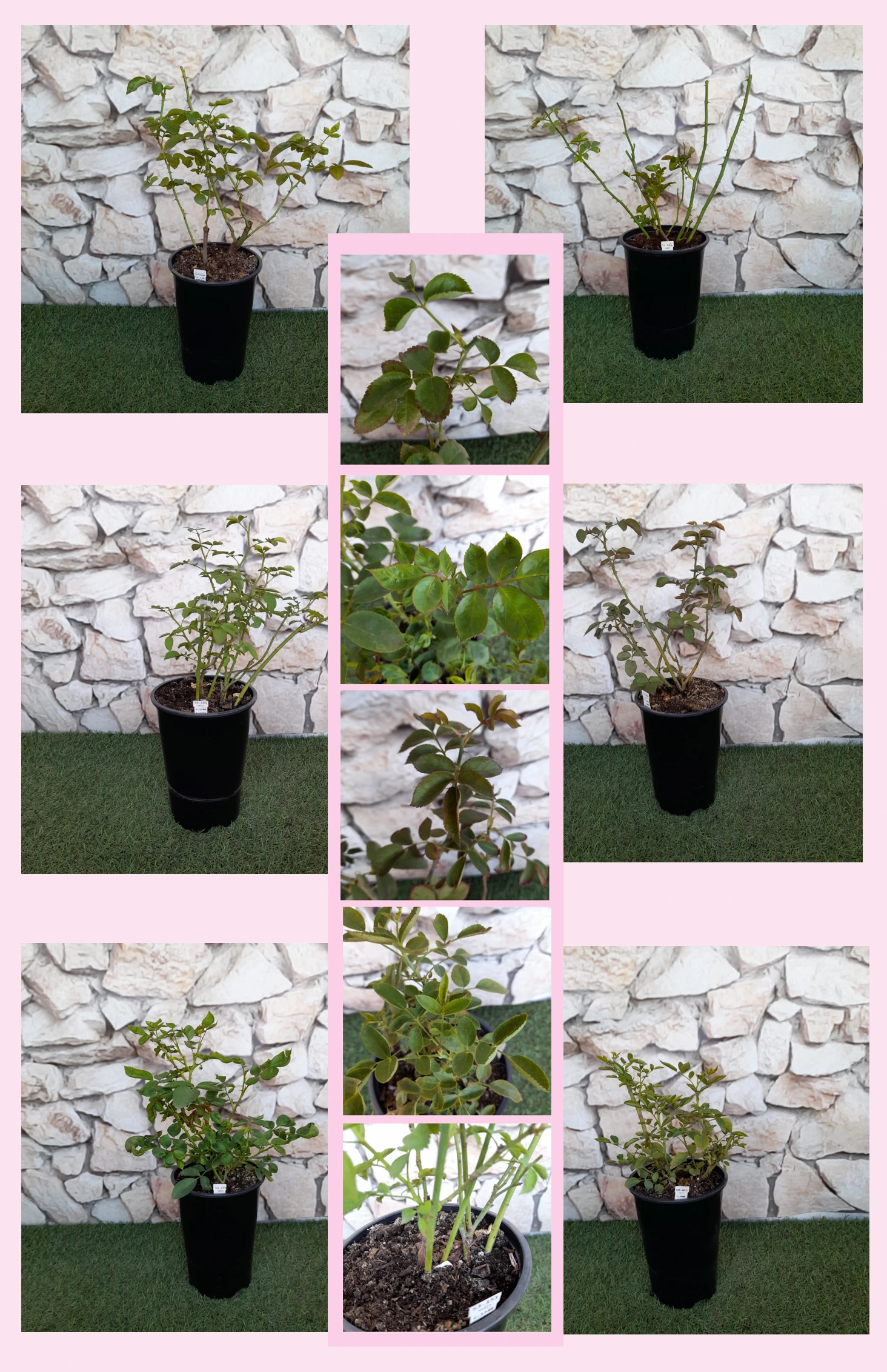
TERRACOTTA® – brick-red tea-hybrid rose - Simpson
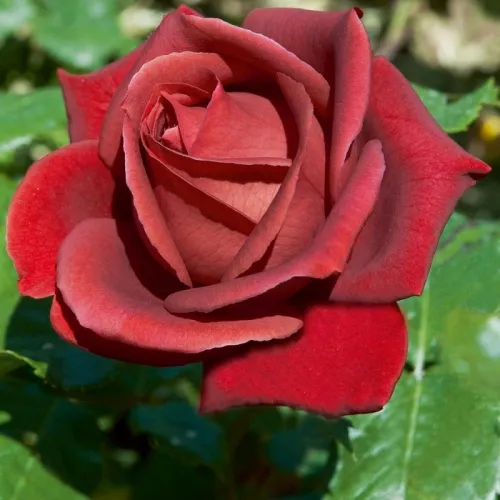
With its unusual brick-red blooms, TERRACOTTA® brings a quietly luxurious, storybook romance to even the most ordinary family garden. This own-root hybrid tea is grown in a manageable 2‑litre container, making planting straightforward on typical UK plots where improved drainage helps in wetter, heavier soils and wind‑brushed sites by the coast. Its upright, bushy habit fits easily into mixed borders or a single, statement planting by the terrace, while the long, sturdy flower stems invite you to cut velvety blooms for the vase. Medium maintenance in practice means a simple seasonal routine rather than constant tending, so you gain dependable repeat flowering without complicated pruning rules. Over time, the own-root structure supports a long-lived, regenerating shrub that keeps its ornamental value even if individual canes age or are cut back. The warm terracotta colour pairs beautifully with soft creams and dusky pinks for a cottage feel, or with grasses for a more contemporary mood. In its first seasons you will notice steady development, and by the third summer the plant settles into a full, mature presence that anchors your garden’s character, combining reliable performance with a comfortably traditional atmosphere.
Usage options
| Target area | Reasoning |
|---|
| Feature rose in a small front garden bed |
The upright, bushy growth and brick-red flowers create an immediate focal point without taking much ground space, giving you a classic hybrid tea look that is easy to shape and keep within bounds – ideal for the time-conscious homeowner. |
| Cottage-style mixed border near a seating area |
Repeated warm terracotta blooms and dark, matte foliage weave naturally into cottage borders among perennials and herbs, so you enjoy a romantic, “afternoon tea” outlook with modest maintenance demands – perfect for the relaxed cottage-gardener. |
| Cutting patch for home flower arrangements |
Extra-large, solitary flowers on long stems provide a reliable source of distinctive brick-red blooms for vases, giving you florist-style stems from your own garden with straightforward care – attractive for the creative arranger. |
| Specimen rose in a large patio container |
Its compact footprint and vertical habit suit a single plant in a 40–50 litre container, where roots have room to develop and watering is easy to manage for repeat flowering – convenient for the space-limited balcony-owner. |
| Traditional rose bed in a family back garden |
Regular remontant flowering and a moderate maintenance profile allow you to create a classic rose bed look, while own-root resilience supports long-term structure with simple seasonal pruning – reassuring for the practical family-gardener. |
| Low, rose-led hedge to edge a path |
Recommended planting distances and bushy growth let you form a loose, low hedge that frames paths or kitchen garden plots, giving gentle structure and colour without becoming overpowering – useful for the order-loving planner. |
| Rose border in heavier or moisture-retentive soils |
Container-grown, own-root plants establish steadily when you improve drainage or use low raised beds, helping the shrub anchor well and cope with British rain and breeze – reassuring for the weather-aware gardener. |
| Part-shaded town garden corner |
Tolerance of partial shade and the gradual build-up from root strength to taller flowering shoots, then full ornamental presence over several seasons, suit sheltered urban corners – a good match for the patient beginner. |
Styling ideas
- Cottage Harmony – Combine TERRACOTTA® with soft pink Lychnis and low baby’s-breath for a frothy, romantic edging to a lawn or path – suited to the nostalgic flower-lover.
- Kitchen Border – Plant along a vegetable plot with Bupleurum and herbs, letting the brick-red blooms echo terracotta pots and garden tiles – ideal for the home grower who enjoys charm and productivity together.
- Patio Showcase – Grow one plant in a 40–50 litre terracotta container with airy grasses for contrast, placing it beside outdoor seating – perfect for balcony and terrace owners wanting easy impact.
- Front-Garden Welcome – Line a short drive or gate with evenly spaced plants, underplanting with lavender for scent and soft structure – appealing to those who like a tidy yet traditional entrance.
- Tea-Table Cuttings – Dedicate a narrow strip for several bushes to supply long-stemmed roses for indoor vases and cake-table arrangements – designed for hosts who enjoy arranging their own flowers.
Technical cultivar profile
| Trait | Data |
|---|
| Name and registration |
Hybrid tea rose; registered as SIMchoca, marketed as TERRACOTTA® Hybrid tea rose SIMchoca; ARS exhibition name Terracotta; premium gold quality own-root plant in 2-litre container. |
| Origin and breeding |
Bred by Nola M. Simpson from ‘Princesse’ × ‘Hot Chocolate’; introduced and distributed by Meilland Richardier (France) in 2001 as a distinctive brick-red hybrid tea with exhibition potential. |
| Awards and recognition |
Recognised in international rose trials with a New Zealand Silver Star in 2001 and a Gold Medal at Durbanville in 2006, reflecting its ornamental value and performance as a garden and show rose. |
| Growth and structural characteristics |
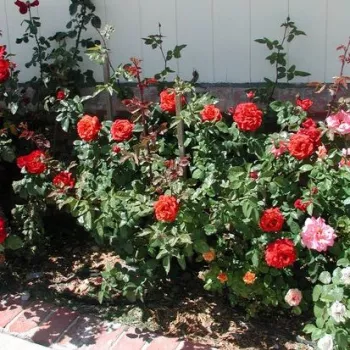
Upright, bushy shrub reaching about 90–125 cm high and 60–85 cm across, with dense, dark matte foliage and relatively sparse prickles, forming a neat, easily managed outline in beds or containers. |
| Flower morphology |
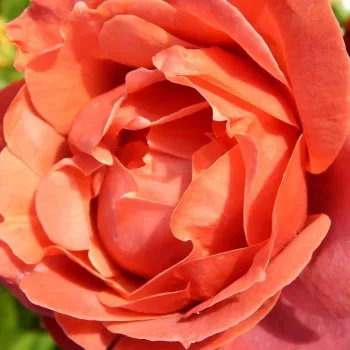
Large, double, cup-shaped flowers with 26–39 petals, usually borne singly on stems; remontant, giving a generous second flush after the main bloom, especially when deadheaded and watered consistently. |
| Colour data and phenology |
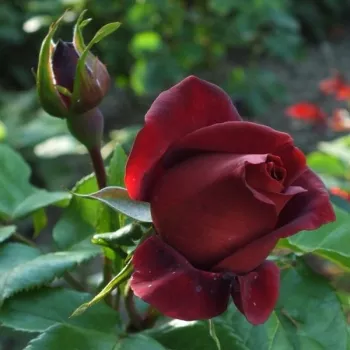
Brick-red, warm reddish-brown tones (RHS 167A–167B) with orange-brown nuances; colour lightens in heat yet deepens in cooler weather, with buds darker outside and flowers softening to ochre as they age. |
| Fragrance and aroma |
Fragrance is very weak and barely noticeable, so it is chosen primarily for its unusual colour and flower form rather than scent; best suited where visual effect and cutting quality are main priorities. |
| Hip characteristics |
Rose hips form only occasionally because of the double blooms; when present they are small, 10–14 mm, ellipsoid, orange-red (RHS 32A i), and make a discreet seasonal feature rather than a major display. |
| Resistance and winter hardiness |
Moderate resistance to black spot, powdery mildew and rust; performs reliably in typical garden conditions with basic care. Hardy to around −21 to −18 °C (RHS H7; USDA Zone 6b; Swedish Zone 3). |
| Horticultural recommendations |
Suited to beds, low hedging, cutting and large containers; plant 40–75 cm apart depending on use. Requires regular watering, feeding and occasional disease checks to sustain repeat flowering and vigour. |
TERRACOTTA® Hybrid tea rose SIMchoca offers distinctive brick-red blooms, reliable repeat flowering and a compact, easy-to-manage habit on a durable own-root plant; a thoughtful choice for long-term structure with gentle, traditional character.