TITIAN™ – deep pink climbing rose - Riethmuller
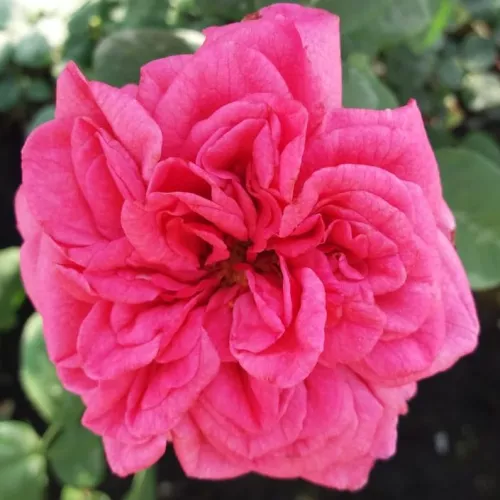
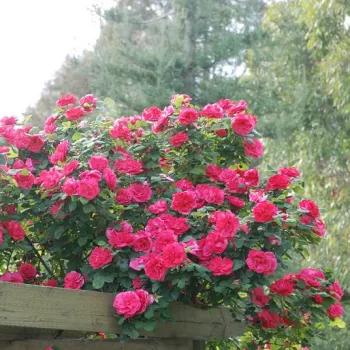
Bring a touch of storybook romance to your garden with TITIAN™, a dependable, own‑root climbing rose that clothes arches, fences and pillars in richly coloured blooms. Its medium maintenance suits everyday family gardens where time is limited but charm matters, and its heat tolerance means it copes gracefully even when summers turn dry. The double, raspberry‑pink flowers appear in generous clusters, flowering in flushes from early summer well into autumn for long‑season visual colour. As an own‑root climber it matures steadily into a well‑anchored, long‑lived framework that can be pruned lightly or more firmly to fit your space. This practical reliability makes it an attractive choice for busy owners wanting structure and privacy as well as beauty. Well suited to cottage‑style planting with herbs and perennials, it provides a quietly luxurious backdrop for afternoon tea beneath an arbour and harmonises with traditional brick, stone and painted boundaries in typical UK homes. With patient care it becomes more rewarding each year, steadily filling its support and enhancing your garden’s sense of cosiness.
Usage options
| Target area | Reasoning |
|---|
| Arches, arbours and pergolas near seating areas |
The climbing habit, 2,4–4 m height and dense foliage create a romantic overhead canopy that frames afternoon seating beautifully. Repeat flowering ensures colour for much of the season, ideal for those wanting a long‑term feature with minimal complexity for the beginner. |
| House walls and sunny fences |
As a short climber it is easy to train along wires or trellis, giving a softer edge to brick or timber without overwhelming smaller plots. Own‑root growth builds a durable framework over time, suiting homeowners seeking reliable structure and privacy with straightforward care for the householder. |
| Family garden boundaries and informal screens |
Dense, matt dark green foliage and moderate thorns form a gentle visual screen that fits traditional cottage‑style gardens. Flexible pruning lets you keep paths and play areas clear while still enjoying height and romance, making it attractive for families who want classic looks with manageable upkeep for the parent. |
| Mixed cottage borders with perennials |
Clustered, deep pink flowers combine well with silvery foliage and airy companions, creating a soft English‑countryside look. The remontant habit means colour returns through summer, reducing gaps in the border for gardeners who prefer continuously pleasing, low‑fuss planting for the stylist. |
| Small urban gardens and courtyard spaces |
Vertical growth uses height rather than ground space, ideal where borders are narrow. Own‑root resilience supports long life even when containers or raised beds are used, and steady flowering rewards simple routine care, matching the needs of busy city dwellers who still want romance outdoors for the commuter. |
| Large containers and raised beds |
When planted in a generous 40–50 litre container with support, this climber offers a flexible, moveable focal point. Its moderate care demands and remontant flowering give high impact from a single specimen, appealing to renters or patio gardeners seeking adaptable structure and colour for the tenant. |
| Rural kitchen gardens and productive plots |
The traditional form and rich pink colour suit paths edging vegetable or herb beds, adding ornament without complex tasks. Own‑root plants regenerate well after harder pruning, fitting areas where practical work comes first but beauty is still valued by the smallholder. |
| Exposed or heat‑prone garden corners |
Good heat tolerance helps it maintain foliage and flower quality where reflected sun or warmer spots could stress other shrubs, and with watering in prolonged dry spells it remains dependable. This suits gardeners who want stable structure and colour without constant adjustments for the planner. |
Styling ideas
- Tea‑arbour – Train TITIAN™ over a simple wooden arbour, underplant with lavender and lamb’s ear for a soft, fragrant retreat – ideal for homeowners creating a romantic afternoon tea corner.
- Cottage‑wall – Fan the climber across a sunny brick wall with foxgloves and campanulas at its feet for a classic, storybook frontage – perfect for those restoring traditional village charm.
- Patio‑pillar – Grow it in a 40–50 litre container around a painted obelisk, with trailing thyme at the base, to bring vertical interest to a small terrace – suited to urban gardeners with limited borders.
- Kitchen‑path – Line a path to the veg patch with TITIAN™ on posts and wires, weaving in herbs and calendula for a productive yet pretty route – appealing to keen cooks who like a rustic feel.
- Evening‑nook – Position near a bench, mixed with airy grasses and lesser calamint, where the medium tea‑fragrance can be enjoyed at dusk – attractive to those seeking a quietly scented reading spot.
Technical cultivar profile
| Parameter | Data |
|---|
| Name and registration |
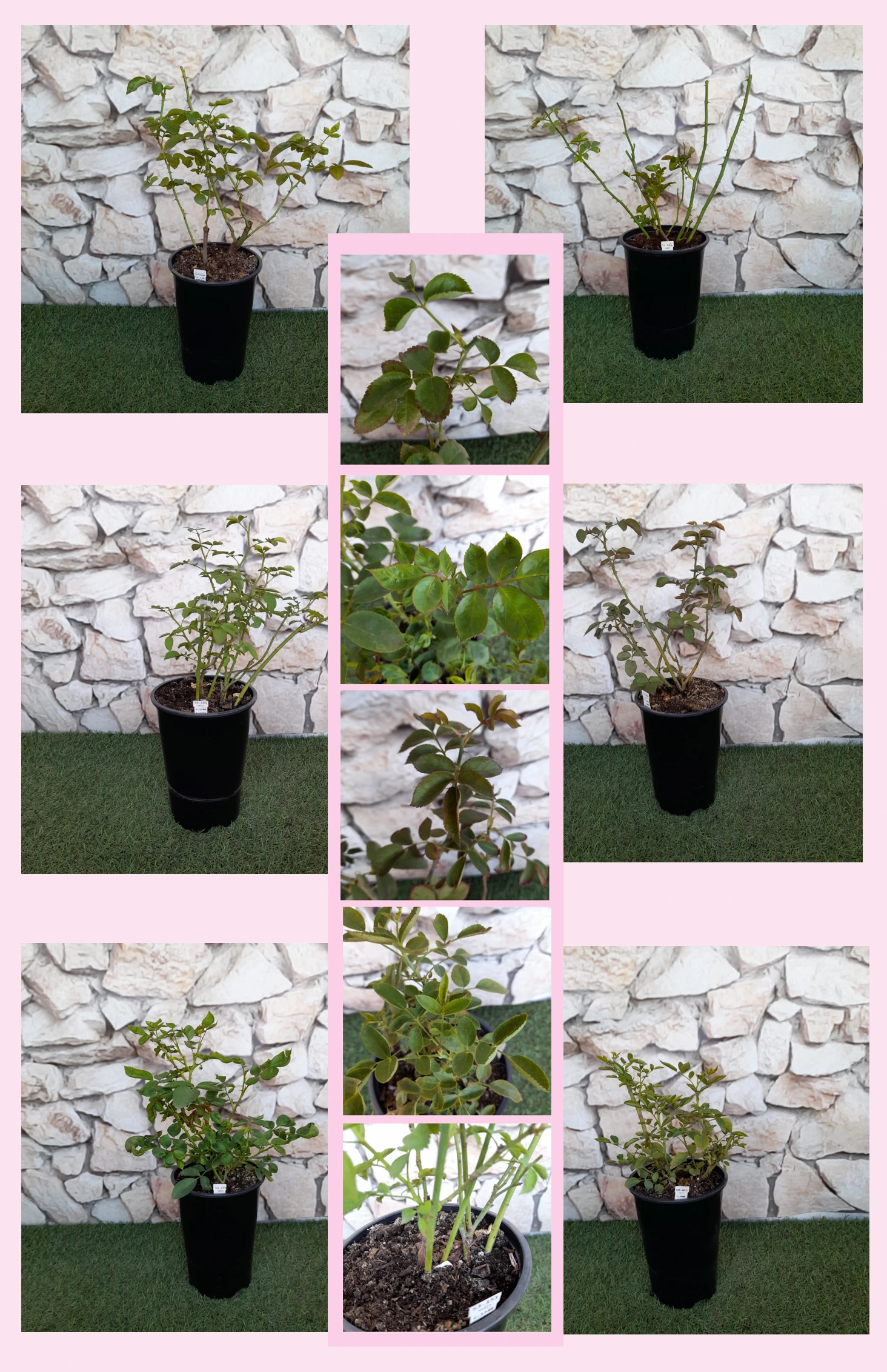
Climbing rose from the Short-Climber group, marketed as TITIAN™ – deep pink climbing rose - Riethmuller; exhibition name ‘Titian’. Unregistered cultivar, supplied here as an own-root, 2-litre plant. |
| Origin and breeding |
Bred by Francis Lewis Riethmuller in Australia from ‘Crimson Glory’ × ‘Eutin’. First introduced by Hazlewood Bros. in 1950, later by W. Kordes’ Söhne in Germany from 1955 catalogue listings. |
| Awards and recognition |
Holder of several mid‑20th‑century accolades, including Gold Medals from Your Garden magazine (1959) and the National Rose Society of New South Wales (1958), plus a “Particularly healthy” note from Wilhelm Kordes in 1964. |
| Growth and structural characteristics |
Vigorous short climber, around 2,4–4 m high with 1,6–2,6 m spread, moderately thorny stems and dense, matt dark green foliage. Forms a stable framework suitable for arches, fences and large supports. |
| Flower morphology |
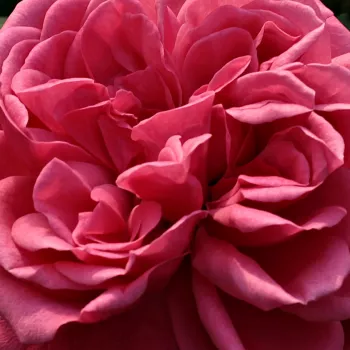
Double, rosette-shaped cluster blooms, typically 26–39 petals and medium sized at 4–7 cm. Remontant habit with a notably generous second flush, giving repeated displays over the main growing season. |
| Colour data and phenology |
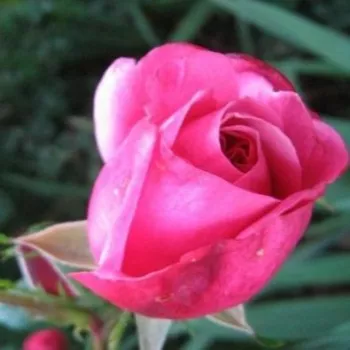
Rich deep pink with carmine tones; ARS deep pink, RHS 53A–53B. Buds are glossy purple-pink, opening to raspberry shades that pale slightly in strong sun and intensify in cooler periods, extending ornamental value. |
| Fragrance and aroma |
Medium-strength fragrance, clearly perceptible near seating areas. Fresh tea-rose character with gentle fruity nuances, offering a balanced scent that is pleasant without overwhelming smaller, enclosed gardens. |
| Hip characteristics |
Occasional ellipsoidal hips, about 10–15 mm, in orange-red tones. Ornamentally modest but a subtle seasonal feature in late season, with no significant impact on overall garden performance or upkeep needs. |
| Resistance and winter hardiness |
Rated to approximately −32 to −29 °C (USDA 4b, RHS H7, Sweden zone 5). Medium disease resistance; regular good practice helps control black spot, mildew and rust, while heat tolerance is good with watering in dry spells. |
| Horticultural recommendations |
Best in fertile, well-drained soil with support and room to climb. Plant at 1,85–3,2 m spacing, using 0,3 plants/m² in mass schemes. Own‑root form supports rejuvenation after pruning and long-term structural stability. |
TITIAN™ – deep pink climbing rose - Riethmuller offers romantic repeat flowering, space‑saving vertical structure and long-lived own‑root resilience; a thoughtful choice if you would like a quietly enduring garden feature.