TRADITION 95 ® – red climbing rose – Kordes
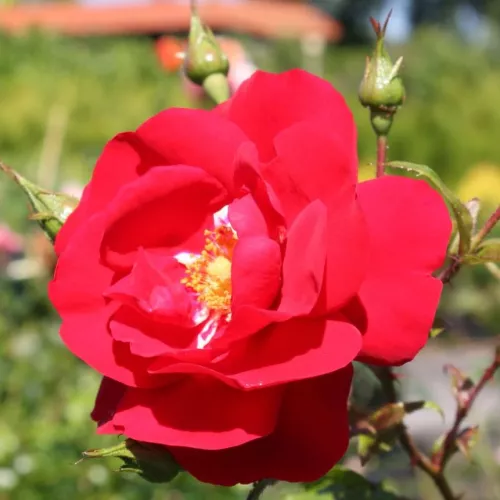
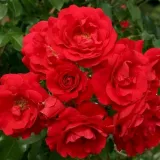
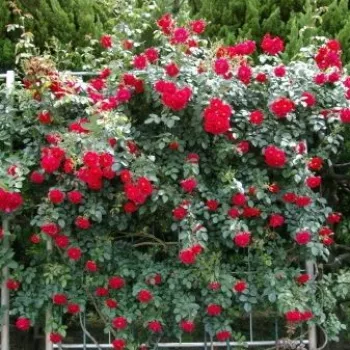
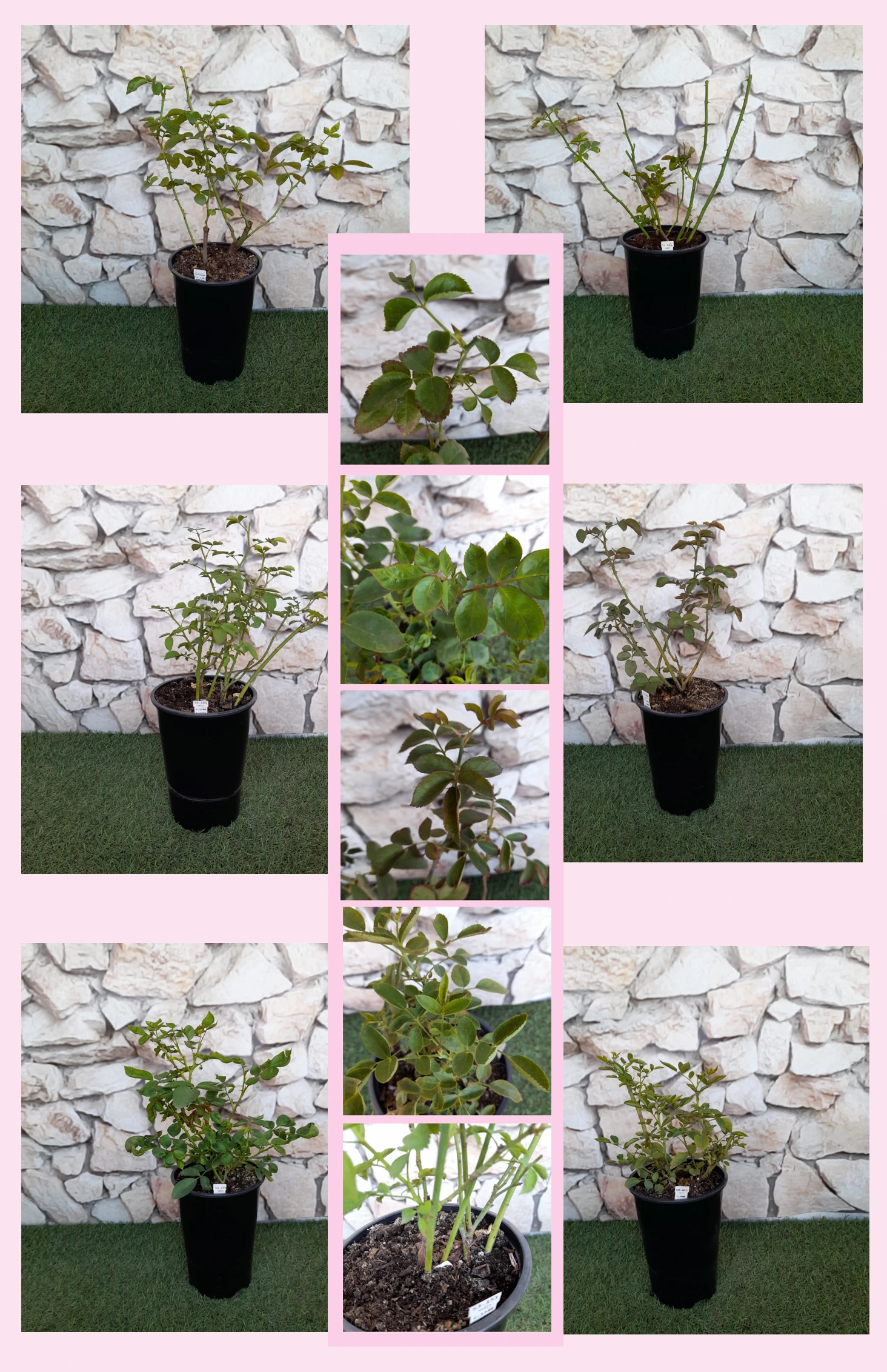
With its storybook clusters of vivid red blooms, TRADITION 95 ® is a reliable climbing rose for arches, pergolas and walls, bringing a sense of afternoon-tea romance to everyday family gardens even where wind and rain regularly sweep across the plot. Bred by Kordes and supplied as an own-root, container-grown plant, it is designed for long garden life: once settled, it responds well to simple, occasional care rather than constant fuss, steadily building into a graceful framework of glossy foliage and deep red chalice-shaped flowers. Over the first few seasons it focuses on roots and then shoots, before reaching its full ornamental value as a richly flowering climber that looks at home in a cottage-style setting. Its remontant nature ensures dependable repeat flowering through summer, with semi-double, subtly scented blooms that offer nectar and pollen to visiting bees. Suitable for partial shade, it works particularly well along fences and house walls where space is limited on the ground but height can be used to create a vertical screen, and it can also be trained along a sturdy rose arch or over a pergola to frame a seating area in a cosy, traditional way. In heavier clay soils it appreciates planting in a raised or well-drained spot, rewarding this small consideration with consistent growth and a long lifespan.
Usage options
| Target area | Reasoning |
|---|
| Rose arch at a garden entrance |
The climbing habit and 2.4–3.8 m height make it ideal for training over an arch, creating a welcoming, romantic gateway of vivid red flowers above head height. Its repeat flowering keeps the entrance attractive for months – perfect for homeowners seeking a traditional focal point for family gardens |
| Pergola over a patio seating area |
TRADITION 95 ® produces generous clusters of semi-double blooms that drape attractively along pergola beams, providing colour and dappled shade around an outdoor seating area. The mild, sweet fragrance adds gentle atmosphere without overwhelming – appealing to those who enjoy relaxed afternoon tea corners for busy households |
| Cladding a fence or side wall |
Its 1.0–1.6 m spread suits narrow borders against boundaries, where it can be tied to wires or trellis to form a living red tapestry. Own-root vigour and long lifespan mean it gradually fills vertical space with stable ornamental value – ideal for people wanting low-effort privacy in small plots |
| Cottage-style kitchen garden backdrop |
The rich red colour and traditional cup-shaped flowers give a classic cottage-garden look, pairing well with herbs and vegetables in a kitchen garden. Semi-double, bee-attracting blooms add pollinator interest among crops – attractive to romantic gardeners who like productive yet pretty country corners |
| Partially shaded town garden corner |
This variety tolerates partial shade, so it can be grown where sun is limited for part of the day, such as beside garages or neighbouring buildings. Moderate maintenance and remontant flowering make it forgiving in less-than-ideal positions – suited to time-pressed urban beginners |
| Raised bed or improved soil on heavy clay |
In gardens with heavier soils it responds well to being planted into raised beds or improved planting holes that give better drainage, helping roots establish steadily for long-term structure and flowering; this thoughtful siting is especially valuable in gardens regularly exposed to strong coastal winds – reassuring for practical-minded planners |
| Large container on terrace or balcony (50–70 L) |
While happiest in the ground, it can be grown in a very large container, where own-root resilience supports long-term health provided watering and feeding are consistent. A 50–70 litre pot allows sufficient root room for a vertical accent – useful for those greening compact paved spaces for city living |
| Low-maintenance family feature with simple pruning |
As a large-flowered climber, it responds well to straightforward pruning: removing old, greyed canes and tying in younger shoots is typically enough to keep it flowering. Own-root growth helps it regenerate from the base if pruned harder – an advantage for families preferring easy-care roses for relaxed gardeners |
Styling ideas
- Storybook archway – Train over a classic metal or wooden arch, underplant with lavender and baby’s-breath to soften the base – ideal for lovers of romantic garden entrances.
- Tea-time pergola – Let stems weave along a pergola above a bistro set, with pots of scented herbs below – perfect for homeowners creating a cosy afternoon tea corner.
- Cottage kitchen backdrop – Use as a vertical red accent behind raised vegetable beds, mingling with coneflowers and mugwort – suited to rural-style kitchen gardeners.
- Urban privacy screen – Cover a wire-trained fence in a small city garden, combining with evergreen climbers for year-round structure – good for busy urban families.
- Container showpiece – Grow in a 50–70 L tub with obelisk support on a patio, underplanted with trailing thyme – appealing to balcony and terrace rose enthusiasts.
Technical cultivar profile
| Parameter | Data |
|---|
| Name and registration |
Large-flowered climbing rose, registered as KORkeltin, marketed as TRADITION 95 ® climbing rose; also known in exhibitions as Tradition™, in the Climbing rose commercial group. |
| Origin and breeding |
Bred by Tim-Hermann Kordes at W. Kordes’ Söhne, Germany, around 1995; introduced in 1998, with unknown parentage, continuing the breeder’s line of robust ornamental climbers. |
| Awards and recognition |
Holder of the RHS Award of Garden Merit (2001), plus multiple show honours including Belfast Certificate of Merit and medals from Kortrijk and The Hague between 1998 and 2003. |
| Growth and structural characteristics |
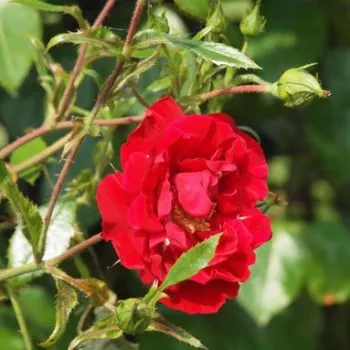
Climbing habit to about 2.4–3.8 m high and 1.0–1.6 m spread, with moderately dense, dark green glossy foliage and a densely thorned framework requiring firm support and careful handling. |
| Flower morphology |
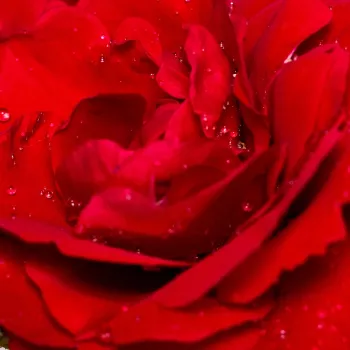
Semi-double, cup-shaped blooms with 13–25 petals, large-flowered and usually borne in clusters; remontant with a generous second flush, but with weak self-cleaning so spent blooms benefit from deadheading. |
| Colour data and phenology |
Even, radiant red coloration (RHS 46A outer, 45B inner); buds dark crimson, opening vivid scarlet, then maturing to intense deep red and finally a muted purplish-red that holds reasonably well in strong sunlight. |
| Fragrance and aroma |
Mild, slightly sweet rose fragrance, noticeable at close range without being overpowering; semi-double blooms with exposed stamens provide some attraction and nectar access for visiting pollinating insects. |
| Hip characteristics |
Forms moderately abundant, spherical red hips about 13–17 mm in diameter, extending seasonal interest into autumn and offering additional ornamental value after the main flowering period. |
| Resistance and winter hardiness |
Moderate resistance to powdery mildew, black spot and rust; hardy to about −21 to −18 °C (RHS H7, Swedish zone 3, USDA 6b), with routine monitoring and basic disease management recommended. |
| Horticultural recommendations |
Suited to arches, pergolas, walls, fences and urban green spaces; plant 140–270 cm apart depending on use, in fertile, well-drained soil, with sturdy support and occasional pruning for frame renewal. |
TRADITION 95 ® offers romantic red clusters, reliable repeat flowering and forgiving partial-shade performance in a durable own-root climber, making it a thoughtful choice for long-lived cottage-style structures you can enjoy for many seasons.